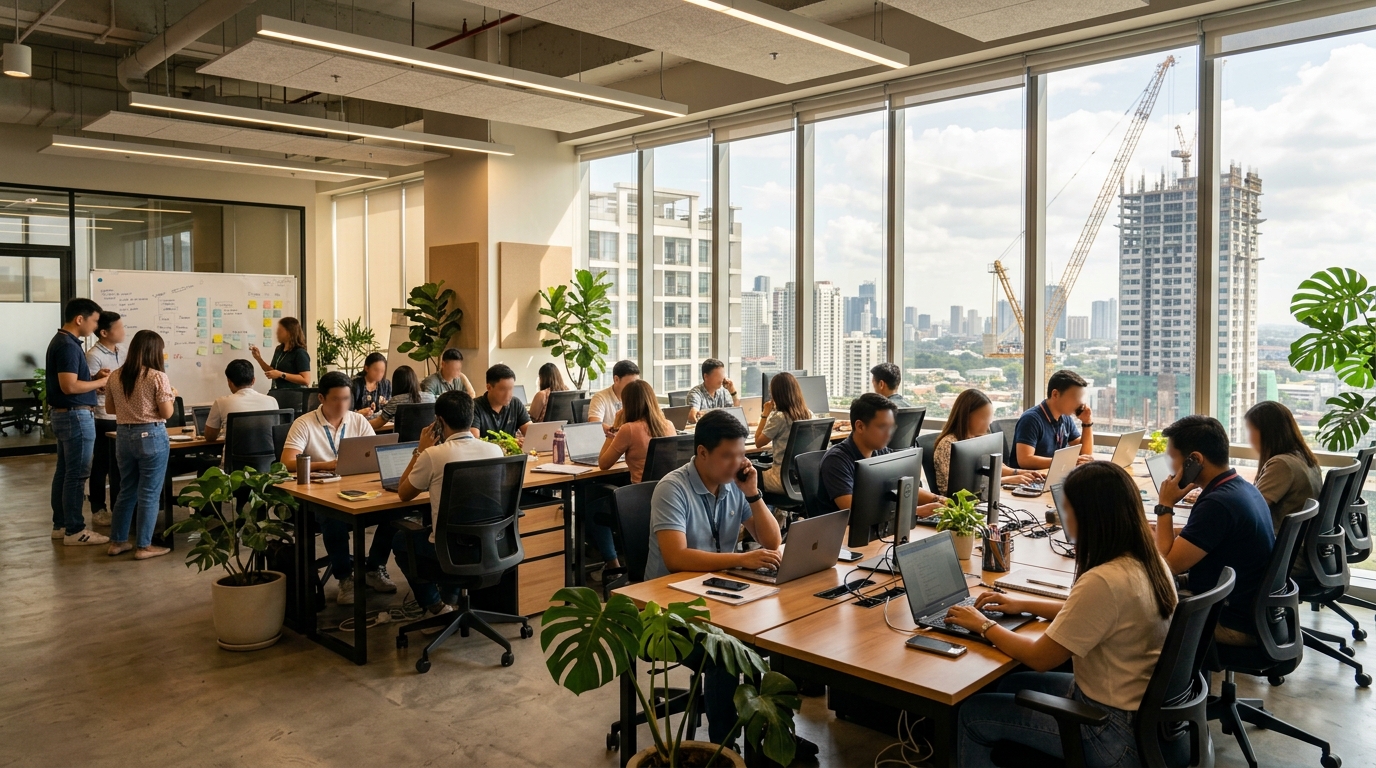
ANGELES CITY, PAMPANGA — The 10‑tower Clark Tech Hub office complex has reached full occupancy, with every square meter of its more than 100,000‑square‑meter portfolio now under long‑term lease to global IT‑BPM firms and multinational companies. The announcement, made by SM Offices on May 20, 2026, was not merely a leasing milestone. It was the trigger for the next phase of expansion: Tech Hub Tower 11, a nine‑story building that will add approximately 20,000 square meters of premium leasable space to a complex that no longer has a single vacancy. "The full utilization of Clark Tech Hub underscores sustained demand for global‑standard, sustainable workspaces outside Metro Manila," said Alexis L. Ortiga, vice president and head of SM Offices. "It also affirms the strong positioning of SM City Clark Complex as a major regional business district."
The ₱700‑million Tower 11 will rise above the SM Clark Skylink terminal, the district's key transit node that is expected to connect directly to Clark International Airport by 2028 through the North‑South Commuter Railway. The investment arrives as Central Luzon consolidates its position as the country's fastest‑rising property corridor. Colliers Philippines has described the region as "the next real estate hotspot," with the Board of Investments reporting that Central Luzon attracted ₱21.5 billion in approved projects in the first two months of 2026 alone—the largest share of the national total. The Clark Development Corporation is on track to hit its ₱12.35‑billion full‑year investment target. Into this landscape, SM Offices is placing a tower that will be sold before it is built—a signal that demand in the Freeport has moved from steady to structural.
A Decade of Leasing, Capped by a Sellout
The 100‑percent occupancy figure did not happen overnight. Towers 1 through 6 were launched in 2016, while Towers 7 through 10 opened in 2021. All ten towers are accredited by the Philippine Economic Zone Authority, giving locators access to fiscal incentives that have historically concentrated IT‑BPM demand in PEZA‑registered buildings. Most tenants hold long‑term lease agreements, a detail that distinguishes the Clark Tech Hub from speculative developments whose occupancy depends on short‑term renewals. The sellout means that every available desk in the complex is occupied, and the pipeline of companies seeking space in Clark now exceeds the capacity of the buildings designed to house them.
The expansion arrives as Clark's broader property ecosystem deepens. The SM City Clark Complex already houses SM City Clark, the second SM supermall in Pampanga; National University; the SMX Convention Center; and Park Inn by Radisson Clark. The recently opened ₱601.74‑million Pampanga Provincial Hospital–Clark provides healthcare access to more than 151,500 workers, locators, and residents. Korean investor JnH Philippines Development Corporation is compressing its ₱840‑million mixed‑use expansion timeline from five years to 30 months. FedEx broke ground on its 78,000‑square‑meter gateway expansion on May 19, while Lufthansa Technik is also gearing up for a major expansion at Clark. Each of these developments adds a layer of infrastructure that makes the Tech Hub complex—and Tower 11, when it opens—more attractive to locators evaluating where to place their next office.
A Green Tower That Rethinks the Office Floorplate
Tower 11 will not be a conventional office block. SM Offices has embedded sustainability and wellness features into the design that reflect a deliberate pivot toward human‑centric workplaces. A 12,000‑square‑meter sky garden will crown the building, designed to promote employee well‑being, collaboration, and everyday connectivity. Solar energy systems, greywater reuse, low‑flow fixtures, and indoor air quality improvements will reduce resource demand while supporting occupant health. Structured programs for hazardous waste management and the responsible collection of paper, plastics, electronic waste, and used lead‑acid batteries will be integrated into the building's operations.
These features are not ornamental. They represent a reading of where office demand is headed. Ortiga described the green space within the complex as designed to promote "employee well‑being, collaboration and everyday connectivity," reflecting a broader trend among developers to market offices as lifestyle spaces rather than mere work sites. The 12,000‑square‑meter sky garden—roughly the size of two football fields—is among the largest green amenities attached to any office tower in Central Luzon.
The tower's location above the SM Clark Skylink terminal positions it at the literal intersection of Clark's transport future. When the NSCR connects the terminal directly to Clark International Airport by 2028, a worker will be able to disembark from a flight, board a train, and walk into the Tech Hub complex without ever stepping outside—a level of integration that currently exists in only a handful of Philippine business districts. "With major infrastructure projects improving access and connectivity, we believe SM City Clark Complex will become even more attractive to locators seeking high‑quality workspaces outside Metro Manila," Ortiga said.
Beyond the Tower: SM Offices Eyes Warehouse Expansion
The Tower 11 announcement did not come alone. Ortiga confirmed that SM Prime's commercial properties group intends to build more warehouses amid growing logistics demand. "We definitely have more plans to add more warehouses to the SM commercial properties group portfolio. In fact, we just recently closed a 40,000‑square‑meter site with SPX, which is the Shopee logistics partner," he said. The logistics push complements the office expansion, reflecting a developer that is simultaneously deepening its presence in two of the region's most active property segments: premium office space for knowledge workers and warehouse facilities for the e‑commerce supply chain that Clark's airport infrastructure is designed to serve.
The warehouse expansion also aligns with the FedEx gateway expansion that broke ground on May 19, which will more than quadruple the logistics hub's footprint at Clark International Airport. Together, the Tech Hub Tower 11 and the warehouse pipeline form a dual‑track strategy: one track captures the IT‑BPM locators whose employees fill desks, while the other captures the logistics operators whose goods fill planes. Both tracks depend on Clark's airport, its PEZA designation, and the NSCR link that will connect the Freeport to Metro Manila—and both tracks are now expanding simultaneously.
For the property market, the Clark Tech Hub's 100‑percent occupancy rate is not merely a statistic. It is the reason Tower 11 exists. The 20,000 square meters of new leasable space will enter a market with no competing vacancy in the same complex and with demand documented across long‑term leases from global firms. When the nine‑story tower opens, it will not be competing for tenants. It will be absorbing the spillover from a sellout that has already happened. For Clark, for Pampanga, and for the broader Central Luzon corridor, that is the definition of a market that has outgrown its own supply—and is now racing to catch up.