MINALIN, PAMPANGA — On March 26, 2026, Vice Governor Dennis "Delta" Pineda walked into Barangay Lourdes and opened the doors of a building that had not existed fifteen months earlier. The new two‑storey, six‑classroom facility at Lourdes Elementary School—funded entirely by the provincial government at a cost of ₱11.4 million—was blessed, inaugurated, and turned over in a single morning. For a province where some schools have been forced into double and triple shifts due to severe overcrowding, the building represents more than concrete and roofing sheets. It is the latest installment in a province‑wide campaign that has already delivered over ₱80 million worth of classrooms across Arayat, Mexico, and Minalin in the first quarter of 2026 alone.
Vice Governor Pineda, accompanied by Fourth District Board Members Kaye Naguit and Vince Calara, led the turnover ceremony. Minalin Mayor Philip Naguit, who had watched the building rise from its January 2025 groundbreaking through its December 2025 completion, praised the provincial government for responding to a need that had grown acute. "The new building will help in decongesting classrooms and be used to house more classes in the coming school year," Naguit said. The arithmetic behind his words is unforgiving. Central Luzon is among the regions most severely affected by the national classroom backlog, and schools in Pampanga have resorted to shifting schedules that compress learning hours and exhaust both students and teachers.
A Building Designed for Dignity, Not Just Shelter
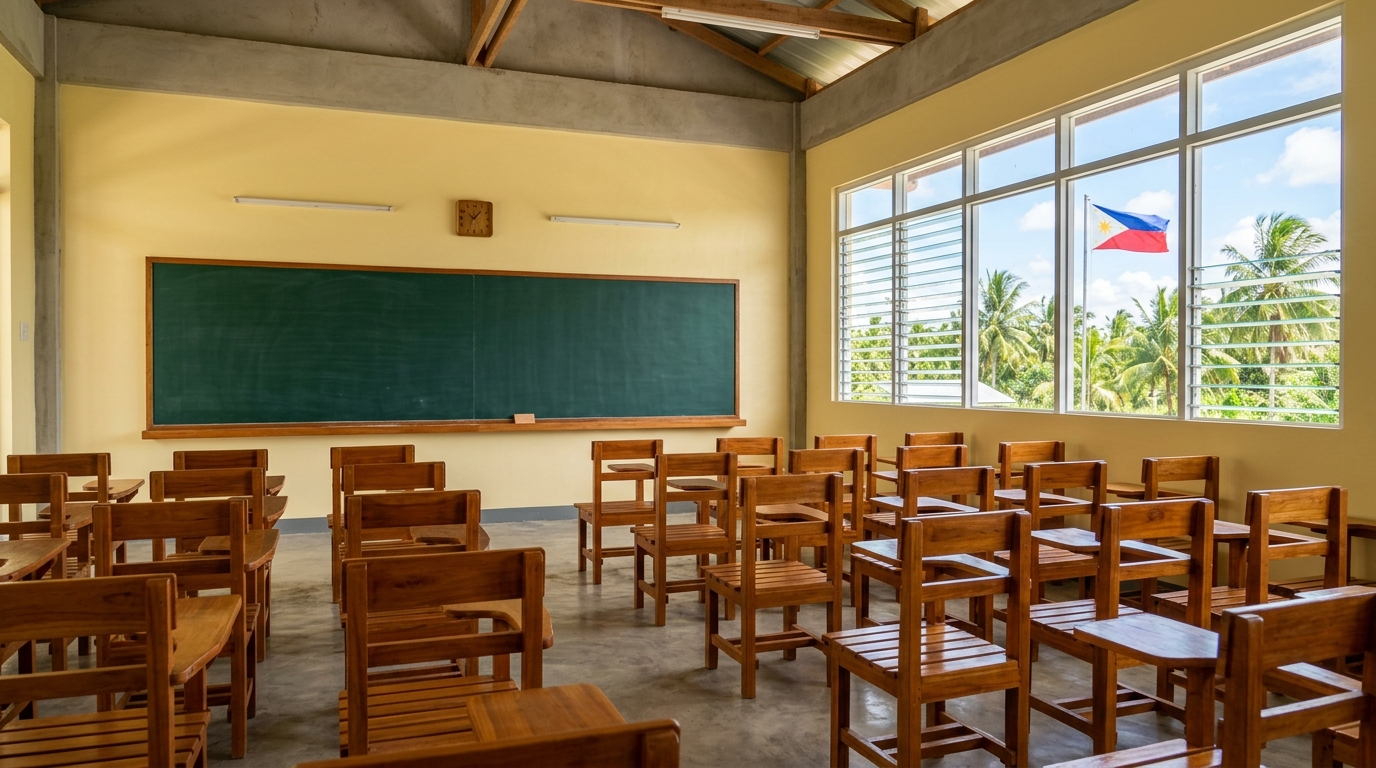
The new facility is not a utilitarian shed. Each of the six classrooms is equipped with its own comfort room, a feature that the provincial government has made standard across its school building program. The design prioritizes student safety, ventilation, and a learning environment that treats children as something more than occupants of a space. Construction began in January 2025 and reached completion in December of the same year—a timeline that reflects efficient project management and the absence of the delays that have plagued classroom construction in other provinces.
The Minalin inauguration follows an accelerating pattern. In January 2026, Vice Governor Pineda inaugurated a nearly identical ₱11‑million, six‑classroom building at Pandacaqui Resettlement Elementary School in Mexico town, where a large student population had been straining existing facilities. Three weeks earlier, the provincial government had cut ribbons on more than ₱50.2 million worth of school buildings across Arayat, including a new building at Arayat National High School, additional classrooms at Justino Sevilla High School, and new facilities at Suclayin Elementary School, San Juan Baño Elementary School, and San Juan Baño High School. An ₱8.8‑million technical‑vocational building at San Vicente Pilot School for Philippine Craftsmen in Barangay Bulaon, serving more than 1,300 students, was also inaugurated in early 2026. The cumulative investment has begun to close a gap that had long seemed immovable.
A Governor's Philosophy, A Vice Governor's Execution
Behind the ribbon‑cuttings stands the partnership between Governor Lilia "Nanay" Pineda and her son, Vice Governor Dennis "Delta" Pineda. Governor Pineda, who has built a province‑wide healthcare network anchored on zero‑balance billing for indigent patients, has extended her infrastructure philosophy to education: build it, build it well, and build it where the need is greatest. Vice Governor Pineda, who served as governor during his mother's congressional term, has become the administration's most visible executor of that vision, traveling from Arayat to Mexico to Minalin to personally hand over each facility.
At the Arayat inauguration in January, Vice Governor Pineda articulated the philosophy underlying the campaign. "Ala kayung dapat tatanawan a utang a lub kekaming manungkulan yu. Obligasyun mi ing i‑assure kekayu na miras la king ustu reng pondu ning gobyernu," he said in Kapampangan—"You should not look at this as a debt to us who are in office. It is our obligation to ensure that government funds reach you properly." The statement, delivered in the language of the communities receiving the buildings, reframed the classrooms not as political favors but as the fulfillment of a contractual duty between government and citizen.
The provincial government's education infrastructure push arrives amid a national classroom crisis that the 2026 budget has attempted to address with an ₱85‑billion allocation for classroom construction and rehabilitation, ₱65.9 billion of which is earmarked for new construction. Senator Bam Aquino has targeted the start of 25,000 classrooms this year, with local government units expected to deliver most of the projects through partnerships aimed at speeding up construction and lowering costs. Pampanga, by using its own funds and managing construction directly, has positioned itself ahead of the curve. The province is also included in the first batch of beneficiaries for PAGCOR's ₱1.4‑billion nationwide school building program, which will deliver 12‑classroom, three‑storey buildings equipped with smart TVs, PWD‑friendly facilities, and free internet to selected LGUs.
The Classroom That Changes the Arithmetic
For Lourdes Elementary School, the new six‑classroom building changes the daily arithmetic of education. Fewer shifts mean longer contact hours between teachers and students. Classrooms with dedicated comfort rooms mean fewer interruptions and a more dignified school experience. The building, modest as it may appear in photographs, is the physical expression of a provincial government that has decided the education of Kapampangan children is not a line item to be minimized but an obligation to be met. As the 2026‑2027 school year approaches, the students of Barangay Lourdes will walk into a building that was not there when they left for summer break. For them, the promise of the provincial government is not a press release. It is a classroom with a comfort room, a chair, a table, and a teacher who no longer has to share the space with a second shift.