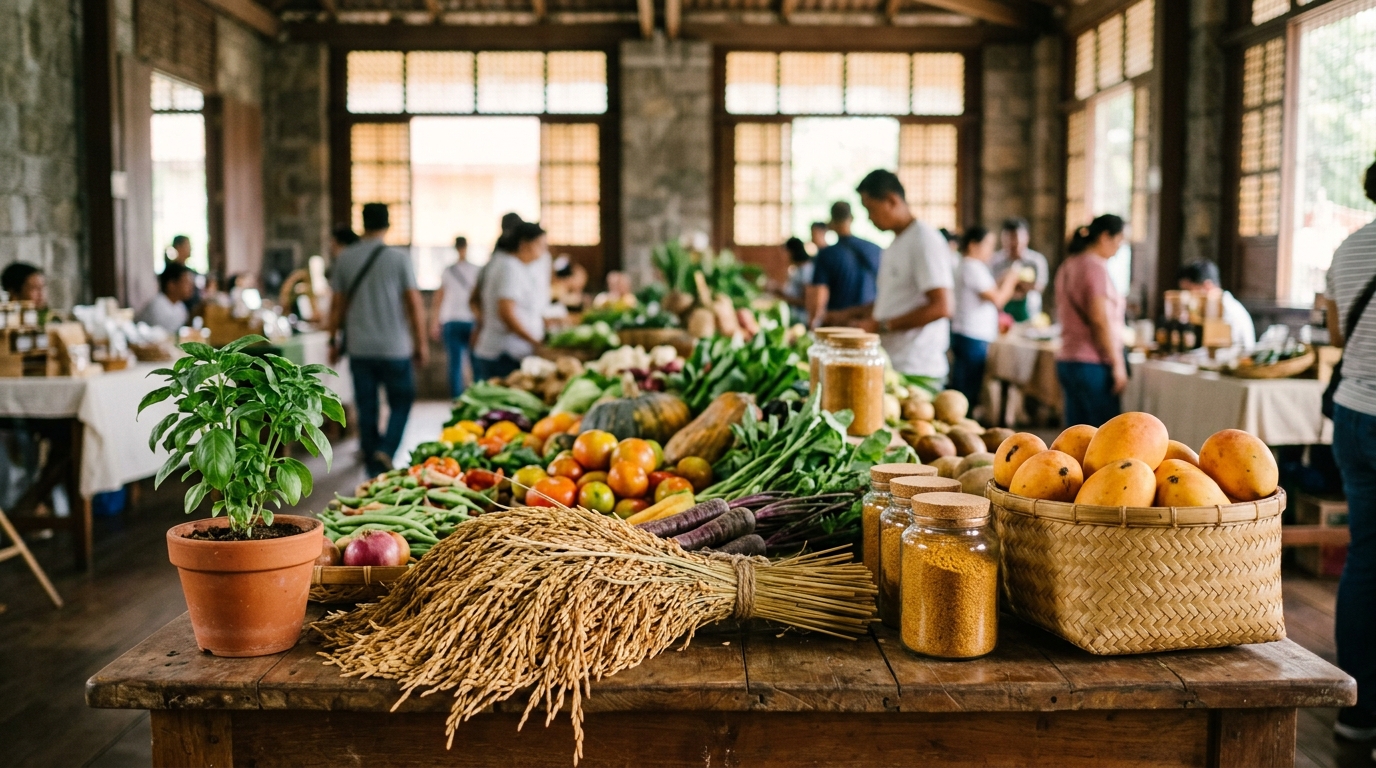
ILOILO CITY — On May 20, 2026, the Casa Real Iloilo—seat of the provincial government and a symbol of Iloilo's institutional maturity—opened its doors not to politicians or property developers but to organic farmers, exhibitors, and agriculture stakeholders from across Western Visayas. The 11th Regional Organic Agriculture Congress, running through May 22, brought together the region's organic farming community for three days of dialogue, product exhibition, and policy alignment. For the property sector, the event carried a quiet but unmistakable signal: Iloilo's farmland is being revalued, and organic certification is emerging as the mechanism that converts agricultural land from a low-yield holding into an appreciating asset.
The congress arrives at a moment when Western Visayas has already exceeded the national benchmark for organic agriculture. Agriculture Regional Technical Director for Research and Regulation Zarlina Cuello reported that 7 percent of the region's effective agricultural area is now engaged in organic farming, surpassing the 5 percent minimum mandated by law. "Organic agriculture remains a key driver for resiliency of agri-food systems, and it is also a pathway for enhancing local communities because our focus is rural communities, the small holder farmers," Cuello said. "Under the environmental and social governance, this organic agriculture is very important for the health of the people as well as the economic stability of the region." The statement, delivered at a media conference on the congress's opening day, frames organic agriculture as both a health intervention and an economic stabilizer—two functions that directly influence land valuation in the province's agricultural municipalities.
A Certification That Triples the Farmgate Price
The real estate connection between organic farming and property values is neither theoretical nor sentimental. Under the Participatory Guarantee System, a community-based organic certification process backed by technical assistance from the Department of Agriculture, accredited farmer groups may receive up to PHP5 million worth of support depending on their proposed projects and operational needs. Once certified, organic produce commands significantly higher farmgate prices than conventionally grown equivalents—a premium that flows directly into household income and, over time, into home improvements, lot acquisitions, and the incremental upgrades that convert informal rural dwellings into titled, bankable properties.
Cuello acknowledged the transition costs that have historically deterred farmers from converting to organic methods. Farmers shifting from synthetic inputs to organic practices usually experience yield gaps ranging from 10 to 30 percent compared to conventional farming, with significant improvements appearing only around the fifth year as damaged or nutrient-deficient soils recover. "In many cases, they are starting from barren or unfertilized soil conditions, so rebuilding soil health takes time," she said. But the long-term arithmetic favors the farmer who perseveres: lower input costs, premium pricing, and soil that appreciates rather than degrades with each planting cycle. For the landowner, organic certification functions as a de facto title upgrade—a designation that distinguishes a parcel from the undifferentiated mass of conventional farmland and attracts buyers willing to pay for provenance.
Western Visayas Regional Agri-Fishery Council head Buen Mondejar urged the Department of Agriculture to quantify these benefits through comparative studies of the same commodity, area, and ecosystem using different technologies. "As of now, we are proud that we are one of the regions that is sufficient, especially in rice. So, I think we can afford to practice organic farming because we are a self-sufficient region," he said. The assertion of food self-sufficiency is not merely an agricultural statistic. It is a variable that agri-tourism investors, farm-lot developers, and residential land bankers increasingly track when evaluating where to deploy capital in Iloilo's rapidly appreciating property market.
Where Farmland Meets the Township Boom
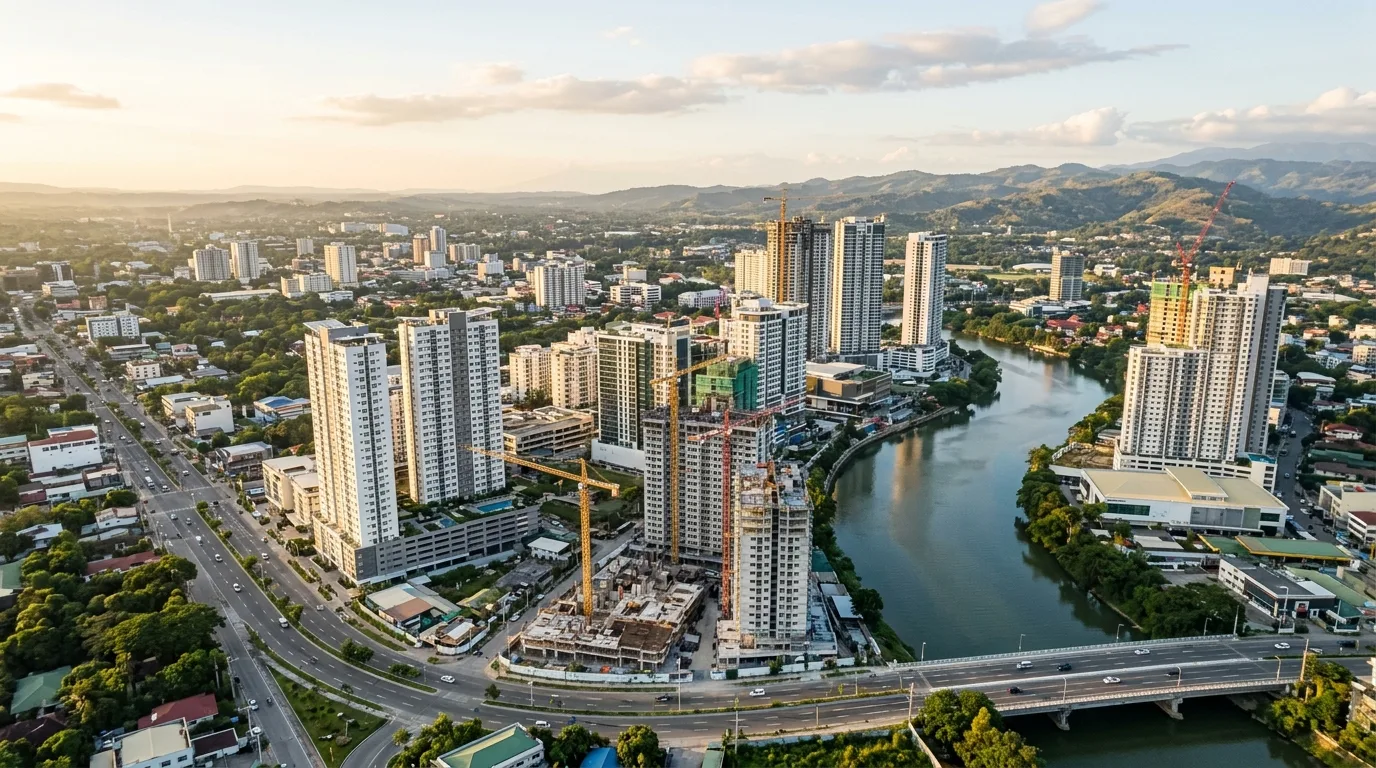
The organic congress takes place inside a province whose real estate fundamentals are the strongest outside Metro Manila. Colliers Philippines reported in its first-quarter 2026 briefing that Iloilo City's house-and-lot take-up rate reached 96 percent—the highest in the Visayas-Mindanao region—while condominium take-up stood at 89 percent. The city has outpaced Metro Cebu in total occupied office transactions, and Western Visayas posted 6.4 percent economic growth in 2025, the fastest among the country's 18 regions. These figures describe an urban property market operating at near-maximum absorption, but they also describe the pressure pushing developers and investors to look beyond the city limits.
The municipalities that surround Iloilo City—Oton, Pavia, Leganes, Tigbauan, and Pototan—have absorbed substantial residential spillover from the urban core. These same municipalities contain the farmland where organic agriculture is taking root. A parcel of certified organic farmland in Tigbauan or Pototan, where the Provincial Assessor has proposed new Schedules of Market Values for 2026, carries a dual-use value: it can continue producing premium-priced organic crops, or it can be converted—subject to zoning and regulatory approval—into the kind of residential subdivision that Iloilo's 96 percent house-and-lot absorption rate demands. Organic certification does not guarantee conversion approval, but it does guarantee that the land has been stewarded rather than depleted, making it more attractive to developers whose marketing materials increasingly feature wellness, sustainability, and farm-to-table living.
The congress itself, by drawing farmers, exhibitors, and stakeholders to Casa Real Iloilo for three days, functions as a microcosm of Iloilo's MICE economy. Every delegate who travels from Capiz, Antique, or Guimaras to attend the congress occupies a hotel room, eats at a local restaurant, and purchases goods from the organic product exhibit. The broader agri-tourism trend—farm lots and organic farm resorts—has been identified as one of the fastest-growing segments in Philippine real estate, appealing to buyers seeking a piece of productive land that generates income while serving as a weekend retreat. Iloilo, with its 7 percent organic farming coverage and its self-sufficient rice economy, is well positioned to capture that demand.
Bridging the Gap Between City and Countryside
The congress arrives at a moment when the contrast between Iloilo City's urban prosperity and its rural hinterlands has become the subject of pointed public commentary. A recent editorial in this paper observed that "Iloilo City enjoys rapid real estate appreciation, while many rural communities remain dependent on agriculture sectors vulnerable to climate change, fluctuating market prices, and outdated farming systems." The observation identifies a structural imbalance that organic agriculture, with its premium pricing and its emphasis on soil health and sustainability, is designed to address. A farmer who transitions to organic methods and receives PGS certification is no longer a price-taker in a commodity market but a supplier to a differentiated, higher-value segment—and the income gains that result narrow the gap between rural and urban household purchasing power.
Cuello noted that Iloilo and nearby provinces "have strong potential for expanding organic agriculture because of existing markets and available agricultural resources." The phrase "existing markets" refers not only to the wet markets and supermarkets that sell organic produce at a premium but also to the hotels, restaurants, and institutional buyers that Iloilo City's tourism and MICE sectors have cultivated. The farm-to-table linkages that the city government strengthened through its first-ever Farmers Congress in February 2026 now extend naturally to organic producers, creating a distribution chain that rewards certification with consistent demand. For the property investor, that distribution chain is a form of infrastructure—one that makes organic farmland in Iloilo more valuable not only for what it produces but for the market access that surrounds it.