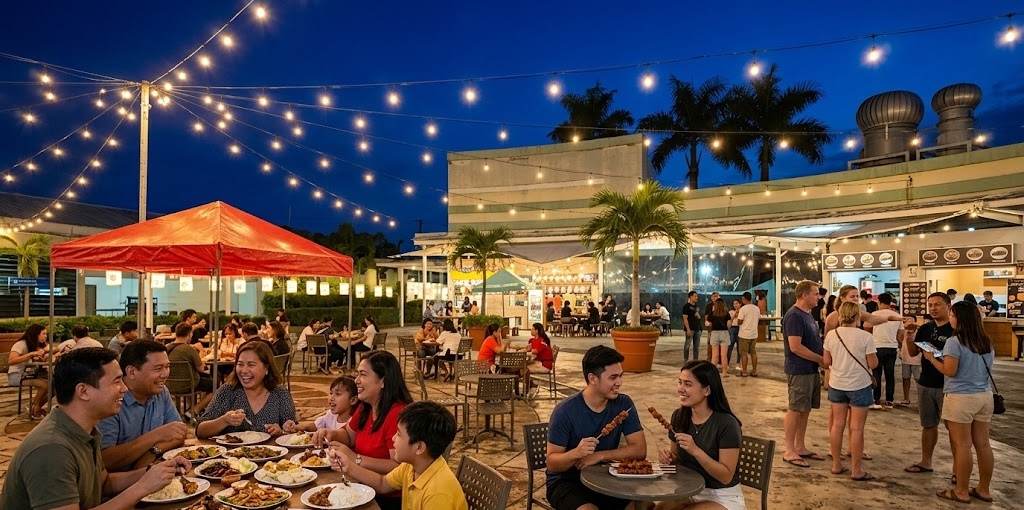
Food parks solve one common social problem: everyone wants something different. One person orders grilled food while another buys desserts or milk tea from nearby stalls without separating the group entirely. The setup removes pressure around deciding where to eat. Bacolod diners enjoy that flexibility. Shared space matters more than uniform orders.
Unlike restaurants where pacing sometimes feels controlled, food parks encourage movement, longer stays, and spontaneous interactions between groups. Customers wander, change tables, or continue talking long after finishing meals. The environment feels socially open. Bacolod nightlife often works best through relaxed structure. People stay because they feel free to.
Visitors often appreciate food parks because they reveal how residents actually spend evenings casually. The atmosphere combines food, conversation, music, and movement without requiring elaborate planning. Travelers also discover more local vendors in one location. Dining becomes exploratory rather than fixed. The experience feels socially alive.