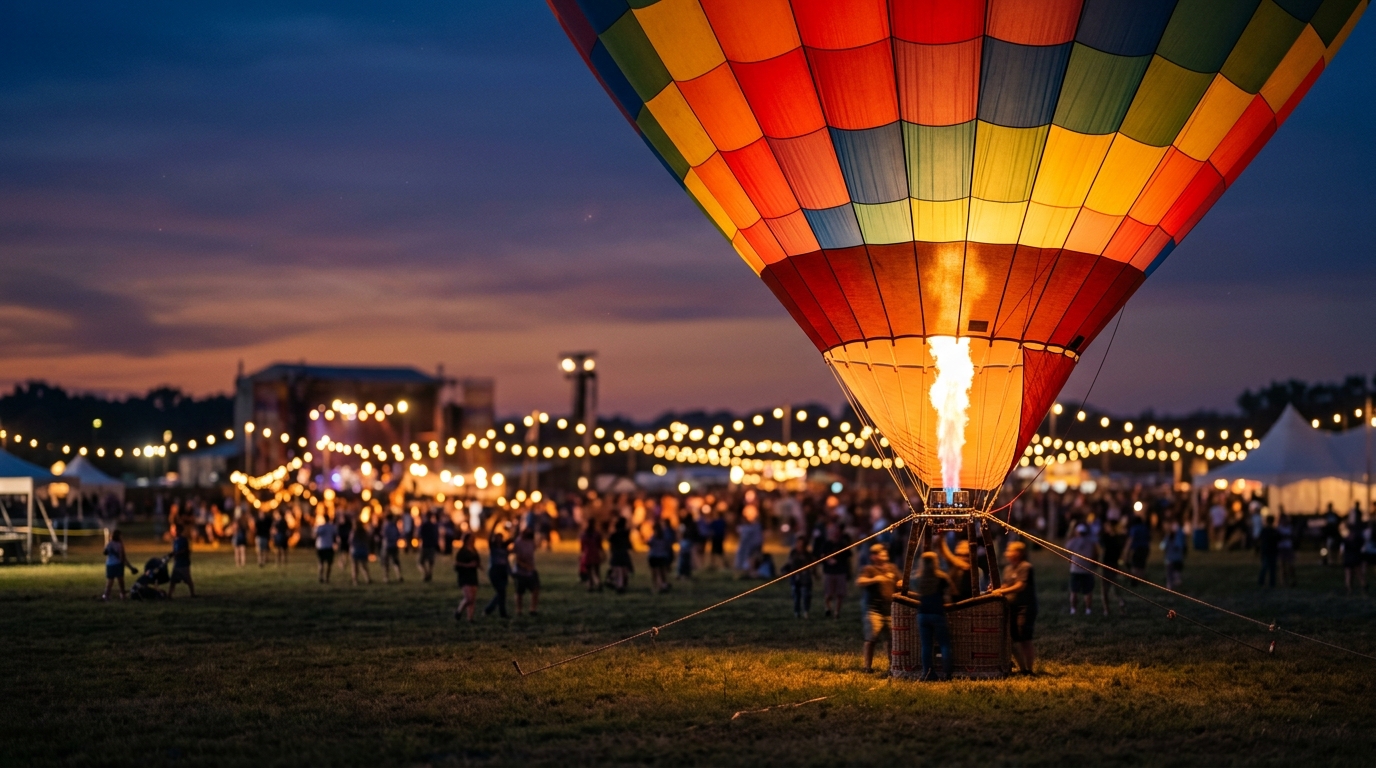
PAMPANGA — For two days in early May, the wide‑open grounds of Clark Global City became a canvas painted with the colors of soaring balloons, the sound of chart‑topping OPM, and the scent of sizzling Kapampangan sisig. Thousands of festival‑goers from across Luzon and beyond converged on the former military airbase for a hot air balloon and music festival that featured free tethered balloon rides, live performances, and interactive attractions—a lineup engineered to appeal to families, couples, and first‑time visitors alike. The event, held on May 2 and 3, 2026, reinforced Clark's transformation into one of the country's most reliable venues for large‑scale, tourism‑anchored gatherings. "First time ko kasing makita 'yung hot air balloons so kaya na ano ako… very good experience," said Rodel Chan, who traveled from Quezon City specifically for the festival.
The festival's architecture was deliberately inclusive. Free tethered balloon rides—a rarity at ticketed events—gave hundreds of visitors their first experience of flight, many of them children who had never seen a hot air balloon outside of a screen. Live OPM performances anchored the musical program, with festival‑goers singing along to hits performed by a lineup that included SB19, IV Of Spades, Sarah Geronimo, and SexBomb—a multi‑generational roster that drew teenagers and their parents in equal measure. Interactive booths invited participation rather than passive consumption, while Kapampangan food stalls turned the festival grounds into a culinary showcase for the province whose cuisine has long been regarded as among the country's finest. Organizers capped the two‑day celebration with a fireworks display that illuminated the Clark skyline on Sunday evening, sending festival‑goers home with a closing image designed for Instagram.
A Festival That Keeps Growing
Jon Gates, a hot air balloon pilot and repeat participant, offered the simplest explanation for the festival's staying power. "I always keep coming back because I like it, I love the people. This event is growing year by year," he said. "Every time we bring the balloon up I can see happy, smiling people and that makes it all worthwhile." The sentiment captures what distinguishes a sustainable tourism event from a one‑off spectacle: repeat visitors, positive word‑of‑mouth, and the kind of emotional resonance that converts a curious first‑timer into a returning attendee.
The 2026 edition, organized by Epic Events, marked the festival's fifth anniversary—a milestone that has seen it grow from a niche aviation‑themed gathering into a comprehensive lifestyle event. The Aurora Music Festival, as it is formally branded, has been described as an "unofficial local version of Coachella in the desert," with the vast open terrain of Clark Global City standing in for the California desert. The comparison is not merely flattering. It reflects the festival's strategic use of a venue that offers something increasingly rare in Philippine event hosting: space. Clark's wide, flat landscape, engineered for aviation, now accommodates tens of thousands of attendees, multiple balloon launch sites, and the kind of expansive crowd flow that dense urban festivals cannot replicate. The 26th Philippine International Hot Air Balloon Fiesta in February 2026 drew nearly 30,000 visitors, demonstrating the area's capacity for large‑scale aviation events.
Clark's Tourism Ecosystem Deepens
The hot air balloon festival does not stand alone. It arrives as Clark assembles the components of a comprehensive tourism and MICE ecosystem. The Clark International Convention Center, the 4,100‑room hotel inventory now being expanded by Korean investor JnH Philippines Development Corporation's ₱840‑million mixed‑use project, and the recently opened Pampanga Provincial Hospital–Clark each add a layer of infrastructure that makes the Freeport increasingly competitive for major events. A two‑day festival that draws thousands of overnight visitors fills hotel rooms, books restaurants, and generates spending that ripples through the local economy.
The Bases Conversion and Development Authority, which oversees New Clark City, has explicitly framed large‑scale public events as drivers of the national government's push to convert former military lands into accessible, revenue‑generating tourism assets. Governor Christian Yap of Tarlac highlighted the broader economic and social gains: increased activity for hotels, tour operators, and small businesses across the province. For the festival‑goer who sampled Kapampangan food at a stall, then returned weeks later with family to explore the Lubao Bamboo Hub or the hot springs of Puning, the festival functioned as a gateway—an introduction to a province whose tourism offerings extend well beyond a single weekend of balloons and music.
A Destination That Flies Year‑Round
The two‑day festival's success is not merely a story of attendance figures. It is a story of what happens when a destination invests in the infrastructure—airports, roads, hotels, convention centers, and open public spaces—that can support events of escalating ambition. Clark is no longer the place where the hot air balloon festival happens. It is becoming the place where the hot air balloon festival happens, and the football festival, and the international cycling race, and the MICE convention, and the music festival, each event reinforcing the destination's reputation and preparing the ground for the next.
For the visitor who rode a tethered balloon for the first time, who ate sisig under the shadow of a slowly deflating balloon, and who watched fireworks burst over the Clark skyline, the experience was not simply a festival. It was a destination making its case—not through slogans or marketing campaigns but through the lived experience of a weekend spent watching things fly. Pampanga, long celebrated for its food, is now building a reputation for its festivals. The hot air balloons are not merely decorative. They are the province's argument, rising silently into the May sky, that this is a place worth coming back to.