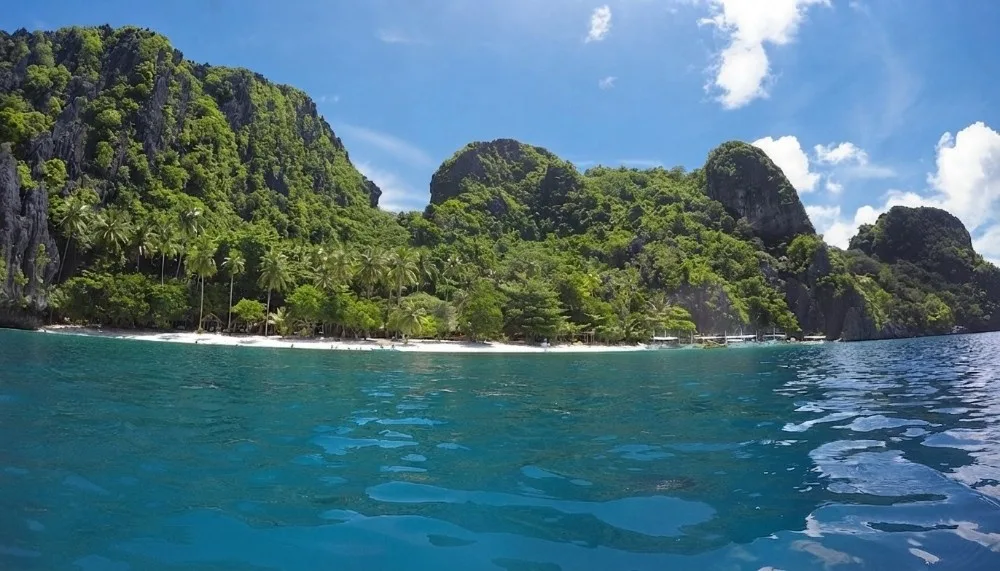
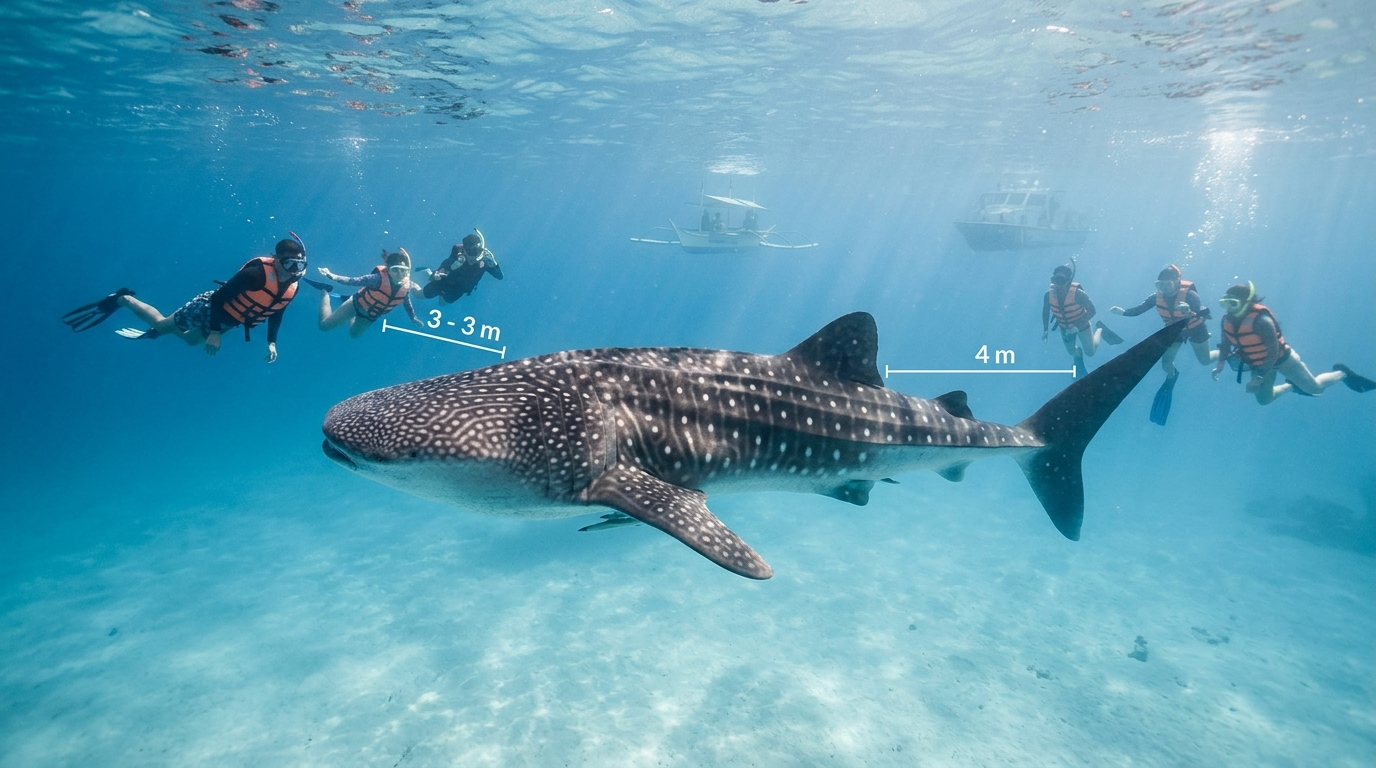
Bohol — The Provincial Capitol implemented an advanced protection framework across the southern coastal towns of Loay and Alburquerque to shield visiting whale shark populations from environmental stress. The newly signed implementing rules and regulations of Provincial Ordinance No. 2026-004 establish strict space requirements that tour operators must maintain during daily wildlife excursions. Under the updated legal rules, swimming arrivals must keep a mandatory distance of at least three meters from the marine mammal's body and four meters from its tail section. This policy update represents a direct effort to transition the island’s expanding marine wildlife market into a non-disruptive, highly ethical eco-tourism model.
Banning Artificial Feeding Paths to Restore Natural Hunting Instincts
A central component of the new environmental regulation is the absolute, non-negotiable ban on feeding whale sharks to attract them closer to tourist boats. Conservation scientists have continuously warned that artificial feeding patterns disrupt the natural migration habits of these gentle marine giants, making them dependent on human interaction for daily food. By forcing the animals to find food naturally in open waters, the province ensures that the local marine ecosystem maintains its biological balance. Local boat captains are transitioning their operations to focus on natural observation tours, which teach travelers to appreciate wildlife without altering natural animal behavior.
Dividing the Blue Waters into Organized Action Zones
To prevent multiple motorized boats from crowding around a single animal, the updated framework introduces a strict spatial zoning system across the municipal waters. Specific coordinates have been split into designated interaction circles, waiting boxes for incoming paddle boats, and absolute no-contact sanctuaries where human entry is completely prohibited. Maritime patrol units are monitoring the viewing spaces daily to ensure that unaccredited vessels do not cross into the preservation zones. This organized layout reduces water noise and minimizes the risk of accidental boat propeller strikes on the skin of the whale sharks.
Securing Global Scientific Praise for Countryside Eco Tourism
The strict implementation of the marine wildlife ordinance helps protect the province's standing as a premier destination for responsible international eco-tourism. International marine biology associations track these local conservation policies closely, and staying obedient to global animal welfare rules helps local operators attract conscious travelers who value environmental care. The provincial board plans to host free educational seminars next week to train local boat operators on advanced wildlife tracking and emergency marine first aid. This supportive approach helps the local community protect its natural coastal assets while securing long-term tourism jobs.