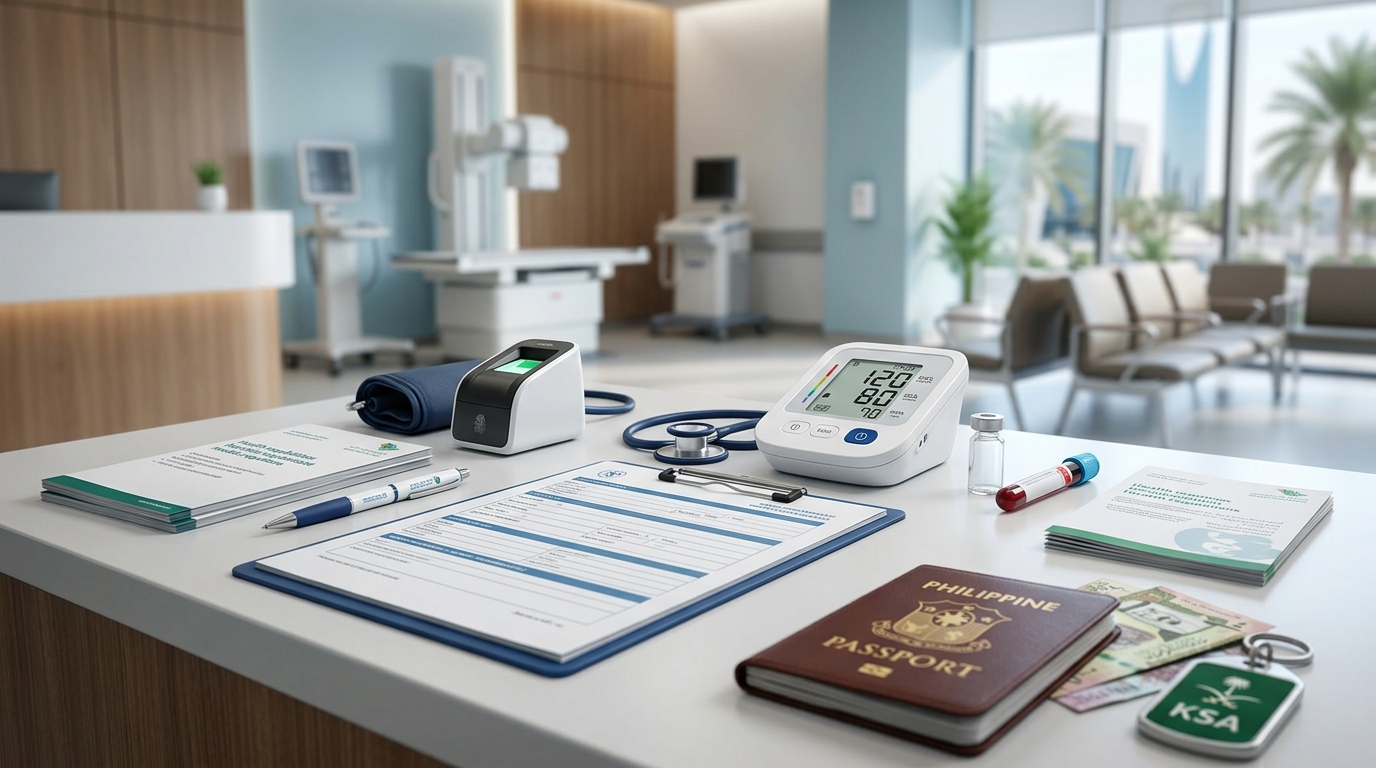
Philippines — Saudi Arabia has commenced enforcement of mandatory occupational fitness examinations for all workers within the Kingdom, a regulatory shift that directly affects hundreds of thousands of Filipino overseas workers. The new mandate prioritizes health and safety across every industry.
A New Era of Worker Safety
The Regulation for Occupational Fitness Examinations and Non‑Communicable Diseases Examinations officially took effect on April 22, 2026. It requires comprehensive health assessments to determine a worker’s physical and mental suitability for specific job roles. The Saudi Ministry of Human Resources and Social Development now links employment directly to verified wellness.
Employers must ensure their entire workforce meets these benchmarks. The initiative is designed to reduce workplace accidents, boost productivity, and safeguard the long‑term well‑being of the Kingdom’s diverse labor force. For Filipino migrants, the message is clear: good health is now a professional asset.
The Three‑Phase Rollout Plan
The government has structured implementation across three distinct phases to avoid labor market disruption. Phase 1 focuses on pre‑employment screenings for all new hires starting mid‑2026. Employers must upload fitness results to an electronic system before a recruit can begin work.
Phase 2, spanning the next twelve months, expands screenings to existing employees in high‑risk industries like construction and manufacturing. Phase 3 achieves universal enforcement by mid‑2027, covering permanent, temporary, seasonal, and even remote workers. Every contract type eventually falls under the mandate.
Beyond Basic Medical Tests
The screenings go far deeper than standard visa medicals. Workers over forty must undergo electrocardiograms, while all employees face chest X‑rays, audiometry, and musculoskeletal evaluations. The regulation also explicitly includes mental and psychological fitness assessments.
A major focus is the early detection of non‑communicable diseases. Cardiovascular conditions, diabetes, chronic respiratory illnesses, and cancers are screened because they could endanger workplace safety. The framework aligns with international standards from the World Health Organization and the International Labour Organization.
What Failure Means for OFWs
A critical protection is embedded in the law: failing the test does not automatically mean termination or deportation. If a worker cannot meet the fitness requirements for their current position, the employer is legally obligated to find alternative measures. Reassignment to a more suitable role is the first required step.
Workers also have the right to request exceptional medical examinations to prove their capability for alternative duties. This nuance offers a safety net for Filipinos who may develop health conditions while abroad. The Philippine Migrant Workers Office is expected to provide direct guidance as the phases progress.
Staying Ahead of the Curve
Filipino workers should prioritize regular health check‑ups even before departing for Saudi Arabia. Keeping personal medical records updated and understanding one’s own fitness level can prevent surprises during mandated screenings. Proactive health management is now a career strategy.
The Philippine Embassy and labor attachés will interface with Saudi Arabia’s electronic health system to protect OFW rights and ensure fair implementation. Staying informed through official government channels is crucial as the regulation expands. Preparedness and transparency will define a smooth transition for the Filipino workforce in the Kingdom.