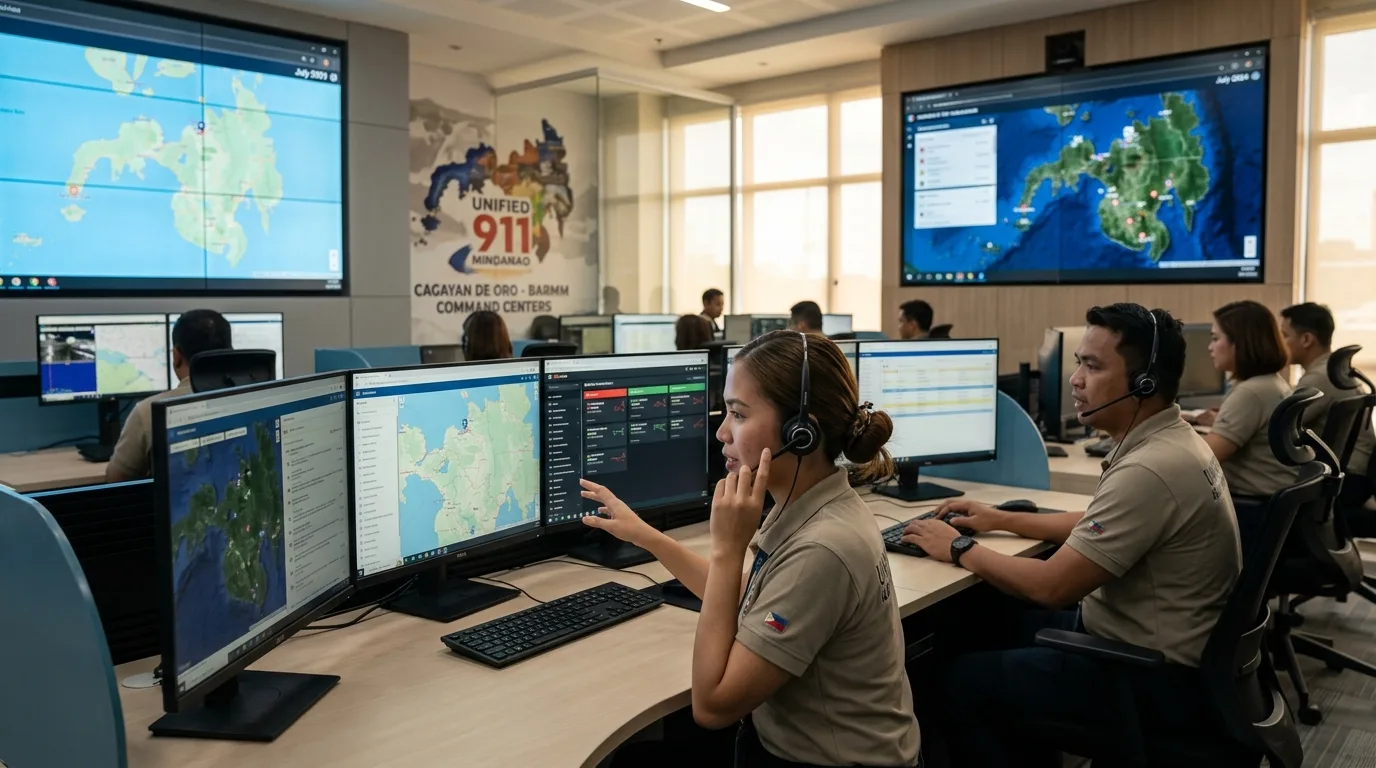
CAGAYAN DE ORO — The Philippines’ emergency response landscape is undergoing a major transformation as the Unified 911 system expands into Mindanao this July 2026. Two new, highly advanced satellite command centers are set to open in Cagayan de Oro City and the Bangsamoro Autonomous Region in Muslim Mindanao (BARMM). By integrating these hubs into the existing national network, the government aims to eliminate communication barriers and drastically reduce response times. This rollout builds upon the successful activation of earlier command centers in Luzon and the Visayas, signaling a unified, nationwide effort to provide efficient, life-saving assistance to every Filipino citizen.
Breaking Language Barriers for Faster Action
The core innovation of the new Mindanao command centers is their ability to process emergency calls in local dialects, including Bisaya, Maranao, Iranun, Maguindanao, Tausug, and Yakan. Interior Secretary Jonvic Remulla emphasized that by ensuring telecommunicators can speak the local language, the system removes critical delays caused by confusion or miscommunication during high-stress situations. Local officials like Fire Chief Inspector Espiridion Ganibe of BARMM and Fire Chief Inspector Willie M. Tan Jr. of Cagayan de Oro noted that their teams are deeply familiar with local landmarks and road networks. This local knowledge allows for more accurate data collection and faster dispatch of police, fire, or medical responders, ensuring help reaches the right location without unnecessary hesitation.
Building a Truly Nationwide Emergency Network
These new hubs are fully integrated into the national Unified 911 network, creating a seamless emergency coordination loop that connects Mindanao to the National Command Center in Metro Manila, the Regional Command Center in Cebu, and existing satellite hubs in Ilocos and the Visayas. This connectivity is vital for managing large-scale disasters, severe weather events, or multiple simultaneous emergencies, as information and resources can now be shared in real time across the entire country. Looking ahead, the government plans to continue this momentum, with additional centers in Pampanga and Camarines Sur scheduled to launch in the third quarter of 2026. By consolidating over 200 fragmented hotlines into one toll-free, 24/7 network supported by next-generation location tracking, the Philippines is setting a new standard for modern, community-centered emergency care.