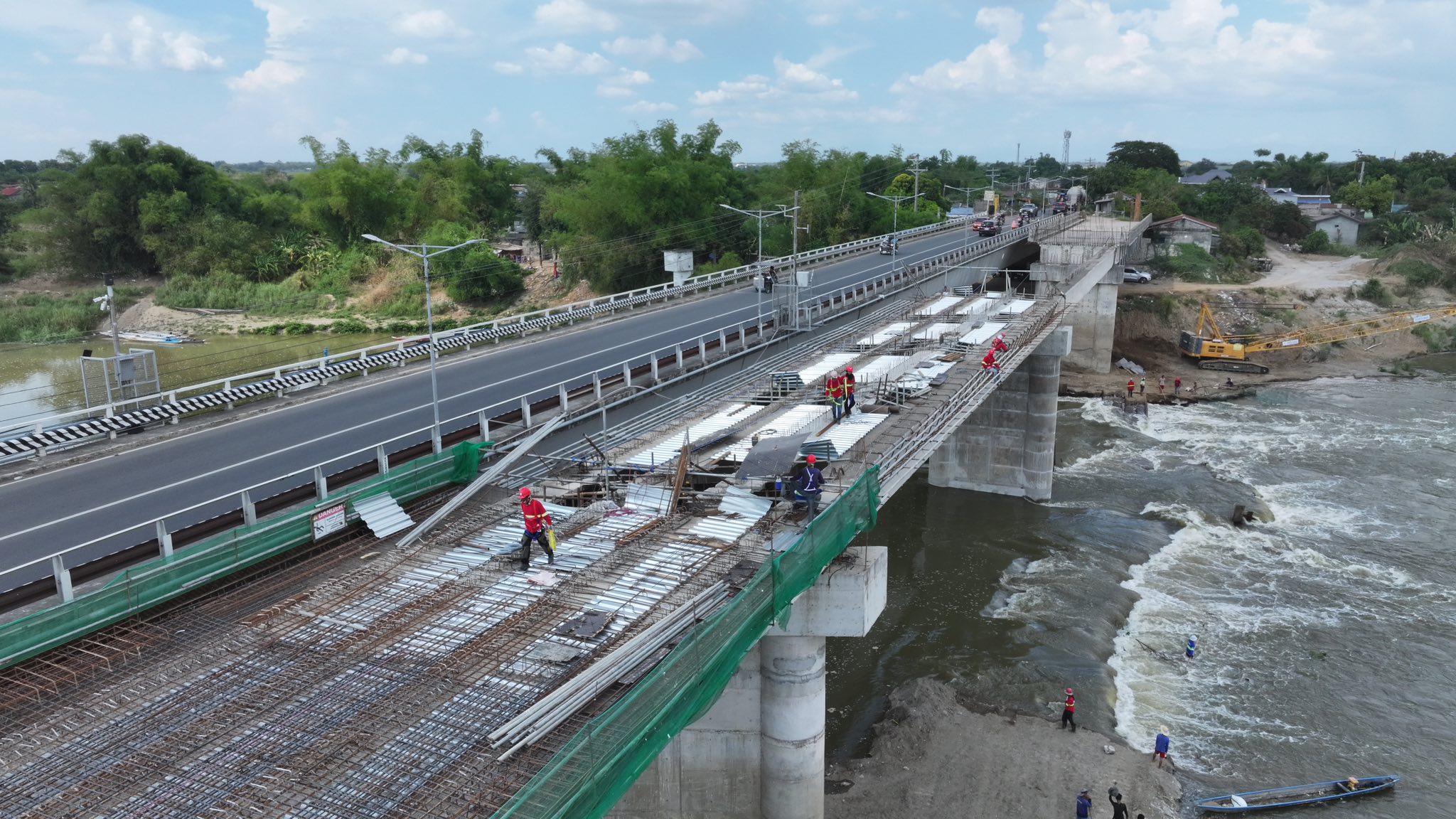
PAMPANGA — The wire mesh cages now being filled with stones along a battered stretch of the Pampanga River carry a quiet declaration: the era of substandard dikes is over. On May 21, 2026, Department of Public Works and Highways Secretary Vince Dizon stood at the Candating flood control project in Barangay Candating and announced that the agency had begun building gabion walls—structures made of rock-filled wire cages designed to prevent soil erosion and riverbank collapse—to replace the repeatedly failing concrete dike that had collapsed three times since 2024, destroying more than 20 riverside homes. The shift marks the department's most visible pivot toward nature-based flood control solutions, a departure from the gray infrastructure approach that had long characterized Philippine river management.
The Candating dike had become a symbol of systemic failure. The project, which received approximately P295 million in cumulative government funding across various phases, collapsed most recently over the weekend of January 24–25, 2026, despite the absence of heavy rainfall. "First of all, it seems that the flood control design in Barangay Candating in Arayat is not really correct. If you remember, we forced the contractor to fix it because the foundations were collapsing. So until now, they have not fixed it properly," Dizon had said in January. By May, his language had shifted from investigation to action. "Yun yung ginagawa natin ngayon na immediate… Hindi tayo titigil sa trabaho natin at yung mga project natin, hindi tulad ng dati. Hindi na yan substandard, hindi na yan ghost," he said during the onsite inspection.
A River Community That Refused to Be Abandoned
The gabion wall project is only one layer of a multi-pronged government response. In coordination with the local government unit and the National Housing Authority, the DPWH has begun preparations to relocate approximately 25 families living within the danger zone along the Pampanga River before the onset of the rainy season. "Kailangan ipaliwanag sa mga kababayan natin na merong mga lugar na malapit sa ilog na talagang delikado at hindi dapat nagtatayo ng bahay. Nakikipagtulungan naman ang national government sa LGU para maalagaan naman yung madi-displace," Dizon said.
The relocation plan addresses a problem that had compounded the structural failures of the original dike. Houses had been built along the riverbank in an area covered by no-build zone regulations, placing families directly in the path of floodwaters every time the concrete barrier failed. Dizon, who had inspected the area in February and questioned how those homes were allowed to stand, has since strengthened coordination with local governments to enforce river easement rules strictly. "Magdi-desisyon tayo dito. Baka kailangan muna nating mag-declare ng danger zone dahil sa nakita natin last week," he had said after the January collapse. By May, the decision had been made, and the families were being moved.
The nature-based approach embodied by the gabion walls represents a broader shift in how the Philippines designs its flood control infrastructure. Gabion walls, unlike concrete barriers, allow water to filter through while holding back soil, reducing the hydraulic pressure that can undermine rigid structures. They are also significantly less expensive than concrete alternatives and can be installed more quickly, making them particularly suitable for emergency interventions like Candating. The DPWH's move aligns with the advocacy of Senator Loren Legarda, who had pushed during the 2026 budget deliberations for a dedicated Nature-Based Solutions Costing Framework that would establish standardized unit costs, design templates, and material benchmarks for ecological and hybrid infrastructure. "If DPWH fails to integrate these into its costing, we are missing the opportunity to build smarter, greener infrastructure," Legarda had said.
Beyond Candating: Five Dams and a River That Will Be Tamed from Above
The gabion walls at Candating are not the endpoint of the DPWH's vision for the Pampanga River. Dizon announced that by 2027, the department will expand its focus to upstream interventions, with plans for five dams and detention basins designed to capture and slow water flow before it reaches the low-lying communities of Arayat and beyond. "Meron tayong limang dam at detention basins na gagawin… Malaki ang maitutulong nun kasi doon pa lang sa taas, napipigilan na niya yung daloy ng tubig pababa dito," Dizon said.
During his May 21 inspection, Dizon also visited the ongoing repairs on the Cupang dike, another flood control structure damaged by storms in 2025. The agency aims to complete the installation of 24-meter sheet piles at that site within two weeks, part of a broader push to complete all unfinished flood control projects that had been stalled by the 2025 budget controversy that froze funding for new initiatives. The DPWH had announced in January 2026 that it would focus on completing existing projects rather than launching new ones, a decision that followed revelations of anomalous flood control contracts and a Senate investigation.
Vice Governor Dennis Pineda joined Dizon during the inspection, reinforcing the coordination between national and local government units that had been absent during the original dike's construction. The DPWH had earlier identified the contractor, Eddmari Construction and Trading, and referred findings to the Office of the Ombudsman and the Department of Justice for prosecution. For the families of Barangay Candating, the gabion walls rising along the riverbank are the first visible evidence that the government's commitment to flood control has shifted from words to wire and stone. The work is not finished, but it has begun—and unlike the concrete that crumbled before it, this time the design is built to last.