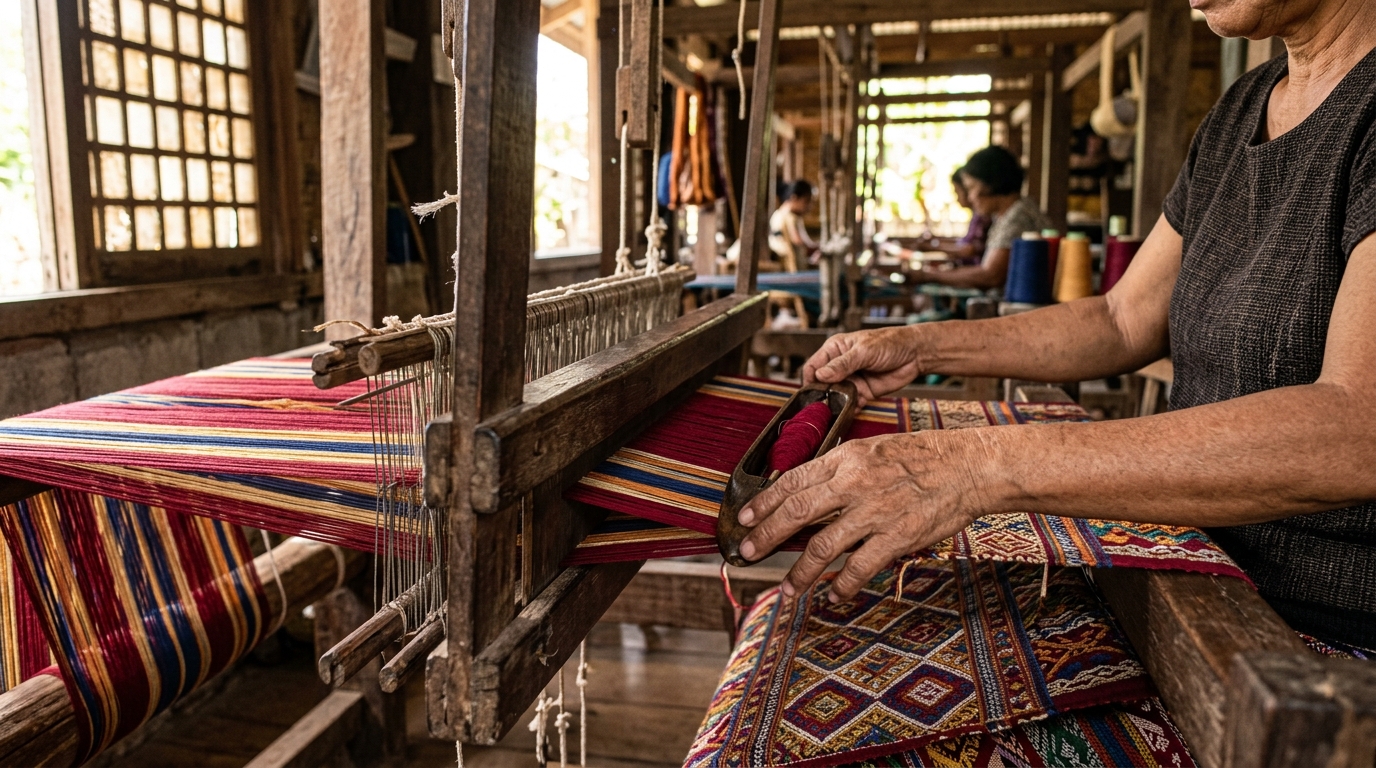
ILOILO CITY — An ancient textile tradition that once accounted for half of Iloilo’s provincial exports is being stitched back into the city’s economic fabric. The Department of the Interior and Local Government Region VI has awarded the Iloilo City Government a plaque of recognition and a ₱750,000 incentive for its SIGE Asenso Program, a community‑based livelihood initiative that trains Ilonggo women in the pre‑colonial craft of hablon weaving. Mayor Raisa Treñas accepted the honor under the DILG’s Sustainable Development Goal Achievement Champions and Exemplars program, which recognizes local government units that implement innovative, sustainable, and community‑centered initiatives.
The award specifically cited the program’s alignment with SDG 8 on Decent Work and Economic Growth. Treñas confirmed the ₱750,000 incentive will fund a dedicated weaving production facility in the city, expanding income‑generating opportunities while safeguarding the cultural heritage embedded in every hablon thread. Under the initiative, 30 women from homeowners’ associations in So‑oc have already completed training in hablon weaving and basic entrepreneurship. The program is implemented through the Local Economic Development and Enterprise Office in partnership with the Iloilo City Local Housing Office, Arevalo Handwoven Products, and the Department of Social Welfare and Development.
A Pre‑Colonial Art Form Gets a 21st‑Century Lifeline
Hablon—derived from the Hiligaynon word habol, meaning to weave—has been practiced on Panay Island since before Spanish colonization. By the 1850s, handwoven textiles from Iloilo accounted for roughly half of the province’s exports, making the region the undisputed textile capital of the Philippines. The industry collapsed in the 20th century under the weight of mass‑produced synthetic fabrics, and for decades the handlooms fell silent.
The SIGE Asenso Program reverses that decline. The 30 women trained in So‑oc learned not only the technical skill of operating a handloom but also basic entrepreneurship. Treñas emphasized that empowering women through skills training and livelihood support plays an important role in improving household income and building stronger communities. The planned weaving production facility will give graduates a permanent workspace, access to better equipment, and a direct route to the growing market for sustainably made, culturally authentic textiles. The city government has described the program as one that “aims to preserve and promote traditional Ilonggo craftsmanship by encouraging communities to continue the hablon weaving practice, a cultural heritage deeply rooted in Iloilo.”
A Weaving Revival That Strengthens the Local Economy
The SIGE Asenso award forms part of a broader push by the Iloilo City Government to embed livelihood creation into its governance framework. The same week the DILG recognition was announced, the city launched the pioneering Barangay Academy for Public Service and Development, a first‑of‑its‑kind training program in Western Visayas designed to professionalize grassroots governance. DILG Region 6 Director Juan Jovian Ingeniero, who witnessed the academy launch, praised the city’s swift action on community‑focused reforms.
The weaving facility, once operational, is expected to attract visitors interested in cultural tourism. Travelers already visit the province’s weaving communities in Miag‑ao and Arevalo to watch artisans at work and purchase directly from the loom. A city‑based production center brings that experience closer to the hotels, restaurants, and markets that draw tourists to Iloilo City. For the 30 women who have completed their training, the facility represents both a workplace and a bridge between the craft of their ancestors and the economy of tomorrow.