As of April 7, 2026, Metro Cebu’s property market is navigating a complex intersection of record-high costs and radical urban reforms. While the city center experiments with new labor models to offset a global energy crisis, the "Satellite Cities" of the north and south are becoming the primary targets for long-term capital.
The defining story of April 2026 is "The Cost of Connectivity." With diesel prices breaching the ₱150 mark, the Cebu City government has officially launched a two-week pilot of the four-day workweek (April 6–17) to reduce operational energy costs. This shift is directly impacting the commercial real estate sector; as firms look to optimize their overhead, the demand for "Smart Offices" in Cebu IT Park—which currently boasts a resilient 14% vacancy rate—is shifting toward buildings with integrated energy-saving systems. Meanwhile, the residential market is feeling the squeeze of a 7.3% inflation rate, prompting the University of Cebu to freeze tuition hikes and the City Council to extend the Real Property Tax Amnesty until July 5, 2026, allowing owners to settle dues before new, market-based valuations under RA 12001 take full effect.
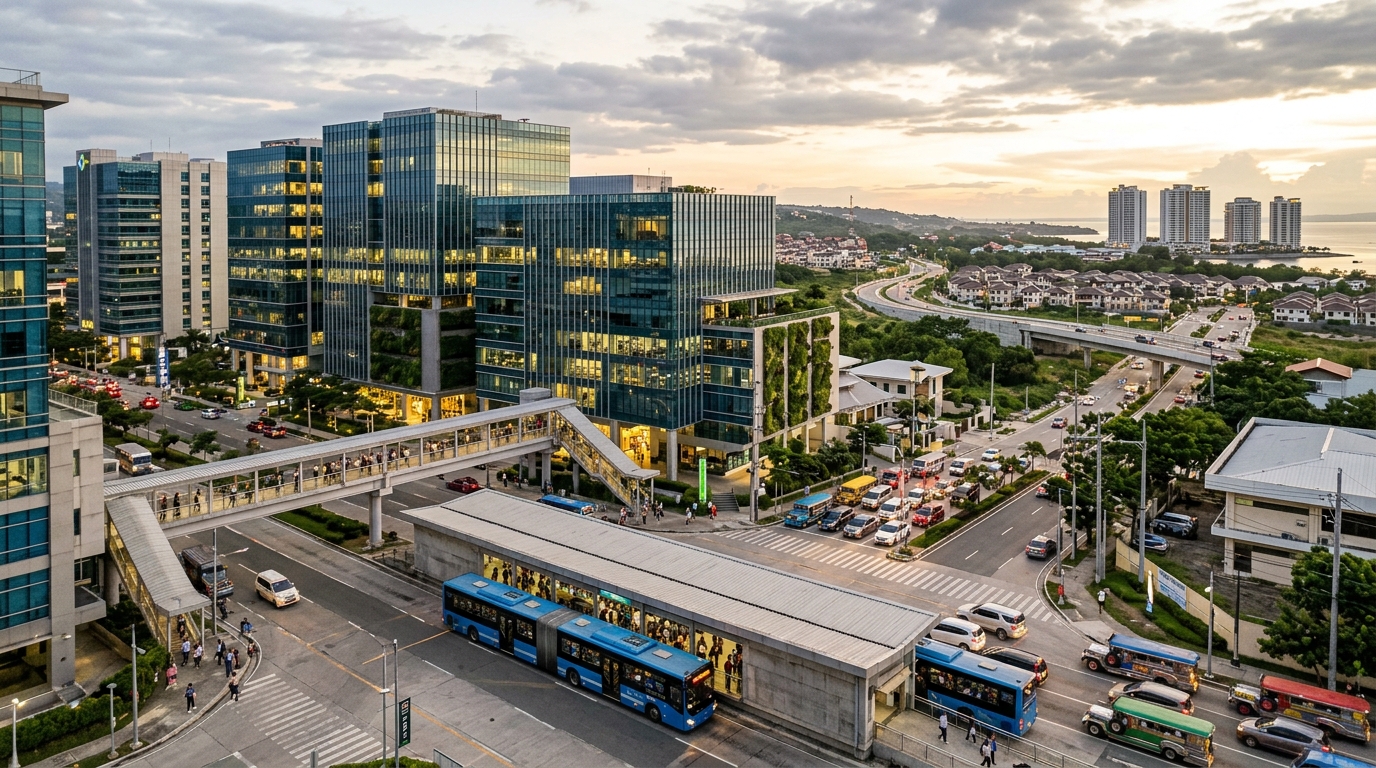
Further out, the "Satellite City" boom is in full swing. The Metro Cebu Expressway has effectively "shrunk" the province, making suburban towns like Liloan and Minglanilla the new hotspots for middle-income housing. Projects like Danarra North are capturing the "Work-From-Anywhere" demographic that prioritizes space and air quality over city-center proximity. In the luxury sector, the "Waterfront Premium" remains untouched by inflation; prime units in Punta Engaño are now commanding over ₱400,000 per square meter. As the Cebu BRT continues its phased rollout at the SRP, investors are betting on a future where mobility and sustainability are the ultimate luxury amenities.