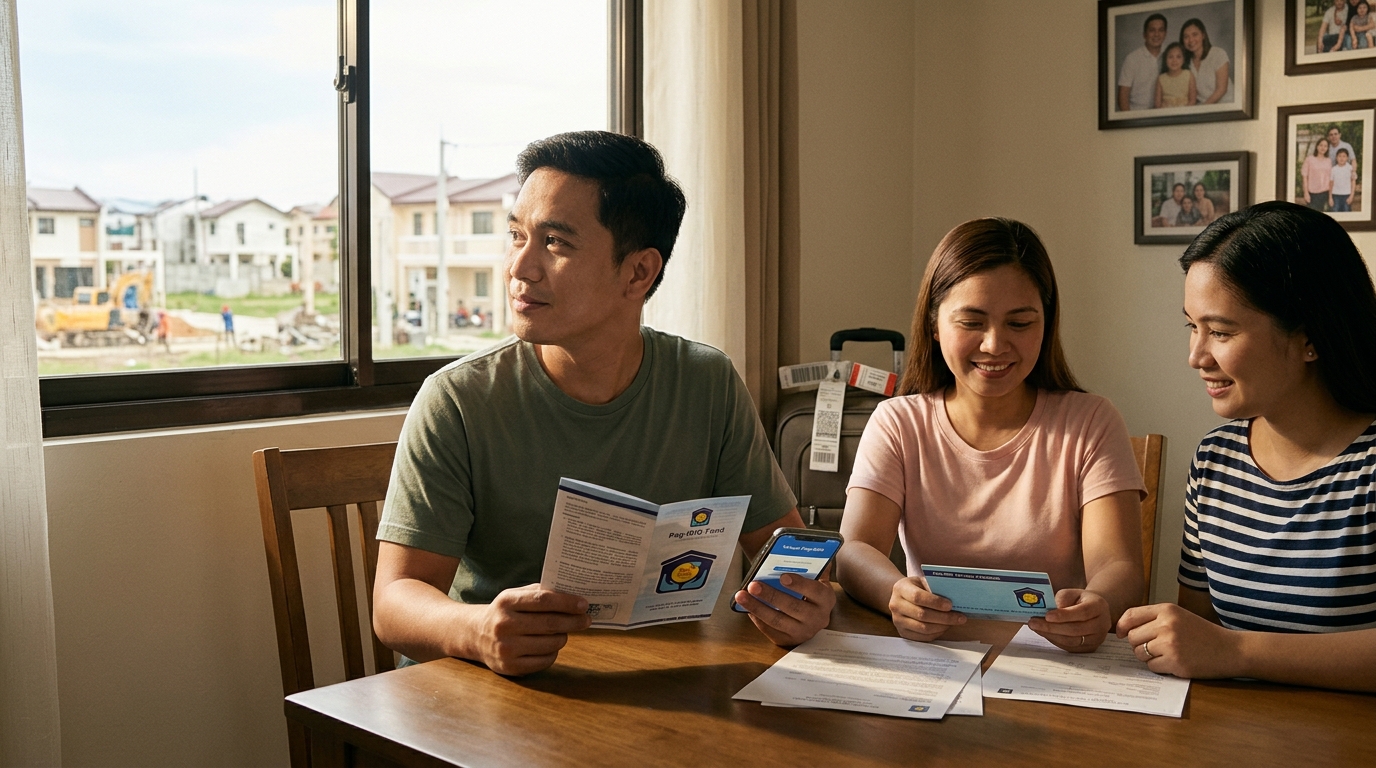
The overseas Filipino workers who are forced to go back to their homeland amid the escalating Middle East crisis may now have hope as the Pag-IBIG Fund has finally approved a special benefits package for them. It consists of a three-month suspension of house mortgage payments without interest and penalty, plus an early withdrawal of regular and MP2 savings.
The program, launched by the Department of Human Settlements and Urban Development (DHSUD), is a result of an direct order from President Ferdinand R. Marcos Jr., which mandates the provision of aid to the OFWs affected by the war. The announcement was made by DHSUD Secretary Jose Ramon Aliling, chairman of the Pag-IBIG Fund Board of Trustees, who explained that this was an opportune time as Filipinos were being repatriated from conflict areas.
Housing Loan Moratorium Takes Center Stage
Of the three forms of relief offered, the mortgage loan repayment moratorium holds significant importance not only for the repatriated OFWs but also for the real estate industry. Eligible individuals can delay their monthly payments for three months without being charged any extra interest or fees. Their loan tenure will also be extended accordingly to ensure that no individual suffers due to factors beyond their control.
This provision works in the direct interest of around 40,024 borrowers from Pag-IBIG housing loans who are working in the Middle East, as per statistics up until February 2026. With its help, the risk of defaults and subsequent foreclosure will be averted; hence, the moratorium will enable OFWs to maintain ownership of their houses while trying to earn new livelihoods back home in the Philippines. For the overall real estate sector, it ensures the stability of an important chunk of Pag-IBIG's loan portfolio.
Early Access to Two Types of Savings
Beyond housing relief, the package allows repatriated OFWs to tap into their savings well before the usual maturity dates. Members may withdraw up to 100 percent of their Pag-IBIG Regular Savings—including their own contributions, employer shares, and accumulated dividends—even though these funds are normally locked in for 20 years. Similarly, those with Modified Pag-IBIG II (MP2) accounts can withdraw the full amount, including returns, before the five‑year maturity period ends.
According to Secretary Aliling, the package is the contribution of the fund to the whole-of-government strategy to aid the overseas Filipino workers (OFWs). “Alinsunod sa direktiba ni Pangulong Marcos Jr. upang maibsan ang epekto ng gyera sa ating mga OFWs, maaari nang ma-access ng ating mga bayaning OFWs ang kanilang Pag-IBIG Fund savings kung kakailanganin nila ngayon,” he said. He added that the goal is to give returning workers more room to provide for their families and meet urgent expenses during a difficult transition.
Online and In-Person Applications Available
Pag-IBIG Fund Chief Executive Officer Marilene Acosta assured that the agency is prepared to process claims quickly and accessibly. Applications will be accepted through the Virtual Pag-IBIG online platform, as well as through more than 200 physical branches, OFW Centers, and service offices nationwide. Mall‑based branches operate Tuesday through Saturday, while office‑based branches are open Monday to Friday, all in compliance with the government’s energy conservation measures.
“We recognize that for this assistance to be truly responsive, it must be made available to qualified members in a manner that is fast, clear, and accessible,” Acosta said. She noted that Pag-IBIG is coordinating closely with the Department of Migrant Workers and the Overseas Workers Welfare Administration to ensure that repatriated OFWs receive seamless support.
A Lifeline for Returning Workers
As a practical aid for thousands of Filipinos returning to the Philippines with an uncertain future ahead, the Pag-IBIG package serves as an practical solution. With the option of suspending payments on mortgages or withdrawing from savings accounts to meet basic requirements, there is sufficient opportunity to seek work and maintain one’s house.