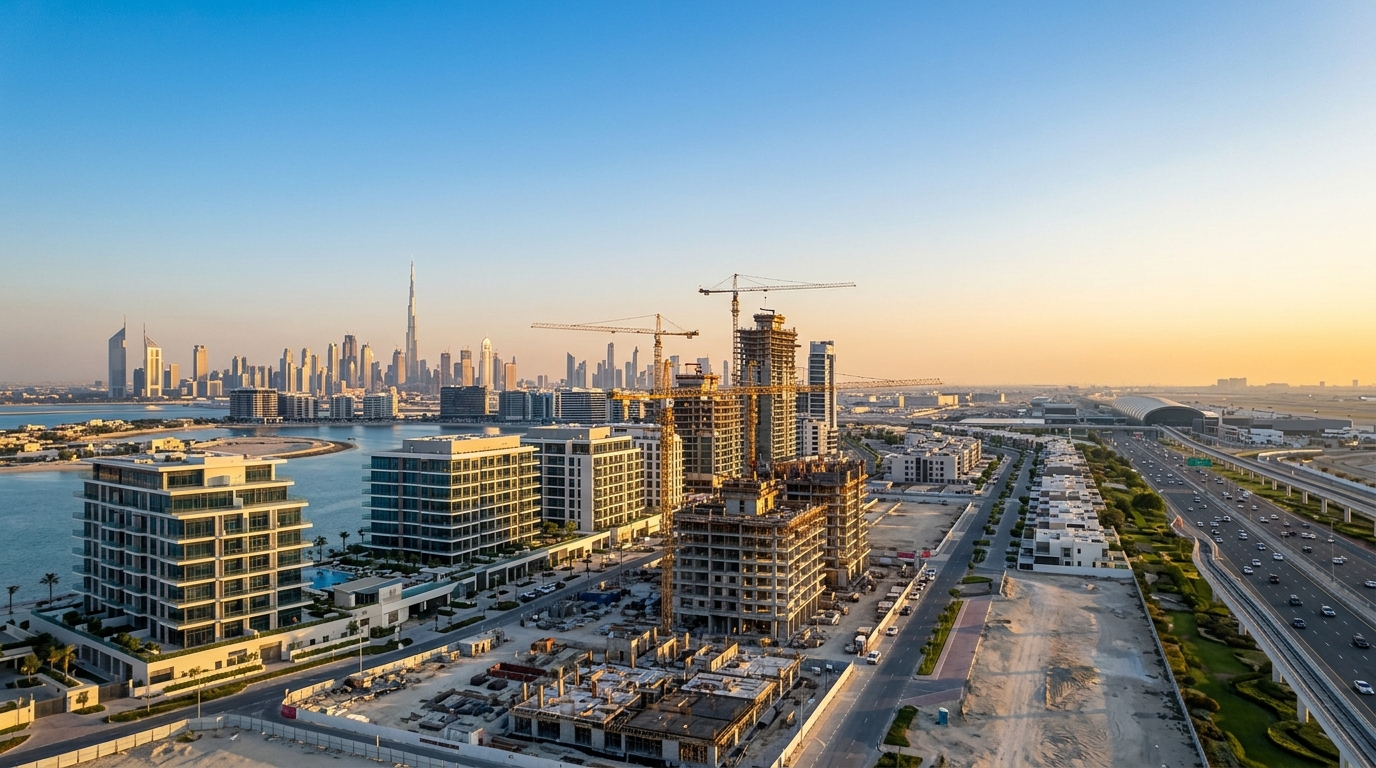
DUBAI – As most parts of the world prepared for a fall in their property markets, Dubai was saying, “Not here!” The latest figures released by the Dubai Land Department (DLD) show that not only is Dubai’s property market remaining robust – but it is picking up speed in an unexpected manner.
March 2026: over 10,300 transactions, AED 31.2 billion
As per the DXB Interact figures compiled by the Dubai Land Department, March 2026 witnessed 10,303 sales transactions valued at AED 31.2 billion ($8.5 billion). This clearly indicates that the month was very impressive in comparison to history, and that the property engine of Dubai is going strong without showing any signs of slowdown. It is also evident from the "nearly 8,000 deals" mentioned in the teaser earlier, as the off-plan apartments accounted for 7,983 sales transactions valued at AED 17.5 billion – a whopping 12.9% jump from the previous year.
A market that bounces back
Even short‑term volatility has not dented confidence. One report noted a 25% decline in sales during the first half of March 2026 due to regional tensions, followed by a sharp 49% rebound after the Eid Al Fitr holiday. That “V‑shaped” recovery is being interpreted by analysts as a sign of deep, resilient investor conviction.
Hotspots everyone is watching: Dubai Islands & Dubai South
There are two prominent hot spots evident from the figures for the month of March 2026 – these being Dubai Islands and the region near Al Maktoum International airport in Dubai South. Dubai Islands alone accounted for sales of up to AED 1.3 billion from only 402 transactions,a sign of high average property values and strong demand for waterfront living. On the other hand, Madinat Al Mataar, which is located near the expanding Al Maktoum International airport in Dubai South, accounted for 809 transactions amounting to sales worth AED 1.2 billion confirming its status as an emerging logistics and residential corridor. Additionally, Jumeirah Second had a good record with sales of up to AED 1.1 billion from nine transactions highlighting how prime central locations continue to attract ultra‑high‑net‑worth buyers.
Experts: “This is not a repeat of 2008”
There is one obvious point that should be made here — namely, that the current boom is definitely not a reenactment of 2008. The figures clearly show this, with long-term investors considering Dubai a haven for large investments. Thus, while in 2008 nearly a fourth of all buyers sold their purchases within a year due to the high level of speculation and easy access to credit facilities, now the corresponding figure barely exceeds 4-5%. What is more, unlike 2008, currently there is a requirement that a maximum mortgage loan-to-value cap of 80% should be observed when dealing with first-time buyers and that off-plan projects should feature escrow accounts.
Moreover, the current growth in population of Dubai should also be considered, as over the past decade the population in the country has increased twofold, reaching 4 million from 1.8 million back then, which provides for the presence of legitimate demand for housing and not for mere speculation. Finally, the influx of the ultra-wealthy in the UAE should also be noted, as in 2025 alone the country welcomed over 9,800 millionaires, and 2026 is expected to bring similar results. The majority of these ultra-high net worth individuals are using their savings to purchase Dubai real estate as a form of insurance against political instability elsewhere, according to one Dubai-based real estate economist.
What this means for buyers and sellers
For potential buyers, the message is clear: prime areas like Dubai Islands and Jumeirah Second are tightening, with prices rising but not irrationally. Off‑plan remains active, with developer payment plans that appeal to end‑users and investors alike. For sellers, the window of strong demand – especially near the airport corridor and waterfront developments – is very much open. Everyone expected a slowdown. But Dubai said no.