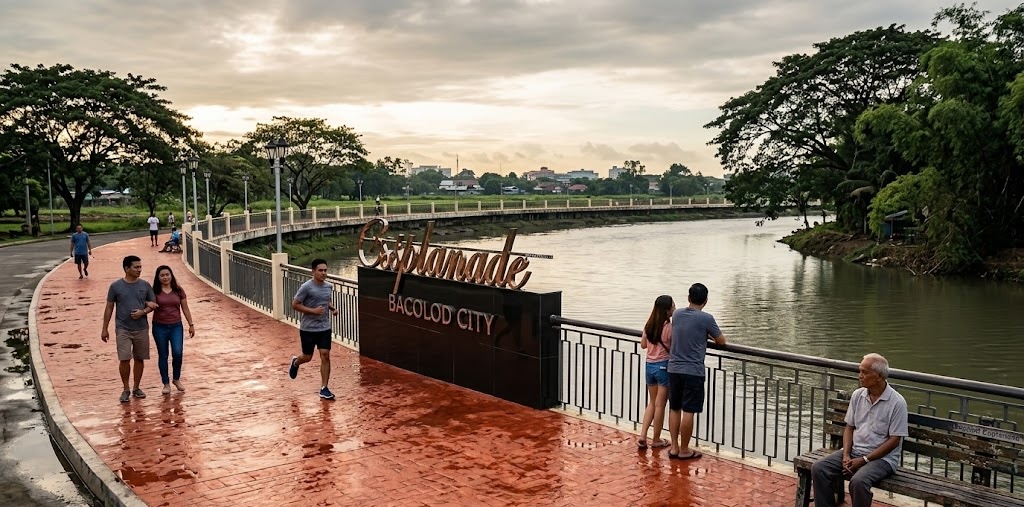
Unlike destinations built around shopping or organized entertainment, the esplanade encourages something simpler: movement without urgency. People walk in pairs, stop briefly along railings, or sit quietly watching water move through the city. Conversations stretch naturally because there are fewer distractions competing for attention. The atmosphere feels intentionally unpolished. That softness is exactly what many residents enjoy about it.
As Bacolod becomes denser, accessible outdoor spaces are beginning to matter more emotionally. Families want places where children can move freely while adults stay nearby without heavy spending involved. The esplanade provides an alternative to enclosed commercial spaces without feeling intimidating or exclusive. Residents slowly build habits around places that feel easy to return to repeatedly. Familiarity turns infrastructure into culture.
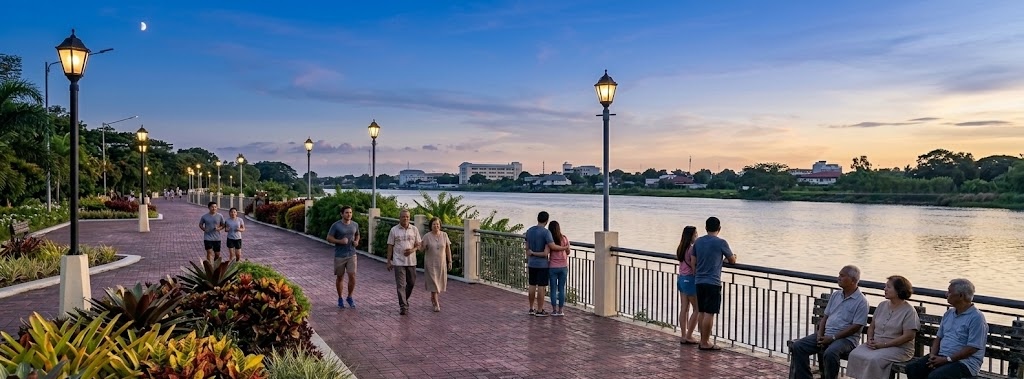
Travelers often photograph the esplanade because it captures a quieter side of Bacolod that restaurants and malls cannot fully represent. The city appears calmer beside the water, especially near sunset when movement slows naturally. Tourists expecting loud attractions instead discover a place built around ordinary rhythm. Sometimes cities become memorable through atmosphere instead of landmarks alone. The esplanade works precisely because it does not try too hard.