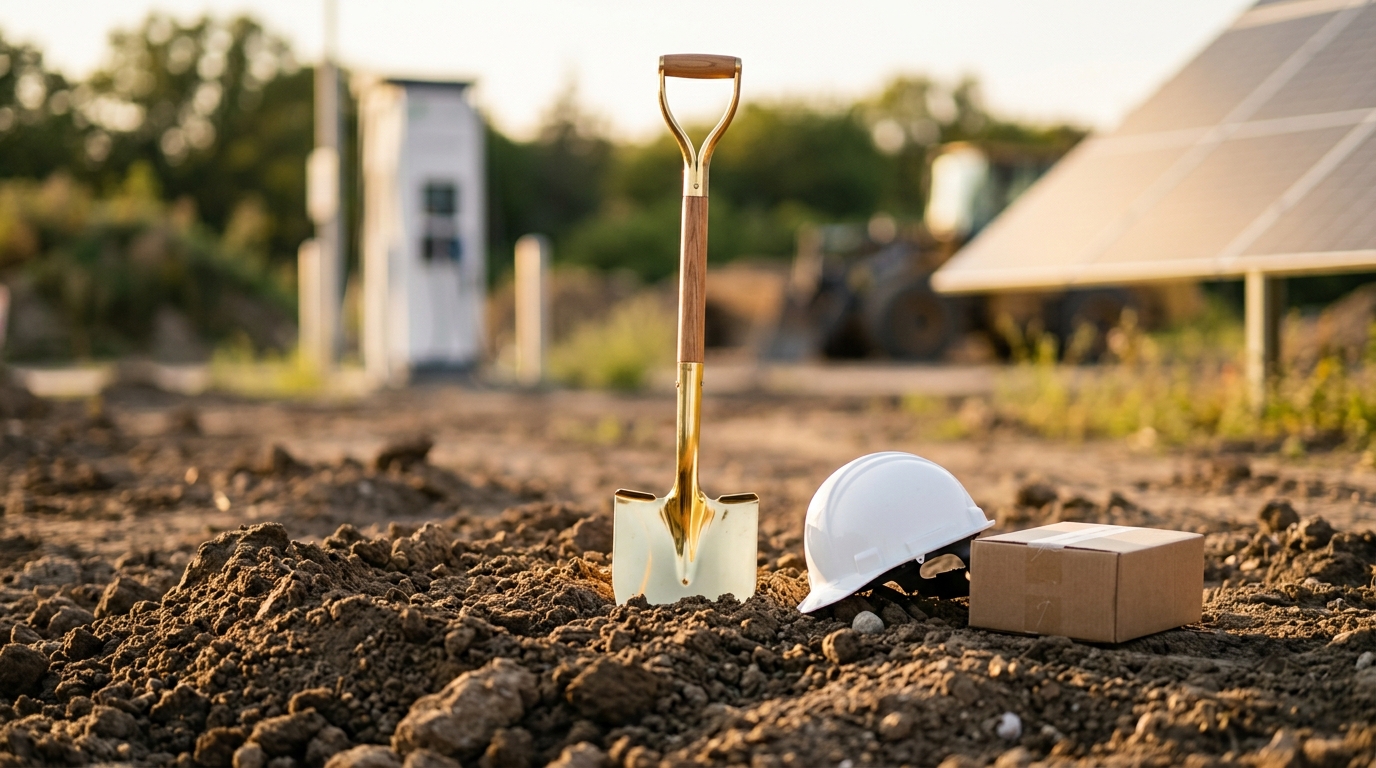
CLARK FREEPORT ZONE, PAMPANGA — On May 19, 2026, federal Express Corporation (FedEx) formally broke ground on the expansion of its Clark gateway facility, a project that will more than quadruple the logistics hub's footprint from 17,000 to over 78,000 square meters. The ceremony drew an extraordinary concentration of government and business leaders, including Department of Finance Secretary Frederick Go and Department of Trade and Industry Secretary Cristina Roque—a level of attendance that underscored the project's significance beyond the logistics sector. For Central Luzon's tourism industry, the expansion represents a structural upgrade that promises faster, more reliable delivery of goods and equipment that hotels, convention centers, and MICE venues depend on.
The expanded facility, located within the Clark Freeport and Special Economic Zone, will feature upgraded handling and operational capabilities designed to enhance shipment flow reliability and service flexibility. Construction is scheduled to begin in the second quarter of 2026, with Robinsons Land Corporation serving as the project developer. FedEx North Pacific and South Pacific President Masamichi Ujiie described the investment as a reflection of the company's continued commitment to building "a smarter, more resilient network" across the Asia-Pacific region. "By enhancing our operational capabilities at Clark, we are better positioned to support Philippine businesses, enable efficient cross-border trade, and provide more reliable connectivity to global markets," Ujiie said. The current facility processes up to 9,000 parcels per hour; the expanded hub will significantly increase that throughput, ensuring that time‑sensitive shipments—from hotel equipment to convention materials—move faster through the supply chain.
A Green Gateway That Matches Clark's Sustainability Ambitions
The new facility is designed not merely as a warehouse but as an environmentally intelligent logistics hub. Sustainability features embedded in the design include high‑performance insulated building materials, energy‑efficient glazing, LED lighting, skylights, water‑efficient fixtures, a rainwater collection system, and electric vehicle charging stations. The roof structure has been engineered to support future solar power deployment, aligning the facility with Clark's broader push toward renewable energy—a push recently reinforced by the Clark Development Corporation's aggressive investment targets and the national government's designation of Clark as a premier eco‑conscious investment zone.
For the tourism and MICE sectors, these sustainability features carry practical weight. International event organizers increasingly screen host destinations against environmental criteria, and the presence of a FedEx gateway that runs on energy‑efficient systems, captures rainwater, and offers EV charging reinforces Clark's credentials as a green MICE destination. The Clark International Convention Center, the newly opened Pampanga Provincial Hospital–Clark, and the growing cluster of hotels that have driven Clark's room inventory past 4,100 units now operate in an ecosystem where even the logistics backbone aligns with sustainability standards. The FedEx expansion makes Clark a more competitive bidder for international conferences, sports tournaments, and trade fairs that prioritize carbon‑conscious supply chains.
A Hub That Keeps Clark's Hotels, Events, and MICE Economy Supplied
The tourism‑logistics connection is neither abstract nor sentimental. Hotels require a steady flow of linens, toiletries, kitchen equipment, and technology replacements. Convention centers depend on the timely arrival of exhibition materials, audiovisual gear, and promotional collateral. Restaurants source specialty ingredients. All of this moves through the logistics infrastructure that FedEx anchors at Clark. When that infrastructure expands from 17,000 to 78,000 square meters and adds advanced sorting and operational systems, the entire hospitality supply chain benefits from increased speed, reliability, and capacity.
Secretary Frederick Go, speaking at the groundbreaking, framed the expansion in terms that deliberately connected logistics to economic growth. "The expansion of FedEx will deepen global connectivity and strengthen local trade capabilities. Filipino firms and consumers can reach more markets while more foreign traders can reach ours. As the Asia‑Pacific region grows, the Philippines will be better positioned to ride on this momentum and drive our economic growth," Go said. His words capture the multiplier effect that logistics infrastructure generates: a more connected Clark is a more investable Clark, and a more investable Clark attracts more hotels, more events, and more tourists.
The expansion builds on FedEx's earlier investments at Clark, including the opening of its initial gateway facility in October 2021 and the signing of a land lease agreement with Luzon International Premiere Airport Development in July 2024. That trajectory of sustained investment signals confidence in the Freeport's long‑term viability. Also present at the ceremony were Joshua Bingcang, President and CEO of the Bases Conversion and Development Authority; Noel Manankil, President and CEO of LIPAD; Atty. Agnes Devanadera, President and CEO of CDC; and Mybelle V. Aragon‑GoBio, President and CEO of Robinsons Land Corporation—a convergence of public and private sector leadership that underscored the project's strategic importance to the region.
A Logistics Milestone That Locks In Clark's Place on the Global MICE Map
Clark has spent the past several years assembling the components of a world‑class tourism and MICE destination: an international airport with growing passenger and cargo capacity, a convention center capable of hosting large‑scale events, a hospital that provides emergency and specialized care, and a pipeline of hotel investments from both domestic developers and international players such as Korean investor JnH Philippines Development Corporation, whose ₱840‑million mixed‑use expansion is compressing its construction timeline to just 30 months. The Clark Development Corporation reported that it is on track to hit its ₱12.35‑billion full‑year investment target for 2026, with first‑quarter commitments already approaching ₱10 billion.
The FedEx expansion completes a critical piece of that puzzle. A logistics backbone capable of supporting express, e‑commerce, and freight shipments at scale ensures that every hotel opening, every convention booking, and every large‑scale event in Clark has the supply‑chain reliability it needs. For the international event organizer deciding between Clark and a competing Southeast Asian destination, the presence of a FedEx gateway that can deliver equipment, materials, and goods on time and at scale reduces operational risk and strengthens Clark's bid. As construction begins in the second quarter of 2026 and the 78,000‑square‑meter facility moves toward completion, Clark's tourism and MICE sectors can look forward to a future where the question is not whether the supplies will arrive, but how quickly they can be put to use.