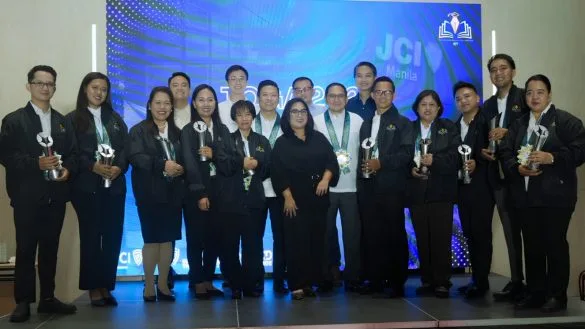
A major international commercial milestone for the Davao agricultural processing sector was finalized on Thursday, May 21, 2026, opening direct trade pathways with East Asian consumers. The Tokushima Auction Market (TAM) of Japan signed a comprehensive Memorandum of Agreement with the Davao Catigan Manufacturer of Coconut By-Products Inc. during a specialized trade convention at the Acacia Hotel in Davao City. Under the new commercial framework, the local manufacturer will export a substantial 8,000 tons of premium coconut derivatives directly to Japan's established distribution hubs. This deal is designed to enhance the global visibility of Mindanao-sourced commodities while securing long-term economic stability for local farming networks.
Diversifying Export Stocks with High Value Confectionery Goods
The newly finalized international trade pipeline focuses explicitly on value-added coconut derivatives rather than raw, unprocessed copra materials. The regular shipping manifests will include organic coconut vinegar, nutrient-dense coconut sugar, smooth coconut cream, and traditional coconut-based candies manufactured across the Davao region. Department of Trade and Industry (DTI-11) Regional Director Romeo Castañaga clarified that this specialized product selection commands premium prices in upscale Japanese grocery chains, maximizing the revenue returning to local processors. By shipping finished retail products instead of raw materials, the local factory keeps processing jobs within the province, elevating the economic value of the region's agricultural output.
Injecting Multi Region Inventory to Fulfill Strict Volume Quotas
To meet the substantial 8,000-ton annual export requirement smoothly, the supply network is actively integrating independent farmers from across Mindanao, including the Bangsamoro Autonomous Region in Muslim Mindanao. Local manufacturing boards are setting up secondary collection centers to consolidate high-grade coconut harvests from smallholder family plantations. This widespread sourcing structure ensures that smaller rural farms can participate in high-volume international trade without facing complex corporate logistics hurdles. Combining the yields of multiple provincial agricultural zones protects the export timeline from localized weather challenges, guaranteeing a reliable supply for Japanese distributors.
Embedding Technology Upgrades to Achieve Premium Quality Standards
A key component of the trade agreement involves a direct capacity-building program funded by Japanese investors to modernize local processing plants. Specialized technical teams from Tokushima will travel to Davao next month to install advanced food-preservation machinery and train factory workers on strict international sanitation protocols. Upgrading these local processing techniques ensures that every bottle of vinegar and bag of sugar satisfies the rigid quality controls enforced by foreign customs agencies. The project showcases a mature model of countryside development, proving that targeted international partnerships can transform traditional farming communities into competitive global suppliers.