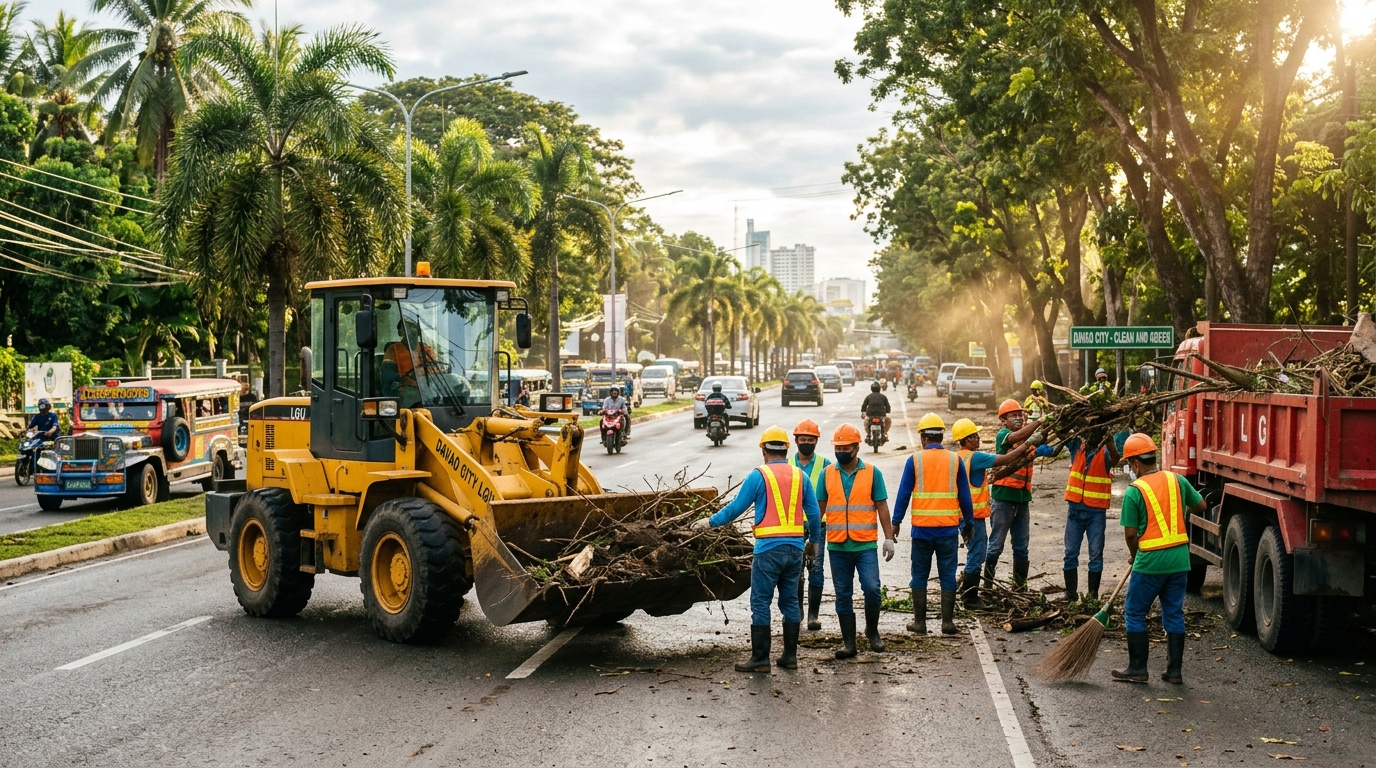
Davao — A massive public safety cleanup campaign rolled out across eleven residential districts in Davao City on Tuesday, May 19, 2026, after intense local downpours. Heavy rain brought by easterly winds and the intertropical convergence zone caused the Matina Pangi River to exceed its warning levels, displacing 358 families. City Information Officer Harvey Lanticse coordinated the rapid deployment of municipal engineering vehicles to clear thick mud and fallen trees from primary transport roads. This quick public works response allowed major arterial streets, including the Carlos P. Garcia Highway, to reopen safely for public commuting before the afternoon rush.
Providing Immediate Household Assistance Across Transit Corridors
While cleanup machinery cleared the asphalt roads, social workers from the City Social Welfare and Development Office distributed emergency food packs to affected family structures. Local barangay halls opened their doors as temporary shelters, providing safe spaces for neighborhood residents until the floodwaters receded completely by dawn. Disaster response teams used advanced water sensors to monitor the river channels in real time, keeping riverside communities informed of safety conditions. This organized assistance program protected vulnerable households from facing prolonged disruptions, allowing the majority of evacuees to return home quickly.
Enforcing Protective Proactive Measures for Classrooms and Offices
To ensure absolute public safety during the clearing operations, the city government ordered a temporary suspension of face-to-face classes and non-essential public office tasks. This administrative decision reduced vehicular traffic on major roads, giving heavy dump trucks and vacuum tankers ample space to clear the city's drainage networks. Emergency response offices, public hospitals, and maritime safety units kept their regular work shifts to handle any localized challenges. Private business operators were encouraged to apply flexible remote work policies to protect their employees from travel delays, keeping the city's workforce safe and unified.
Preventing Medical Challenges through Active Neighborhood Advisories
Following the successful completion of the road-clearing operations, the City Health Office deployed medical workers to distribute preventative safety treatments against waterborne illnesses. Health professionals visited residential zones to explain the importance of washing thoroughly after walking through standing rainwater, especially for individuals with open skin wounds. Local pharmacies supplied neighborhood clinics with ample stocks of essential medicines to keep public health conditions stable. This proactive medical focus demonstrates the city's ability to maintain public health and safety after experiencing short-term tropical weather challenges.