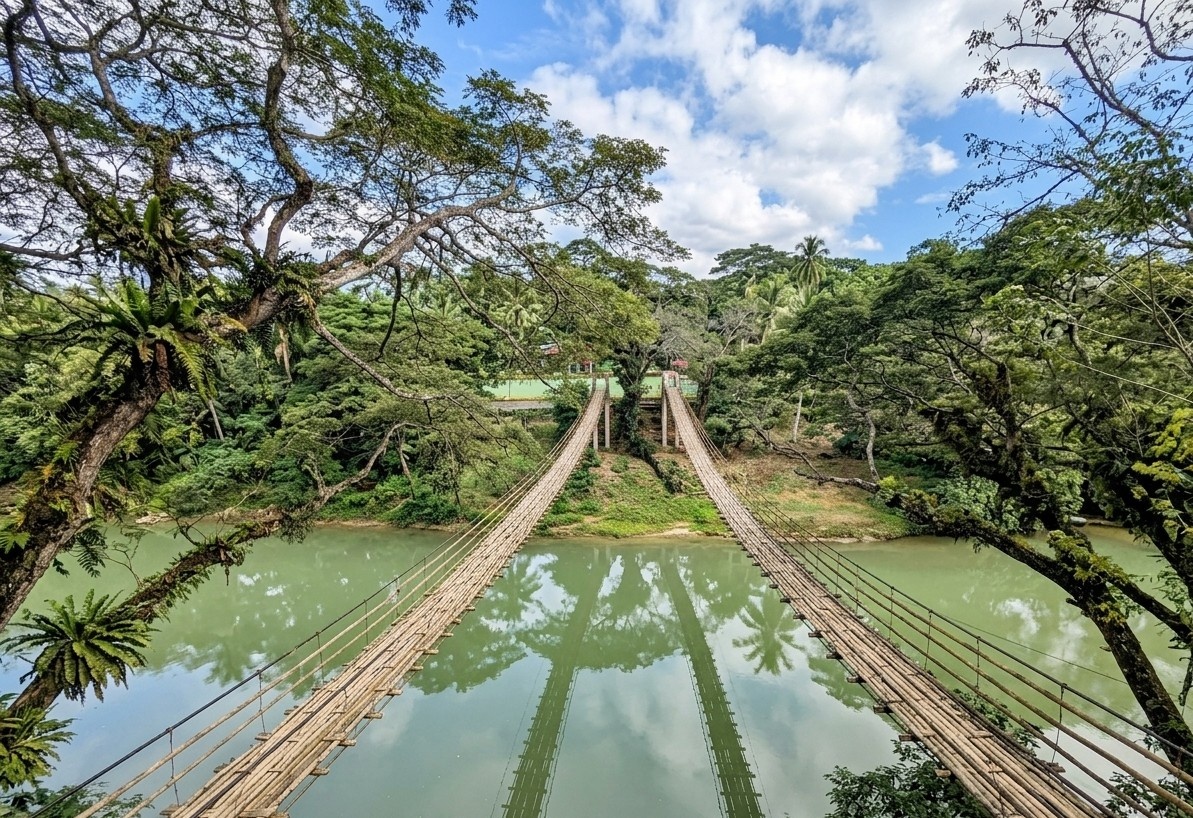
Bohol’s interior highlands are packed with dramatic geological wonders, but some of the most memorable travel moments happen at the historic community river crossings hidden between the major landmarks. The Sevilla Twin Hanging Bridge—frequently mapped by seasoned road-trippers as the Sipatan Twin Hanging Bridge—stands out as a highly popular, fast-paced detour in the tranquil town of Sevilla. Suspended a thrilling 20 meters directly over the winding, emerald-green waters of the Sipatan River, this twin system connects the rural communities of Barangay Ewon. Originally woven together by hand after World War II out of raw bamboo slats and tree ropes to help local agrarian families carry crops and livestock across the gorge, the modern double-bridge framework has since been meticulously reinforced with heavy-duty industrial steel cables. This clever pairing of modern safety technology with traditional bamboo craftsmanship offers an incredibly photo-worthy pitstop for travelers checking off their 2026 Visayan bucket lists.
The Rhythmic Bounce Over a Moving Teal Mirror
Stepping onto the first parallel bamboo deck triggers an immediate, heart-dropping rush of excitement as the structural planks gently bounce, sway, and creak under your weight. Stretching 40 meters horizontally from bank to bank, the dual-bridge design sets up a highly efficient one-way traffic pattern, allowing crowds to cross safely on one side and return smoothly along the adjacent walkway. Pausing directly over the center of the span treats tourists to a spectacular, unobstructed view of the wide river cutting through dense walls of native palms and wild ferns. For pairs or group travelers looking to snap the perfect action shot, a favorite trick is to split up across both spans, allowing you to easily capture high-fidelity photos of each other suspended mid-air against the beautiful tropical backdrop.
The Cheapest Souvenirs in the Province
Beyond the initial adrenaline rush of crossing the swinging planks, reaching the far riverbank unlocks a lively micro-economy operated entirely by welcoming local families. The far-side clearing is packed with rustic market stalls where bargain hunters frequently note that you can purchase the cheapest t-shirts, handmade keychains, and native woven handicrafts in all of Bohol, with prices heavily beating the corporate retail hubs near the Chocolate Hills. After a long morning of exploring, hikers can sit down at small refreshment booths to rehydrate with fresh buko (coconut) juice chopped open on the spot or sample local native delicacies like Kabkab (crispy cassava crackers). The entire destination is brilliantly managed by the municipality, charging a highly accessible maintenance fee of ₱50 per person (usually free if visiting after 5:00 PM) to help fund ongoing upkeep, clean public restrooms, and a secure vehicle parking zone.
Strategic Planning for the Ultimate Countryside Circuit
Because a complete round-trip walk across both decks, including a casual souvenir shopping stroll, takes only 15 to 30 minutes, travelers shouldn't plan an entire standalone day around this attraction. Instead, tour operators recommend utilizing the bridge as a seamless, high-value stopover on a classic Bohol Countryside Tour, as it sits perfectly along the main interior road connecting the Philippine Tarsier Sanctuary in Corella, the Bilar Man-Made Forest, and the iconic Chocolate Hills. The site is open to the public daily, but it is best experienced during bright daylight hours from 8:00 AM to 5:00 PM when the local market stalls are fully active. To guarantee a comfortable walk across the gaps, make sure to wear flat, stable footwear like sneakers or sport sandals, and keep a close eye out for occasional cracked bamboo pieces along the path.