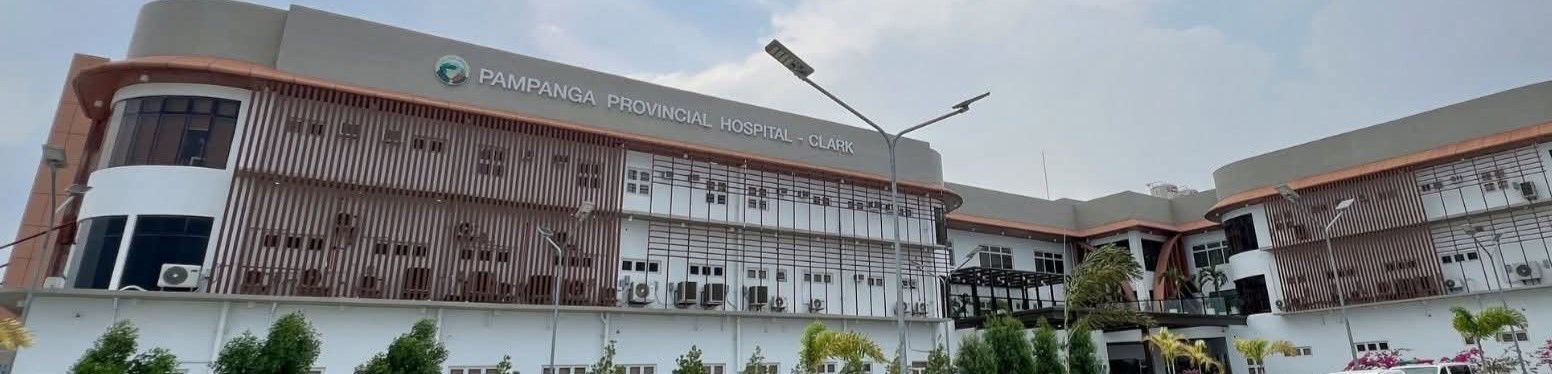
PAMPANGA — When President Ferdinand R. Marcos Jr. walked through the corridors of the newly completed Pampanga Provincial Hospital–Clark on April 29, 2026, he was not merely inaugurating a three‑storey, 143‑bed healthcare facility. He was activating the single most important non‑commercial anchor that the Clark Freeport Zone has gained since its transformation from an airbase into an economic powerhouse. The ₱601.74‑million Level II government hospital, funded by the Provincial Government of Pampanga, the Department of Health, and PAGCOR, with infrastructure support from the Bases Conversion and Development Authority and an additional ₱85 million in medical equipment from the Office of the President, is designed to serve more than 151,500 workers, locators, investors, and nearby residents. For the property sector, the hospital represents the missing piece in a market that has already attracted ₱9–10 billion in investment pledges in the first quarter of 2026 alone.
The significance of the hospital's arrival cannot be separated from the velocity of capital already flowing into Clark. CDC Vice‑President for Business Development Noelle Mina D. Meneses confirmed that the freeport zone is on track to exceed its ₱12.35‑billion full‑year investment target, with first‑quarter commitments already representing the bulk of that goal. Among the approved projects are a ₱4‑billion mixed residential and hotel development on a two‑hectare site near Hann Resorts, a ₱1.23‑billion assisted living facility spanning 4.9 hectares, and a ₱4.4‑billion deal with Korean developer Luxia Corp. for a premium mixed‑use property with hotel and serviced apartments. The hospital, by providing a Level II government healthcare facility with advanced diagnostic capabilities—CT scan, X‑ray, endoscopy, mammogram—directly addresses the due‑diligence checklist of every locator and developer evaluating Clark: can our people access emergency and specialized care without leaving the zone?
A Hospital That Doubles as a Property‑Value Anchor
CDC President and CEO Agnes VST Devanadera framed the hospital's opening in terms that deliberately connect healthcare infrastructure to investor confidence. "Hindi dahil government hospital, e government hospital lang. Dito, pag sinabi mong Pampanga Provincial Government Hospital, ang sagot, wow! That is an indication that here, we are giving the best. The government is giving the best to our workers," she said. The remark was not merely rhetorical. It was directed at the more than 151,000 workers inside Clark who previously had to seek medical attention outside the Freeport Zone, often incurring additional travel time and expenses that employers and locators alike had long flagged as an operational friction point.
Devanadera explicitly noted that healthcare infrastructure is a key factor in sustaining investor confidence, as locators consider the availability of essential services such as hospitals when choosing and expanding operations in economic zones. The statement translates into a quantifiable real estate proposition: a freeport zone with a Level II government hospital is a freeport zone where industrial locators, BPO firms, and hospitality investors can promise their workforce access to care without the productivity loss of off‑site medical travel. That promise, once absent, is now codified in 143 beds, an ICU, a NICU, an OB‑GYNE unit, and full diagnostic services housed within 9,259 square meters at Changi Gateway in Clark Global City.
The hospital's operational model reinforces its role as a social stabilizer. Governor Lilia Pineda confirmed that 70 percent of the facility's capacity is reserved for indigent patients, with a zero‑balance billing policy for qualified families. "Ipinatayo natin ito para sa mga mahihirap na hindi kayang bayaran 'yung private hospital at professional fee," she said. For the thousands of minimum‑wage workers employed by Clark locators, the hospital removes the financial barrier that has historically delayed treatment until conditions became acute—and, in doing so, protects the workforce productivity that sustains the freeport zone's commercial real estate occupancy.
Central Luzon's Property Fundamentals Gain a Healthcare Layer
Clark's hospital opening arrives within a broader regional property narrative that Colliers Philippines described in March 2026 as the emergence of Central Luzon as "the country's next real estate hotspot." Pampanga closed 2025 with 538,000 square meters of office supply and a 17‑percent vacancy rate, with rents holding steady between ₱550 and ₱750 per square meter. Colliers Research Director Joey Roi Bondoc noted that "township development is reshaping Central Luzon's residential landscape, and buyers now view the region as a true extension of Metro Manila." The region's industrial pipeline—930 hectares of new industrial land projected from 2026 to 2028—far surpasses the CALABA corridor, while the Board of Investments reported that Central Luzon attracted ₱21.5 billion in approved projects in the first two months of 2026 alone, the largest share of the ₱47‑billion national total.
The hospital adds a qualitative layer to these quantitative strengths. A locator evaluating a warehouse lease or a BPO office expansion in Clark now factors in not only power reliability, fiber connectivity, and tax incentives but also the presence of a government hospital capable of handling workplace emergencies, childbirth, cardiovascular events, and neonatal intensive care. For the 4,100‑room inventory that Korean firm JnH Philippines Development Corp. is expanding through its ₱840‑million mixed‑use project, and for the growing MICE market that the newly opened Clark International Convention Center is designed to serve, the hospital functions as a risk‑mitigation asset that event organizers and hotel operators can cite in their safety protocols.
The hospital is also expected to generate approximately 401 jobs once fully operational, adding to the employment density that sustains residential demand in the townships surrounding Clark. Colliers has identified Alviera, Capital Town, and Centrala as townships drawing homebuyers and investors connected to Clark's employment hub, while the ₱1.23‑billion assisted living facility signals growing interest in Clark as a retirement destination—a segment that particularly values proximity to comprehensive medical care. For property investors, the hospital's opening on April 29, 2026, is not a standalone event but a structural addition to a market whose fundamentals—record investment inflows, industrial expansion, office absorption, and now verified healthcare access—are converging into a sustained growth story that no other regional corridor in the Philippines currently matches.