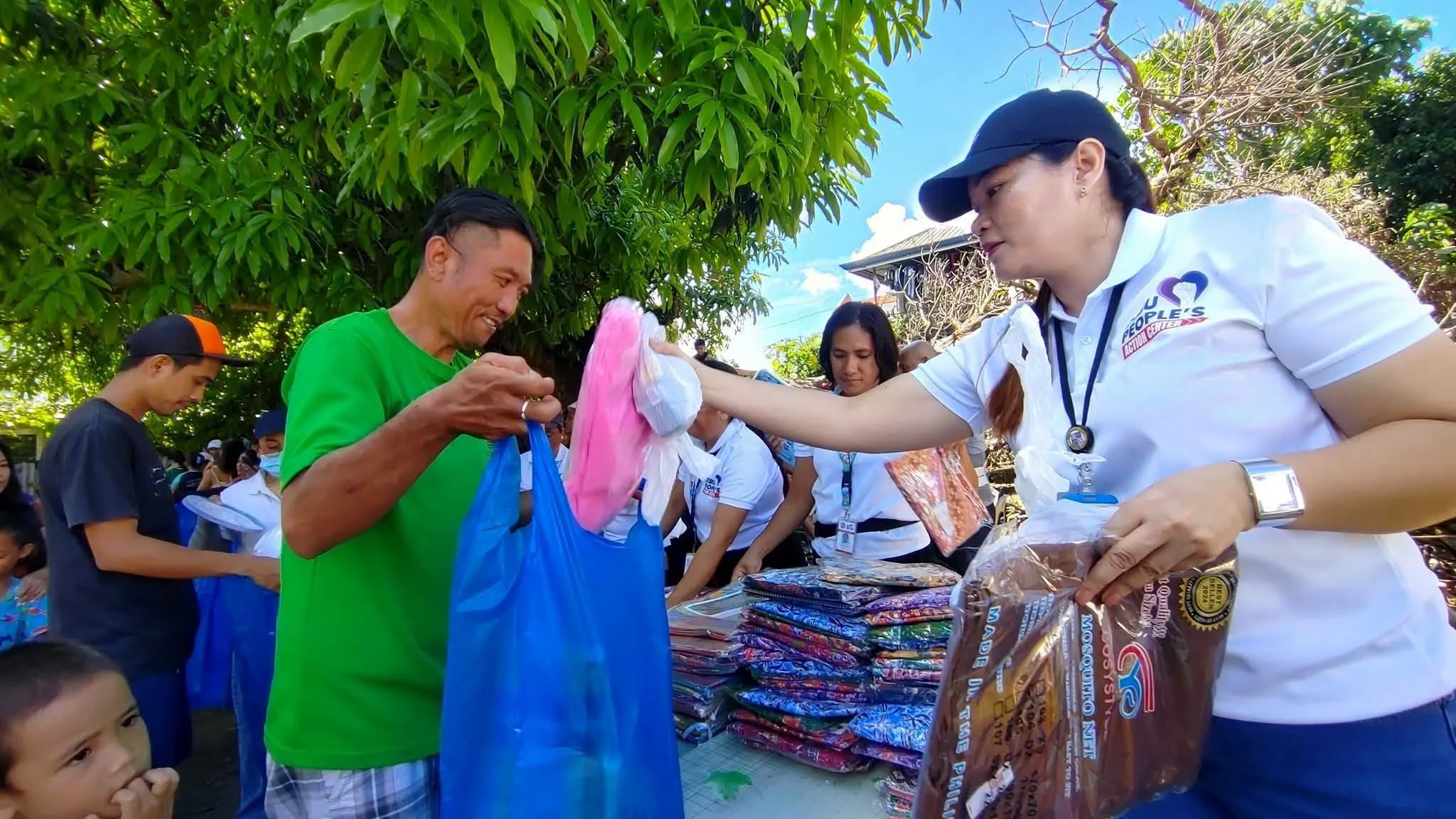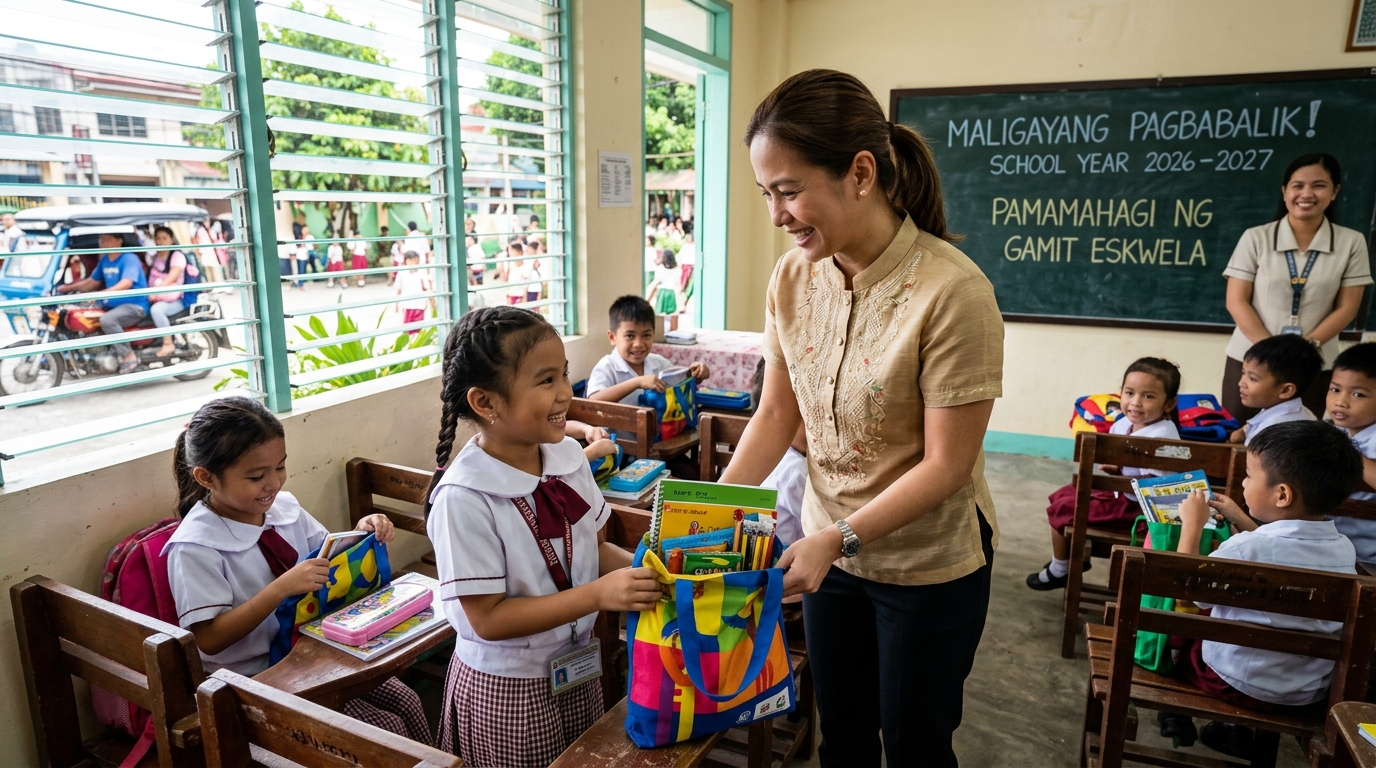
ILOILO CITY — Inside a recent meeting of the Iloilo City Local School Board, a simple budget line was approved that will touch nearly every public school household in the city: ₱8.5 million from the Special Education Fund, earmarked solely for the purchase of school supplies for School Year 2026–2027. The allocation—supplemented by the city's ₱1.4‑billion supplemental budget—marks the revival of a program that Mayor Raisa Treñas had suspended during tighter fiscal years and has now restored as a direct response to the financial strain that families are absorbing amid the ongoing energy emergency. For the parents of the more than 83,000 students enrolled in Iloilo City's public schools, the arithmetic is immediate: notebooks, pens, and paper that the household no longer needs to purchase.
"Even a small assistance already helps. If you have three or five children, it is already a big relief because at least your concern will only be what they need for school," Treñas said. The revival of the free school supplies program was not an isolated decision. It was approved alongside a package of infrastructure projects that will reach 51 of the city's 66 public schools—a "bottom‑up" approach in which school principals were personally summoned to identify their own priority needs rather than having projects imposed from above. The mayor framed both initiatives as a direct translation of taxpayer contributions into classroom impact. "These initiatives show that the taxes you pay directly go back to the people, for a better learning environment and higher quality education for our children," she said. "For every ₱100 paid in RPT, ₱33 goes directly to the SEF—used for classrooms, repairs, school facilities, and student support."
Where the Money Actually Goes: A Special Education Fund That Has Nearly Doubled
The ₱33 out of every ₱100 figure is not a slogan; it is the statutory allocation under the Local Government Code, which mandates that one percent of assessed real property tax collections flow automatically into the Special Education Fund. Before the city's RPT adjustments took effect, the SEF budget hovered around ₱450 million, with occasional peaks of ₱500 million. In December 2025, the city allocated ₱680 million for the 2026 SEF—a figure that includes ₱398 million for capital outlay alone, directed at the repair and construction of classrooms, laboratories, and Early Childhood Care and Development centers. "The increase in RPT boosted the fund for our Local School Board," said Maria Mathilde Treñas, Special Assistant to the City Mayor.
The capital outlay funds a physical transformation of Iloilo City's public school infrastructure. The 51 schools receiving projects were chosen not through political patronage but through a process in which principals themselves submitted priority lists. The result is a portfolio of projects that range from new classroom construction to essential building repairs, each calibrated to a specific campus's most urgent need. Treñas described the philosophy behind the approach: "Last year, I personally called the school principals and committed that no school in Iloilo City will be neglected. That is why they themselves identified their priority projects based on what their schools truly need." The infrastructure push is designed to reduce classroom congestion that has forced some schools to operate at ratios of one classroom for every 40 or 50 students, with others resorting to shifting schedules. "Our goal is to reduce the ratio to create a more conducive learning environment for our students here in the city. Ideally, a safe standard is 1:30, and in some schools, we are aiming for 1:25," the mayor said.
Beyond Supplies: A City That Has Decided Education Is Its Best Investment
The school supplies program and the infrastructure projects sit within a broader education investment architecture that Iloilo City has been assembling across multiple fronts. The SEF also finances the salaries of 50 contractual teachers hired at Salary Grade 12, addressing workforce gaps that the national DepEd budget cannot fully cover. The city operates the Iloilo City Community College and the Technical Institute of Iloilo City, which have produced thousands of graduates and skilled workers. The Iskolar sang Iloilo Program provides full college scholarships covering ₱180,000 annually for marginalized but deserving students. The recently approved partnership with the National Academy of Sports opens a pathway for young Ilonggo athletes to receive fully subsidized training at New Clark City. And the Uswag Scholarship program, which automatically enrolls graduating 4Ps beneficiaries into college or technical‑vocational education, ensures that no student exits the educational pipeline simply because their family's poverty status changed.
What connects all of these programs is their funding architecture. The RPT‑to‑SEF mechanism ensures that as property values in Iloilo City rise, the local education budget rises with them—a virtuous cycle in which the city's booming real estate market directly finances the educational infrastructure that makes the city attractive to families and investors alike. When Treñas tells her constituents that "your taxes go directly to where they are needed most—for a better learning environment and a higher quality of education for our children," she is describing a fiscal pipeline that is both transparent and traceable. The ₱8.5 million for school supplies is not a gift. It is a return—one that every Ilonggo property owner has already paid for, and one that every Ilonggo public school student is about to receive.