ILOILO CITY — On May 15, 2026, the Department of Labor and Employment in Western Visayas announced that Oplan Kontra Baha—a national flood‑mitigation program carrying the directive of the Marcos administration—would formally launch in Iloilo City the following week. The announcement was not a ribbon‑cutting or a photo opportunity. It was the culmination of an assessment that had already sent teams from DOLE, the Department of Public Works and Highways, the Iloilo City Public Employment Service Office, and barangay officials into the flood‑prone barangays along the Iloilo River to map the creeks, measure the silt, and identify exactly where the water would go if nothing were done. "Through programs like TUPAD Oplan Kontra Baha, our aim is to provide an opportunity for employment to vulnerable workers and also to empower communities to take part in environmental protection and disaster mitigation initiatives," said DOLE‑6 Regional Director Sixto Rodriguez Jr.
The program deploys the Tulong Panghanapbuhay sa Ating Disadvantaged Workers framework—a 31‑day river clean‑up that puts vulnerable residents to work clearing the very waterways that threaten their homes. It is aid structured as labor, and labor structured as defense. The assessment focused on seven barangays in the Jaro and La Paz districts: Ticud, Baldoza, Ingore, Caingin, Tabuc Suba, Banuyao, and Hinactacan. These are not the barangays that dominate property headlines. They are the ones that flood first when the rains come, and the ones whose residents have spent years watching the water rise without the means to do anything about it.
A 31‑Day Clean‑Up That Doubles as a Livelihood
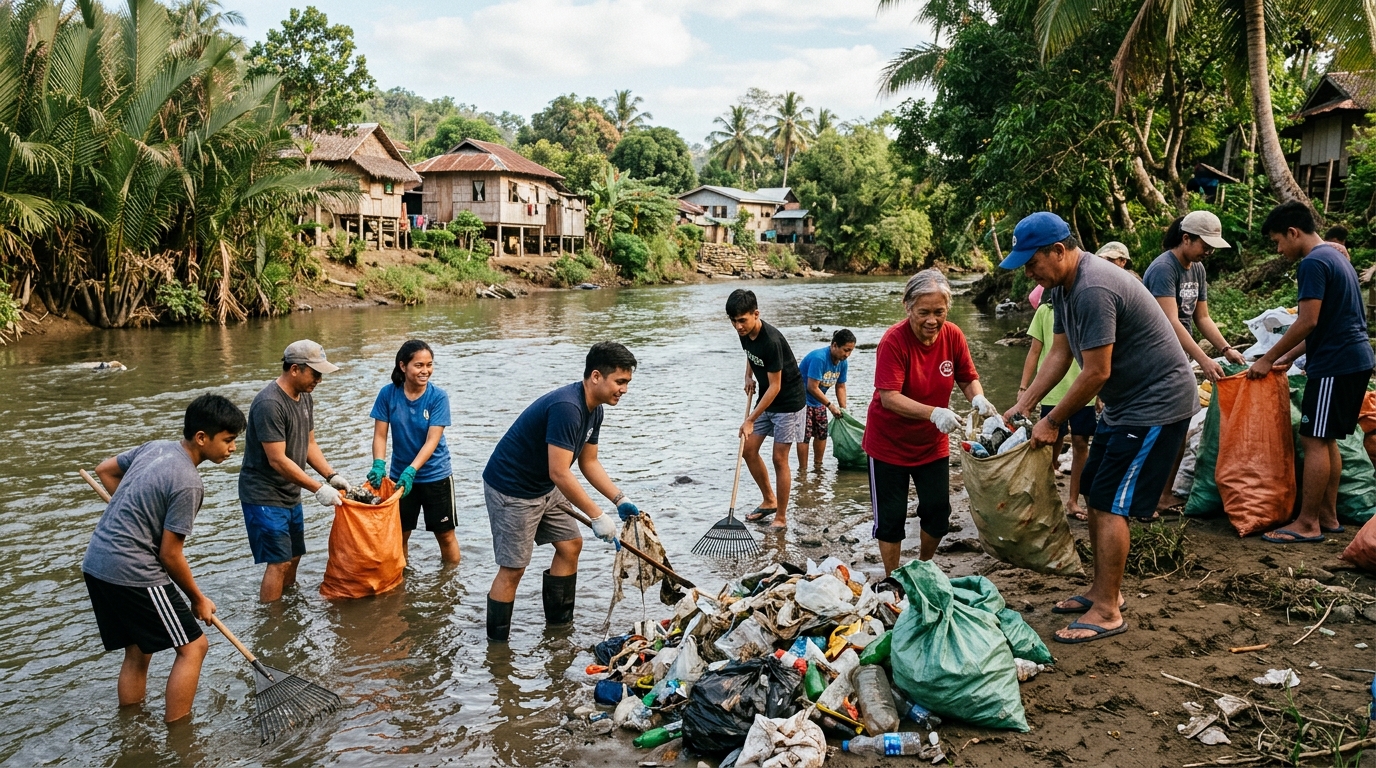
Under Oplan Kontra Baha, the river clean‑up combines manual labor from TUPAD workers with technical intervention by the DPWH and the Iloilo City General Services Office for in‑water debris removal. The beneficiaries—drawn from the ranks of disadvantaged workers and Pantawid Pamilyang Pilipino Program households—will spend 31 days pulling waste from creeks, clearing obstructions, and restoring stream flow in waterways that have been neglected for years. When the clean‑up concludes, the barangays will maintain waste traps installed as barriers to collect debris, and 4Ps beneficiaries will participate in community service to sustain the cleared riverbanks.
The initiative builds on dredging operations that began April 13 at Rizal Creek in Barangay Rizal, La Paz, a waterway the city's 2021–2029 Comprehensive Land Use Plan had already identified as critical. Led by the DPWH, the city government, and the Philippine Institute of Civil Engineers Iloilo Chapter—headed by Engr. Mavi Gustilo, who also chairs the Iloilo City Drainage Task Force—the Rizal Creek operation set the template. Similar operations are now underway at the Batiano River, spanning 17.5 kilometers from Barangay Santa Clara in Oton to Barangay Villa Alegre in Molo, where the DPWH reported 67.20 percent completion as of late April using an amphibious excavator. Barangay Cubay in Jaro and Barangay Taft North in Mandurriao have also been identified as priority sites.
A City That Is Learning to Hold Water
Oplan Kontra Baha does not stand alone. It arrives as the operational layer beneath a broader reimagining of Iloilo City's relationship with water. The city has adopted a "Sponge City" strategy that prioritizes permeable roads, rain gardens, green roofs, and rainwater harvesting over the conventional approach of channeling floodwater away as quickly as possible. The Iloilo River Esplanade, a 12‑kilometer corridor of restored riverbanks and mangrove plantings, has already demonstrated that nature‑based solutions can coexist with urban density. The city's flood control allocation for 2026 reached P250 million, directed at drainage and disaster mitigation projects across multiple barangays.
The PICE‑Iloilo Chapter described Oplan Kontra Baha's primary objective as "significantly mitigating the risk of severe localized flooding and systematically improving the maximum flow capacity of existing, heavily silted waterways that serve as the essential drainage arteries for Iloilo City." The language is technical, but the outcome is human: fewer homes submerged, fewer families displaced, fewer livelihoods interrupted. For the TUPAD workers who will spend May and June clearing creeks, the program is also an answer to a more immediate question—how to earn a wage in a season when construction slows and planting cycles are uncertain. Rodriguez framed the program as a convergence of environmental protection and disaster mitigation, and for the residents of seven barangays, that convergence will be measured in the depth of the water that does not enter their homes when the rains finally arrive.