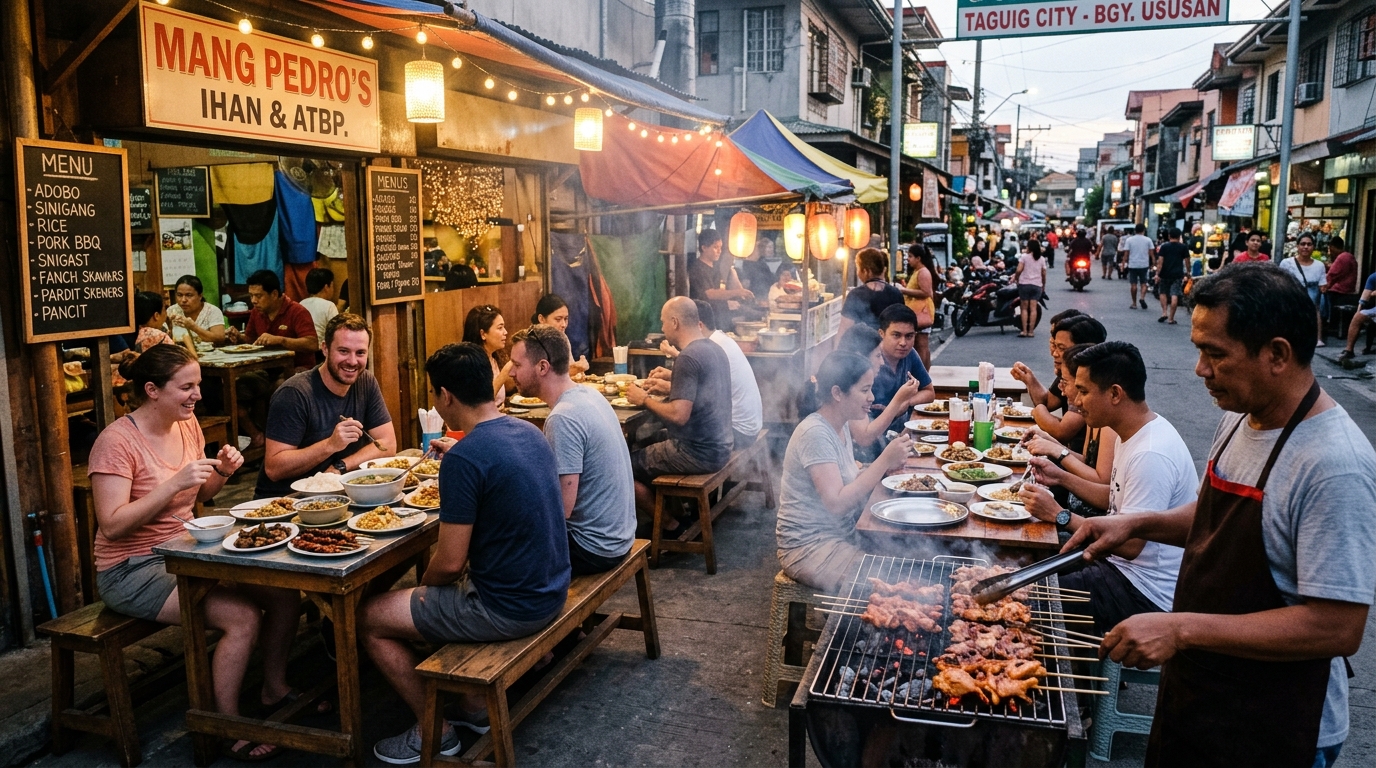
In 2026, Taguig is seeing growing interest in its local food tourism scene as visitors look beyond major commercial hubs and explore authentic Filipino dining experiences. Neighborhood eateries, small restaurants, and street food stalls across the city are becoming increasingly popular among both locals and tourists. These establishments offer affordable and traditional dishes that reflect everyday Filipino cuisine, providing a more grounded alternative to upscale dining. As tourism trends shift toward experiential travel, food has become one of the main reasons visitors explore different parts of Metro Manila, including Taguig’s residential areas.
The rise of culinary tourism in the Philippines is supported by national efforts to promote diverse travel experiences. According to the Philippine News Agency, tourism growth continues to be driven by domestic travel and the increasing interest of international visitors in local culture and cuisine. At the same time, the Department of Tourism (Philippines) has been encouraging the development of regional food experiences as part of its broader tourism strategy. This includes highlighting local flavors, supporting small food businesses, and promoting unique culinary destinations across urban areas like Taguig. As a result, food-related activities are becoming an important component of the city’s tourism appeal.
Beyond individual restaurants, Taguig’s community-based food spots—such as weekend markets, roadside grills, and family-run eateries—offer visitors a chance to experience authentic local culture. These places often serve as gathering points for residents, creating a lively and social dining environment that tourists find आकर्षive and immersive. By exploring these areas, visitors gain insight into daily life in Taguig while enjoying traditional Filipino dishes. In 2026, this growing food tourism trend highlights how Taguig is evolving into a more diverse destination, where cultural experiences and local flavors play a central role in attracting visitors.