ILOILO CITY — The city government has begun positioning 54 static water tanks across 25 barangays identified as highly vulnerable to water scarcity, a preemptive move designed to shield households from the worst of the looming El Niño. General Services Office head Neil Ravena confirmed on May 22 that the first deployments had already reached Hinactacan in La Paz, Calaparan in Arevalo, and several barangays in City Proper, with each 2,000‑liter tank prepositioned to receive bulk water deliveries on demand. “We have started the deployment of static tanks in Hinactacan and Calaparan, and this afternoon in City Proper areas,” Ravena said, adding that bulk water supplier Flowater has informed the city it is willing to provide water free of charge.
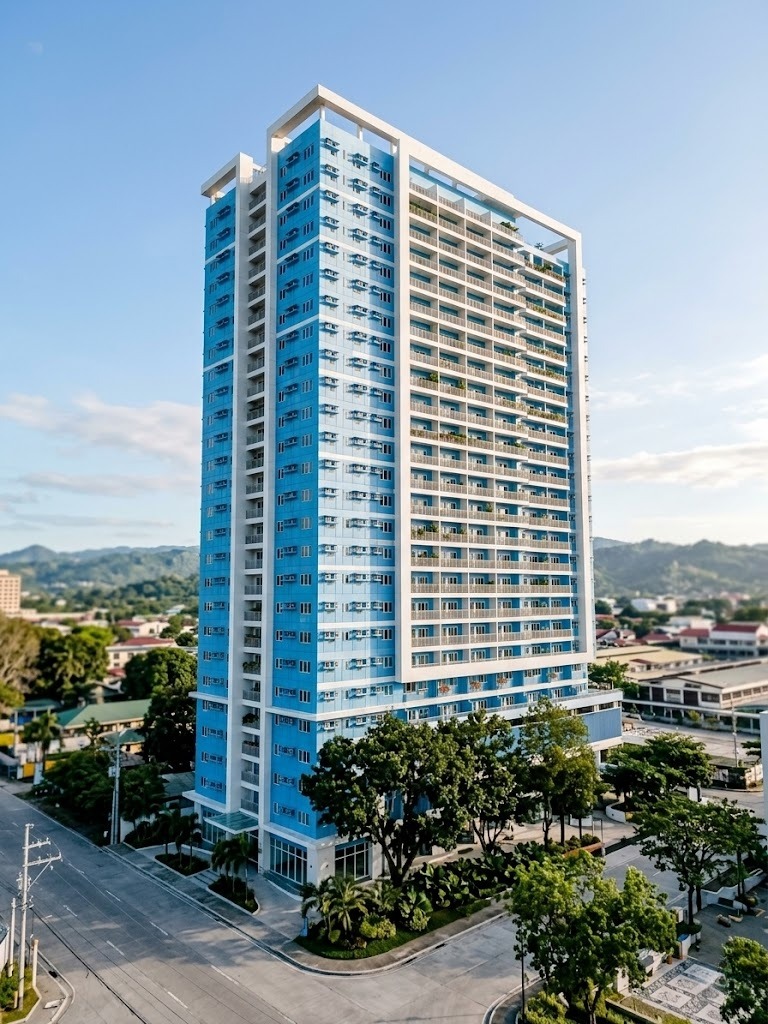
For Iloilo’s property market—where house‑and‑lot take‑up leads the Visayas‑Mindanao region at 96 percent and condominium absorption stands at 89 percent—the tank deployment represents a tangible layer of climate resilience that developers and investors increasingly factor into location decisions. Mayor Raisa Treñas, who has been coordinating directly with the Metro Iloilo Water District and Metro Pacific Iloilo Water, made the connection explicit. “Gin‑remind naton sila nga i‑update ang census data, especially sa mga bag‑o nga building developments, bangud madamo subong sang investors kag developments sa Iloilo City,” she said on May 21. Her statement links water infrastructure directly to the pace of new construction—a recognition that a city whose taps run dry cannot sustain the condominium towers and commercial buildings rising across its districts.
A City That Decided to Prepare, Not Panic
The City Disaster Risk Assessment identified the 25 vulnerable barangays, where approximately 11 percent of the total population is affected. These are mostly waterfront and coastal communities dependent on shallow wells, making them acutely sensitive to falling water tables and saltwater intrusion. Ravena confirmed that 10 barangays already have water supply at critical levels, and the city will reconvene next week to assess whether the number of affected barangays and individuals has increased. The 54 static tanks provide enough capacity for at least two tanks per barangay, with private partners on standby to augment supply if needed.
The deployment arrives as PAGASA places the probability of El Niño emerging between June and August 2026 at 79 percent, with conditions likely to persist into early 2027. The Regional Disaster Risk Reduction and Management Council has already rallied agencies and LGUs to cushion the impacts, with Iloilo, Guimaras, and Antique reporting emerging water scarcity and initial rationing efforts. On May 15, the MPIW implemented an emergency shutdown following the closure of the Moroboro Dam, while production at a treatment plant in Santa Barbara slowed due to the extreme heat. For residents of Veterans Village and Leganes, the daily reality has already become one of capturing faucet drips into drums. The static tanks are the city’s answer: not a permanent fix, but a buffer that keeps households supplied while longer‑term infrastructure catches up.
Beyond the Tanks: A ₱5‑Billion Water Security Pipeline
The static tanks are the most visible component of a layered water‑security architecture now taking shape across the province. Metro Pacific Iloilo Water has committed ₱5 billion across roughly 50 projects and 142 kilometers of pipeline for 2026–2027, targeting the recovery of 10 million liters per day through non‑revenue water reduction and service improvement. Modular desalination units have been deployed at two sites: a seawater reverse‑osmosis unit in Barangay Nabitasan, La Paz, and a brackish‑water reverse‑osmosis unit at Ateneo de Iloilo. More than 20 water tankers are on standby, supported by 24‑hour monitoring teams, continuous leak detection, and valving simulations. A proposed 65‑million‑liter‑per‑day desalination plant in Barangay Ingore is advancing through the permitting pipeline, with the mayor targeting 90 percent reliable water access citywide by 2028.
For property investors, these figures form a trajectory rather than a snapshot. The MPIW pipeline program replaces aging, undersized infrastructure that has contributed to system inefficiencies, while the desalination plant—once operational—will more than double service coverage from 28 percent to 60 percent. Each project shrinks the gap between Iloilo’s water supply and the demand generated by its record‑setting real estate absorption. Megaworld’s Iloilo Business Park alone generates an estimated 20,000 direct and 80,000 indirect jobs across 13 office towers, and every new condominium or office building that comes online adds to the load on a water system that the city and its utility partners are now racing to reinforce.
Water Reliability as the Next Property‑Value Differentiator
Iloilo’s property market has already outpaced Metro Cebu in total occupied office transactions for the first time, and Western Visayas was the country’s fastest‑growing regional economy in 2025. Colliers Philippines has described the region as one of the most active real estate markets outside Metro Manila, driven by BPO expansion, OFW remittances, and a growing base of young professionals. But sustained absorption at these levels requires that the infrastructure beneath the buildings—the pipes, the treatment plants, the storage tanks—keeps pace with the towers rising above them. The 54 static tanks now positioned across 25 barangays are a small but telling signal that the city government understands this equation.
The longer‑term implications extend to which barangays attract the next wave of residential development. Areas with reliable water access—whether through piped supply, static tank coverage, or proximity to the future desalination plant—will command a premium over those that remain dependent on shallow wells vulnerable to El Niño. Developers scouting land in Mandurriao, Jaro, and La Paz are already factoring water infrastructure into their site‑acquisition calculus, and the city’s transparent, census‑based approach to identifying vulnerable barangays provides the data they need to make informed decisions. For the families living in Hinactacan, Calaparan, and the City Proper barangays where the first tanks now stand, the deployment is simply water when they need it. For the property market that surrounds them, it is one more reason to believe that Iloilo’s growth is built to last.