MAKATI CITY — On March 19, 2026, inside a room where the weight of precedent hung as palpably as the air-conditioning, Energy Regulatory Commission Chairperson Atty. Francis Saturnino C. Juan handed Mayor Nancy Binay a Certificate of Recognition that no Philippine local government had ever held before. Makati City had just been formally cited as the first LGU in the country to champion 100 percent renewable energy utilization under the Retail Competition and Open Access framework and the Retail Aggregation Program. The recognition was not ceremonial window dressing. It was attached to a nine-year Renewable Energy Supply Agreement with ACEN Corporation that will shift all 154 city government facilities—including New Makati City Hall, Ospital ng Makati, and the University of Makati—from conventional power to electricity sourced entirely from ACEN's solar, wind, and geothermal plants. Nearly 10 megawatts of combined load will now run on clean energy. For the property sector, the deal represents something that no amount of marketing copy could manufacture: a city government willing to stake its own operating budget on the proposition that renewable energy is not a gesture but a governance model.
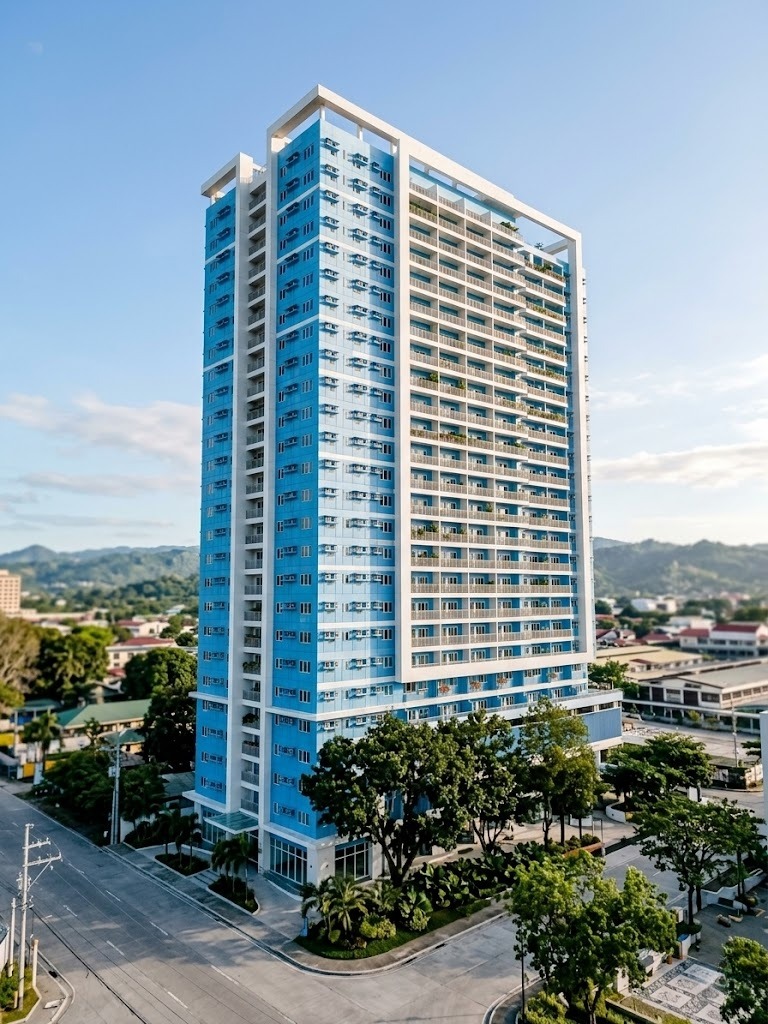
The real estate significance of the ERC recognition lies not in the savings—though the projected ₱300 million over nine years, generated through a guaranteed discount on prevailing utility generation charges, is substantial. It lies in the signal. Makati, the country's densest and most economically active financial district, has effectively declared that the future of urban infrastructure is renewable, and it has anchored that declaration in a binding, decade-scale contract with one of Southeast Asia's largest clean-energy providers. For the landlords and developers who own the towers that line Ayala Avenue, Gil Puyat, and the broader Makati CBD, that signal is already translating into action. Federal Land's Philippine AXA Life Center, a 28-story office tower, signed its own renewable energy supply deal with ACEN RES in February 2026 under the government's Green Energy Option Program, joining a growing roster of commercial properties that are decoupling their power supply from the fossil-fuel grid.
A Hedge Against the Crisis That Property Investors Cannot Ignore
Mayor Binay framed the agreement in terms that deliberately connect energy policy to fiscal resilience. "At a time when global uncertainties, including ongoing conflicts in the Middle East, continue to put pressure on power prices, this partnership is both timely and strategic. It strengthens our energy security while reducing the impact of rising costs of electricity on the city's resources." The arithmetic is straightforward. Electricity is the single largest operational expense for most commercial buildings in the Makati CBD. A lease that can guarantee tenants a power supply hedged against oil-price volatility is a lease that commands a premium. A building whose operational costs are insulated from the fuel-price surges that have plagued the Philippine grid since mid-2024 is a building that retains tenants and sustains rental income through market cycles.
The ₱300 million in projected savings over nine years, while directed at public coffers, sends a parallel message to the private sector. If a government entity with 154 facilities can save that amount by switching to renewable energy, a private office tower with comparable load can achieve similar operational efficiencies. ACEN RES, the retail electricity supply unit of the Ayala group, has become the leading supplier under the Green Energy Option Program—a policy that enables end-users with an average monthly peak demand of at least 100 kilowatts to choose their preferred clean power provider. Makati's decision to go all-in as an LGU effectively validates the GEOP framework at a scale that no previous participant had attempted.
EV Charging Stations and the Infrastructure of the Next Decade
As part of the agreement, ACEN will install 19 electric vehicle charging stations at city facilities at no cost to the local government. These stations, powered by the same renewable supply, will support the city's growing fleet of e-jeepneys, e-buses, and e-shuttles. For property developers, the charging-station network represents a piece of infrastructure that did not exist in Makati a year ago but will soon be woven into the urban fabric. A condominium or office tower located within walking distance of a municipal EV charging hub gains a differentiated amenity—one that aligns with the ESG mandates that increasingly govern the site-selection decisions of multinational tenants.
Mayor Binay has described the broader vision in terms of a circular economy: "Clean energy powering our buildings, that same energy powering our electric vehicles, and savings going back to public services. That is what a circular economy looks like in practice, and Makati will be the proof of concept." The city is also formulating a Makati Green Building Code to fast-track the adoption of energy-efficient and low-carbon building practices. For the real estate sector, which already operates within Makati's existing Green Building Code and Solar Energy Systems Ordinance—the latter exempting accessory solar energy systems from real property tax and simplifying permitting requirements—this signals that the regulatory environment will continue to tilt toward sustainability.
What the First-Mover Advantage Means for Property Values
Over the life of the contract, the transition is expected to prevent approximately 289,885 metric tons of carbon emissions—equivalent to removing 62,000 cars from the road or preventing the combustion of 108 million liters of diesel. Those figures are environmental, but their economic translation is becoming clearer as institutional investors and corporate lessees incorporate carbon-footprint criteria into their due diligence. A building located in a city where the government itself has gone 100 percent renewable carries a lower regulatory and reputational risk than one in a city where the grid remains fossil-dependent. "We want other cities to look at what we did here and say, 'We can do that too.' If the most urbanized, most densely populated financial district in the country can run on renewable energy, then other cities will also be inspired to try," Mayor Binay said. For the landlords of Makati, that sentence is not merely civic rhetoric. It is a property-value proposition, delivered by the city's highest elected official, with a nine-year contract to back it up.