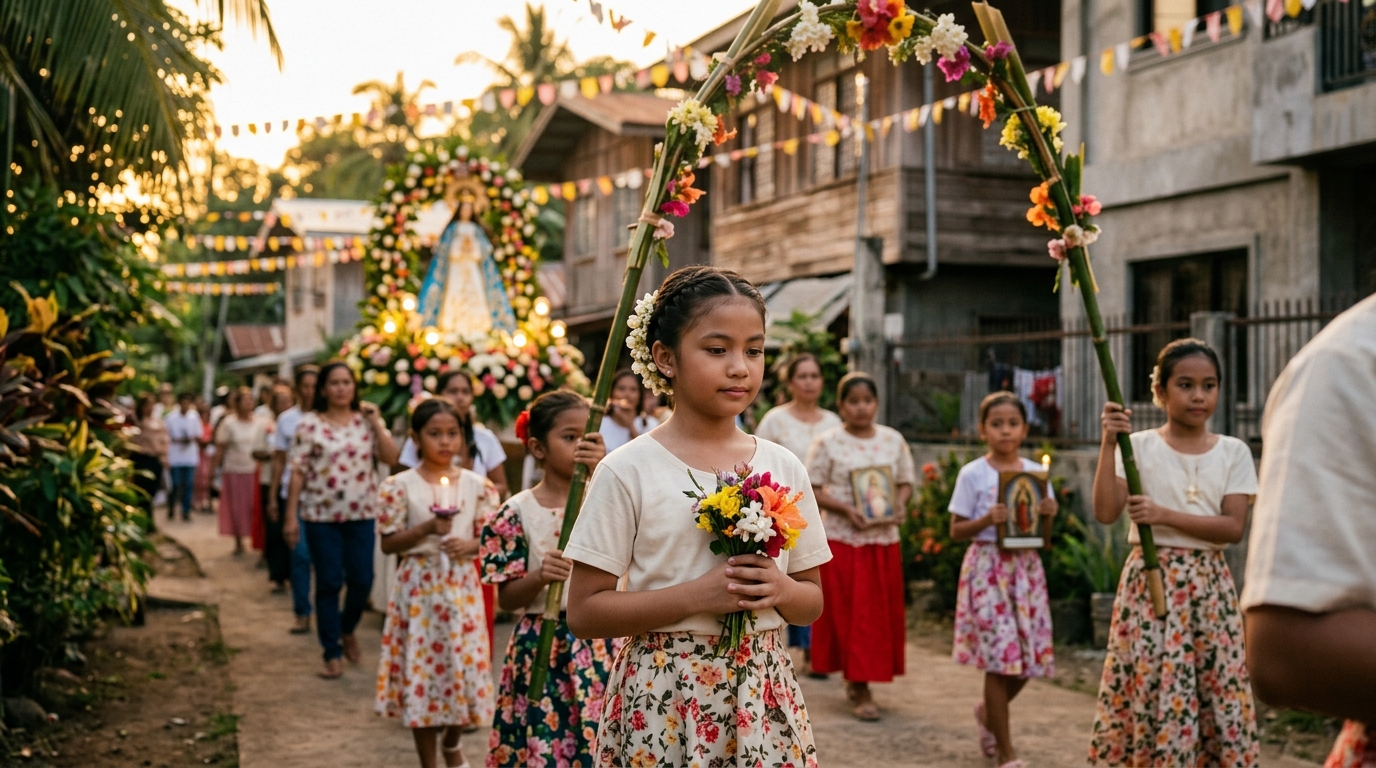
MAKATI CITY — Beautifully crafted gowns, vibrant arches adorned with intricate designs, and carefully handpicked bouquets of flowers filled the streets of Makati City on Saturday evening, May 16, 2026. This timeless spectacle was showcased during the annual Flores de Mayo procession held at the St. Andrew the Apostle Parish in Makati City. Behind this visually captivating cultural celebration lies a profound, faith-driven movement rooted in Marian devotion.
The Difference Between Flores de Mayo and Santacruzan
Flores de Mayo is a spiritual tradition that traces back to the time of the Spanish friars, who used it as a form of catechesis to teach the Catholic faith to early Filipinos. The tradition features characters that come from biblical stories, with Reyna Elena being the most famous figure as the discoverer of the cross used for Jesus' crucifixion. Offering flowers to the Blessed Mother remains a prominent way Filipino Catholics express their closeness to Christ through Mary's intercession.
The Tradition Behind the Procession
The procession features participants wearing elaborate gowns and walking beneath decorated arches. The characters in the parade are drawn directly from biblical characters meant to reinforce historical faith. Reyna Elena takes center stage as the specific figure who discovered the crucifix or the cross used for Jesus.
Beyond the Visual Spectacle: A Faith-Driven Movement
According to Fr. Ryan Jamemar Belono-ac, a formator at San Carlos Seminary, the multi-century tradition of Flores de Mayo traces back to early Spanish friars who used the practice as a form of catechesis. The phrase "Pueblo Amante de Maria," or "A Nation in Love with Mary," reflects how the Philippines continues to uphold its reverence for the Blessed Mother. The Philippines is known as a country close to the heart of Mary, and this enduring devotion serves as a reminder of her maternal presence amid changing times.