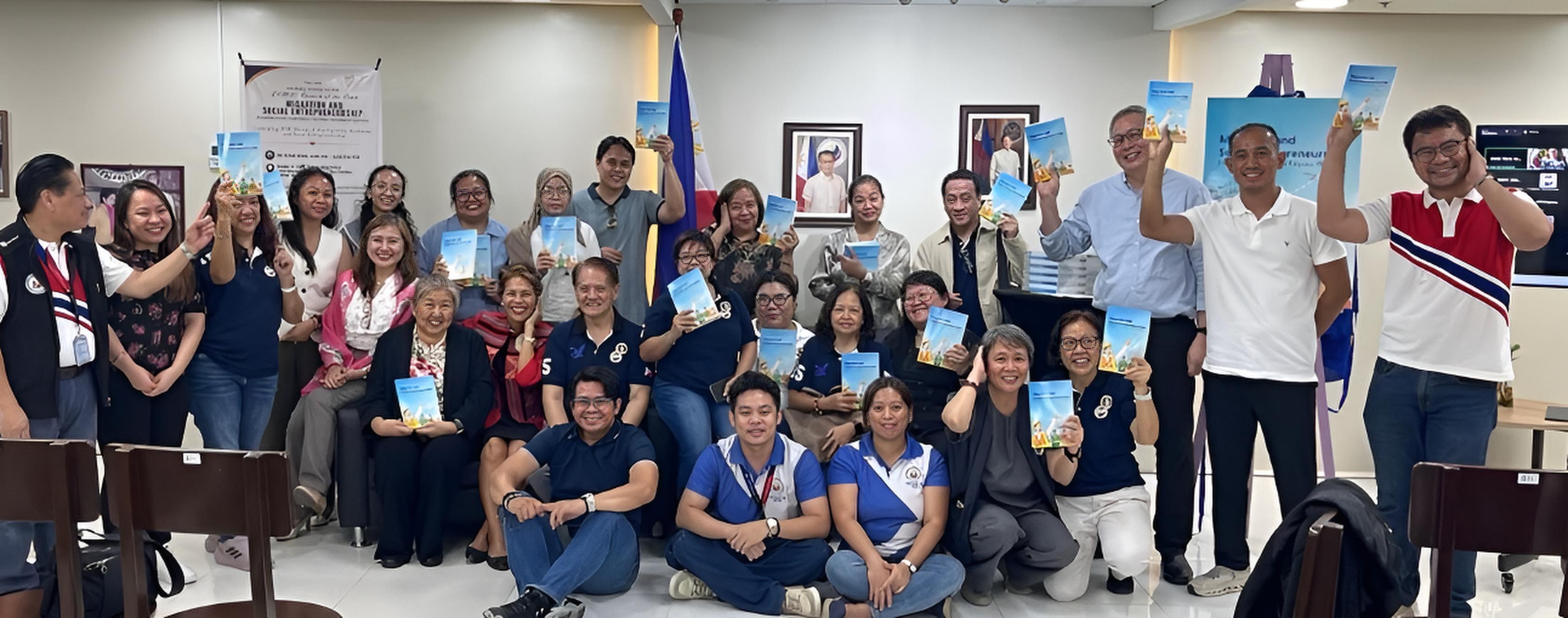
MAKATI CITY — The Department of Migrant Workers (DMW) officially launched the book “Migration and Social Entrepreneurship: Journeys of Overseas Filipino Workers” on June 20, 2026, at the Susan V. Ople Labor Migration and Development Resource Center. The publication turns the spotlight on former OFWs who transformed their overseas experiences into thriving community enterprises.
A Milestone for Migrant Workers’ Month
The launch served as a key event in the month‑long celebration of Migrant Workers’ Month, themed “Serbisyong Buo, Kalingang Totoo.” DMW Secretary Hans Leo Cacdac had earlier emphasized that June’s activities aim to shift the conversation from crisis repatriation to long‑term, sustainable reintegration. This book embodies that shift.
The volume was co‑written by economist Dr. Philip Arnold Tuano and case writers from the Ateneo Leadership and Social Entrepreneurship (ALSE) Program. A ceremonial copy was turned over to the Susan V. Ople Library, ensuring the stories will serve as a permanent reference for policymakers, scholars, and future OFW entrepreneurs.
Real Stories of Transformation
Each chapter documents a former migrant worker who used skills and savings acquired abroad to launch a social enterprise back home. One story features a domestic worker who now runs a community bakery employing single mothers; another highlights a seafarer who built a water‑refilling station serving a remote barangay.
These narratives are not just uplifting anecdotes. They provide a practical roadmap for turning remittance‑funded consumption into productive, community‑based investments. The book illustrates that migration, when paired with the right support systems, can become a powerful engine for local economic development.
The ALSE Program and Academic Backing
The Ateneo Leadership and Social Entrepreneurship Program, a 17‑year‑old initiative, provided the research backbone. Operating in over 39 countries with more than 5,200 alumni, ALSE offers a six‑month certificate course that trains OFWs in leadership, financial literacy, and social enterprise planning. The book’s case studies draw directly from its graduates.
Ateneo School of Government’s involvement ensures that the publication is grounded in rigorous methodology. The partnership between the university, the National Reintegration Center for OFWs (NRCO), and the Overseas Filipino Society for the Promotion of Economic Security demonstrates how academe and government can collaborate to document and scale successful reintegration models.
A Whole‑of‑Government Reintegration Push
The book aligns with the DMW’s “Kabuhayan, Kaalaman, Kalinga, Kaagapay” framework. It serves as a resource under the “Kaalaman” pillar, providing knowledge that returning workers can use to plan their next chapter. The NRCO spearheaded the project to show concrete proof that social entrepreneurship mitigates the social costs of migration.
Assistant Secretary for Reintegration Services Francis Ron De Guzman noted that the government’s responsibility extends beyond safe repatriation. Reintegration, he said, is a whole‑of‑government initiative combining services from multiple agencies to help OFWs and their families transition back into local communities with dignity and purpose.
Empowering the Next Wave of OFWs
By showcasing successful reintegration stories, the DMW hopes to inspire more returning workers to view homecoming not as an end but as a new beginning. The book will be distributed to NRCO field offices, overseas posts, and reintegration caravans nationwide. It stands as a testament that the journey of an OFW can lead back home, carrying seeds of lasting change.