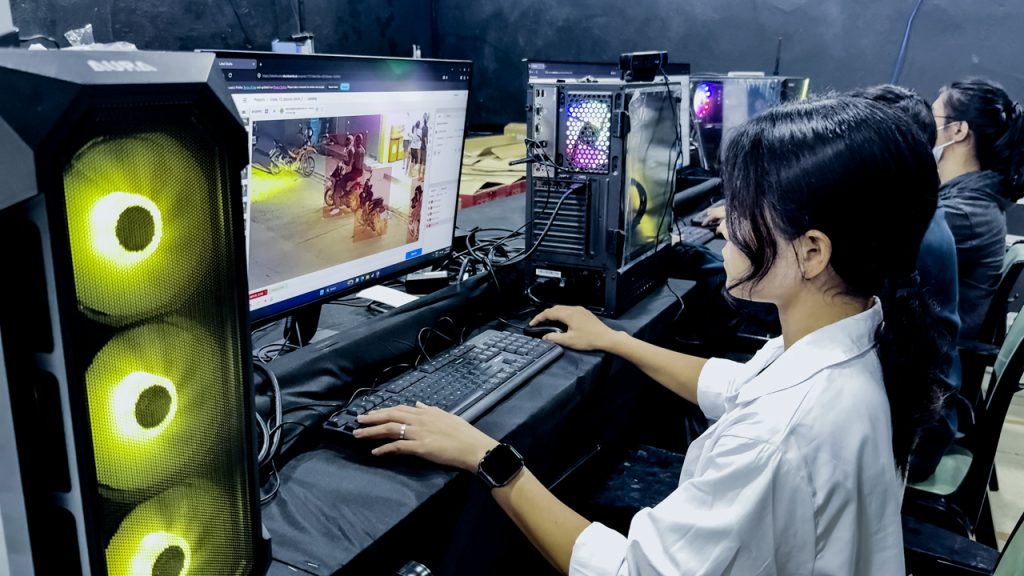
PHILIPPINES — The Department of Migrant Workers (DMW) and Amazon Web Services (AWS) met on May 14 to explore a partnership that would provide overseas Filipino workers with free training in artificial intelligence and cybersecurity, a move designed to transform digital upskilling into a sustainable reintegration pathway.
A New Era of Digital Skills for Returning OFWs
The discussions centered on the DMW’s “Kaalaman to Kabuhayan” program, which positions digital literacy as the bridge between knowledge and livelihood. Officials examined how AWS's resources could be deployed to create both short-term certifications and long-term learning courses covering AI utilization, machine learning, and cybersecurity awareness.
This initiative arrives at a pivotal moment for thousands of repatriated OFWs. With over 7,900 workers and dependents returning from the Middle East between March and late April 2026 alone, demand for marketable, future-proof skills has never been greater. The program represents a deliberate shift away from generic training toward high-demand digital competencies.
The collaboration also complements existing government efforts. TESDA has already begun offering courses in virtual assistance, AI, data annotation, and drone operation, with DMW identifying beneficiaries—including family members—for these enterprise-based programs. The AWS partnership would layer world-class cloud computing and AI curriculum on top of this foundation.
Cybersecurity Awareness as a Protective Shield
Beyond technical career skills, the proposed training addresses a darker dimension of digital life: the escalating threat of online scams, misinformation, and digital exploitation that increasingly targets Filipinos working abroad and those transitioning home.
This protective focus aligns with other DMW initiatives launched in 2026, including a memorandum of understanding with the Global Anti-Scam Alliance to boost cross-border intelligence sharing and equip OFWs with enhanced fraud detection tools. Adding AWS-powered cybersecurity modules would deepen this safety net substantially.
The training is expected to cover practical cybersecurity awareness, a skill set that protects not only individual workers but also their remittances and personal data. As digital fraud increasingly becomes a global cybercrime concern, making OFWs digitally literate serves both their economic interests and their personal security.
From Training to Tangible Livelihood
DMW Undersecretary Felicitas Bay recently emphasized that training programs must create real pathways to quality employment, not just certificates. The AWS collaboration is being designed with this outcome-focused philosophy, exploring how cloud computing certifications can translate into remote work opportunities, freelance contracts, or employment with technology firms.
The timing is strategic. AWS has signaled that its digital skills initiatives in the Philippines are set to accelerate throughout 2026, with an emphasis on accessible, community-driven training and nationwide talent development. For OFWs, this means access to credentials recognized by a global technology leader, credentials that carry weight whether they choose to remain in the Philippines or seek overseas employment again.
The DMW has framed private-sector collaborations as essential to making AI-driven skills training inclusive, particularly for OFW households that have historically had limited exposure to emerging technologies. By embedding these partnerships into its reintegration architecture, the department is betting that digital upskilling can break cycles of re-migration driven by a lack of local opportunities.