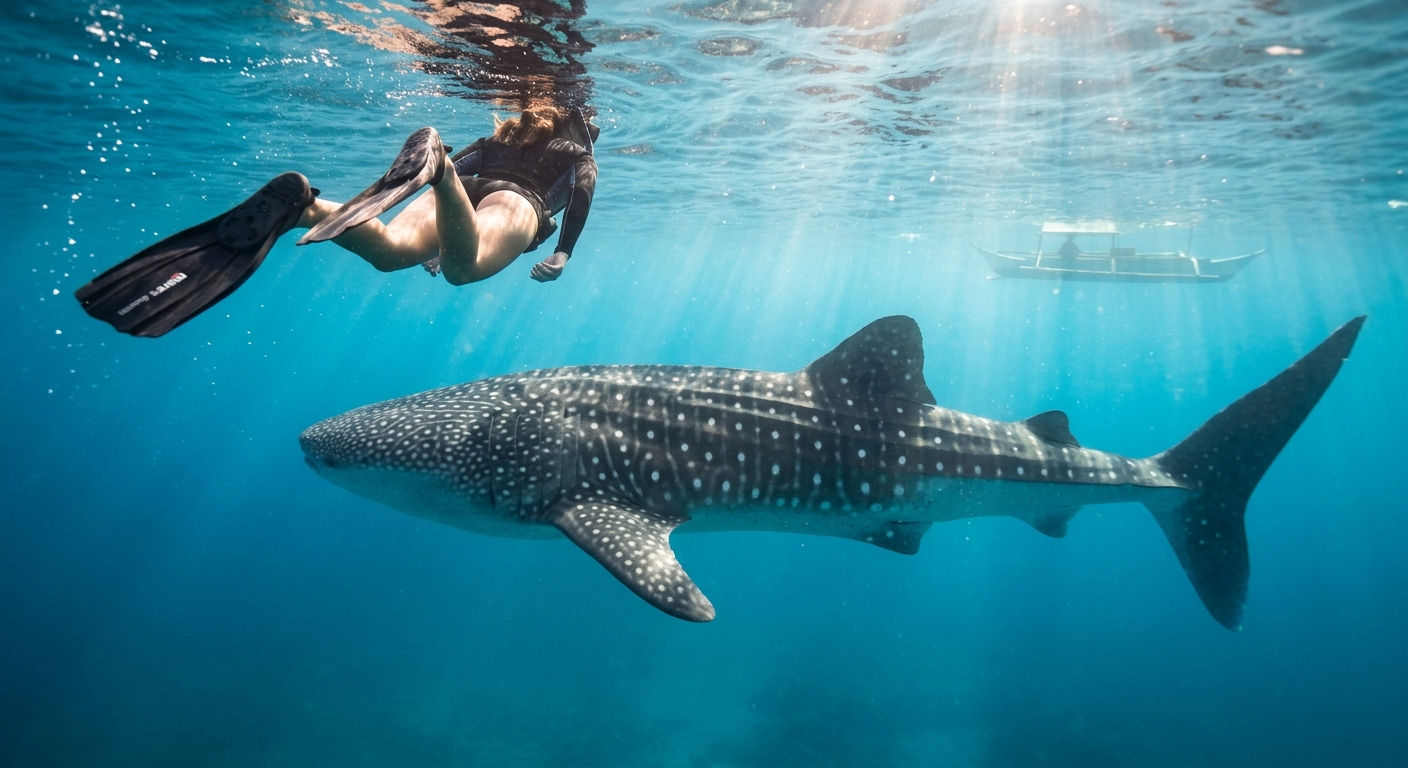
PANGLAO, BOHOL — Bohol has reopened its waters to one of nature's gentlest giants, but this time with rules designed to protect both the whale sharks and the visitor experience. The provincial government has signed the Implementing Rules and Regulations for its Enhanced Sustainable Marine Wildlife Interaction Ordinance. The updated policy enforces strict conservation standards for whale shark encounters, ensuring that tourism and protection go hand in hand.
The return of regulated whale shark interactions marks a new chapter for responsible marine tourism in Bohol. The encounters are designed to be low‑impact and carefully managed, offering visitors the rare chance to observe these magnificent animals in their natural habitat. For travelers seeking meaningful nature‑based experiences, the ordinance provides assurance that their visit supports long‑term marine ecosystem protection.
A Complete Island Escape, Responsibly Managed
Beyond the whale shark encounters, Bohol offers a full spectrum of island experiences. Visitors can explore the white sand beaches of Panglao, cruise along the Loboc River, visit the iconic Chocolate Hills, and dive into vibrant coral reefs. Centuries‑old churches and cultural heritage sites add depth to the island's appeal. The new marine conservation framework ensures that every wildlife interaction meets international sustainability standards.
The whale shark experience is not an isolated attraction but part of a broader eco‑tourism strategy. Bohol's waters are home to diverse marine life, and the provincial government is committed to ensuring that tourism does not degrade the ecosystems that sustain it. The ordinance represents a deliberate effort to balance economic opportunity with environmental responsibility, creating a model for other Philippine destinations to follow.
An Eco‑Airport Welcome
Every journey to Bohol begins at the Bohol–Panglao International Airport, the country's first eco‑airport. Operated by Aboitiz InfraCapital Bohol Airport Corporation, the facility features natural ventilation, solar power systems, rainwater harvesting, and open green spaces. It reflects the island's commitment to sustainability from the moment travelers arrive.
The airport's design aligns with the same values driving the whale shark ordinance. Just minutes from major beach resorts and tourism hubs, it allows visitors to move quickly from arrival to island experiences. As global travelers increasingly seek destinations that prioritize environmental stewardship, Bohol's combination of eco‑friendly infrastructure and regulated wildlife encounters strengthens its position as a premier Philippine destination.