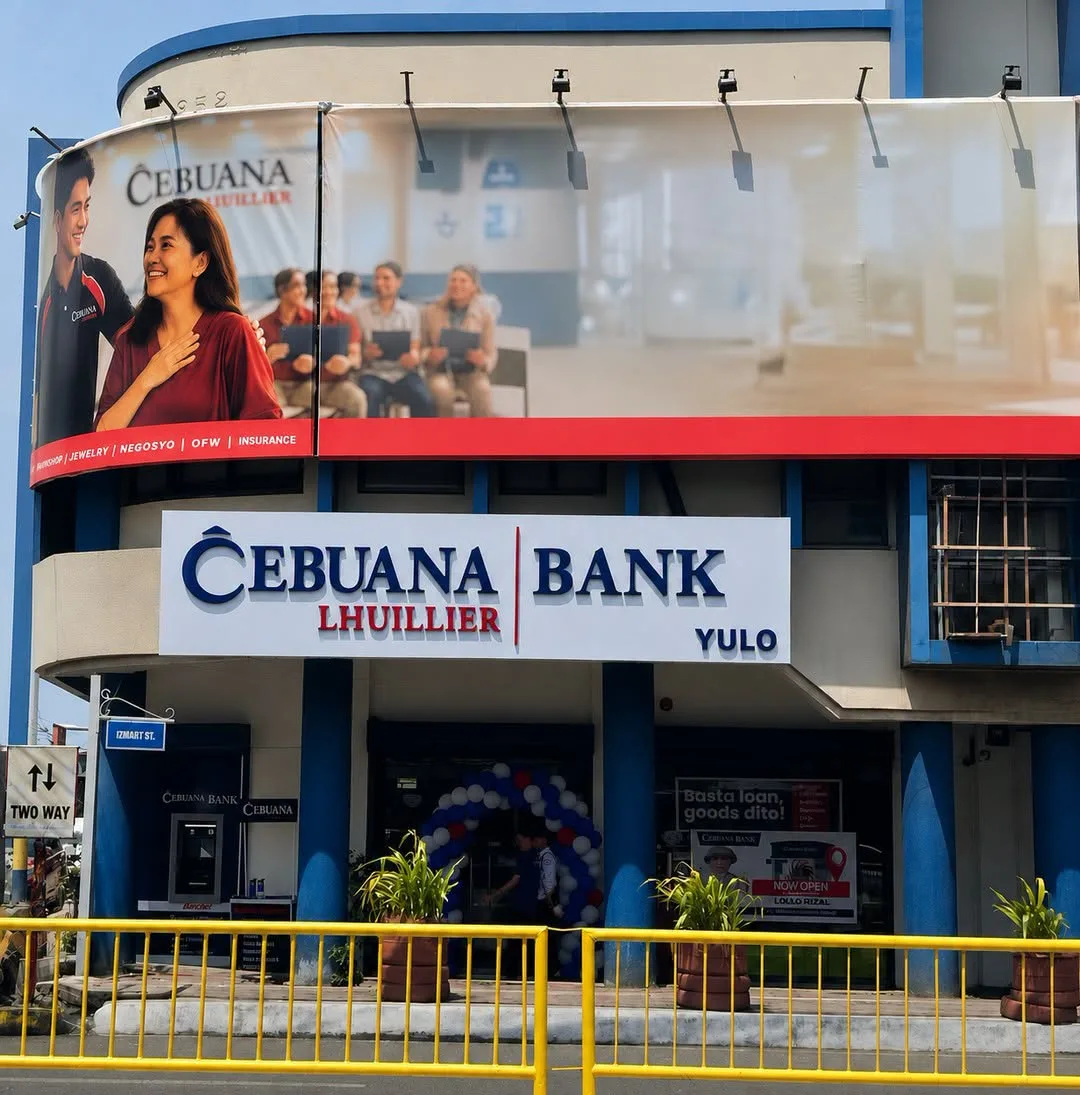
ILOILO CITY — Cebuana Lhuillier Bank (CL Bank) has quietly opened the doors of its newest branch in Yulo, a bustling commercial pocket that serves a dense mix of homes, schools, markets, and small businesses. The soft launch marks the bank’s 11th branch nationwide and signals a fresh push to weave formal financial services into the daily fabric of Iloilo’s economy.
A Strategic Spot for Everyday Finance
The Yulo branch is not a standalone outlet; it sits alongside a Cebuana Lhuillier pawnshop, creating a co‑located model that pairs lending and banking under one roof. For a resident who drops by to pawn an item, opening a savings account or applying for a small business loan becomes a natural next step. The design eliminates the intimidation of a formal bank and replaces it with the familiarity of a trusted neighborhood fixture.
The location was chosen deliberately. Yulo is a transit point for students, market vendors, and workers who move between residential barangays and commercial centers. By planting itself in this daily flow, CL Bank hopes to capture transactions that previously stayed in informal channels. A market vendor who ends the day with cash can deposit earnings immediately, a jeepney driver can secure a microloan for vehicle repairs, and a family can open an educational savings plan all within walking distance.
Building on Decades of Trust
CL Bank draws its identity from the same roots that built the Cebuana Lhuillier brand into the country’s largest pawnshop network with over 3,000 locations. Founded in 1953 as Agencia Cebuana in Cebu, the group has long been a fixture in communities where formal banking remains out of reach. The bank, established in 1998 and regulated by the Bangko Sentral ng Pilipinas, translates that grassroots credibility into regulated financial products.
President and CEO Jean Henri Lhuillier said the expansion is about more than counting branches. He framed it as a mission to bring banking closer to the places where people actually live and work. The bank’s rural banking license allows it to tailor products for micro‑entrepreneurs and wage earners, segments that often struggle to meet the minimum requirements of larger commercial banks. For Iloilo, a province experiencing rapid urbanization, this accessibility can accelerate local enterprise.
Fueling Iloilo’s Commercial Vibe
Iloilo has been on an upward economic trajectory, with its mix of BPO growth, infrastructure upgrades, and agricultural commerce driving demand for financial services. The Yulo branch positions CL Bank in one of the city’s emerging corridors, where residential subdivisions are rising and new businesses are opening. Access to credit and savings tools in these areas can multiply the pace of development.
Small sari‑sari store owners, tricycle operators, and home‑based food sellers often operate outside the banking system, limiting their ability to expand. CL Bank’s presence offers them a formal entry point to manage cash flow, build credit history, and protect earnings. The branch also serves the growing population of young professionals moving into Yulo’s surrounding neighborhoods, providing a convenient alternative to larger banks.
A Model That Works
The co‑located model has proven effective in other branches, capitalizing on the high foot traffic of pawnshops. When a customer visits to send remittances or pawn jewelry, the bank counter is just a few steps away. This proximity turns casual visitors into informed clients, gradually increasing financial literacy and inclusion. The model also reduces operational costs, allowing the bank to maintain a lean, efficient presence.
CL Bank plans to continue this rollout in other high‑growth areas nationwide, recognizing that the informal sector remains vast. The Yulo branch is a test case for how a familiar brand can bridge the gap between unbanked communities and the formal economy. For Iloilo City, it is another sign that the financial infrastructure is catching up with economic ambition.