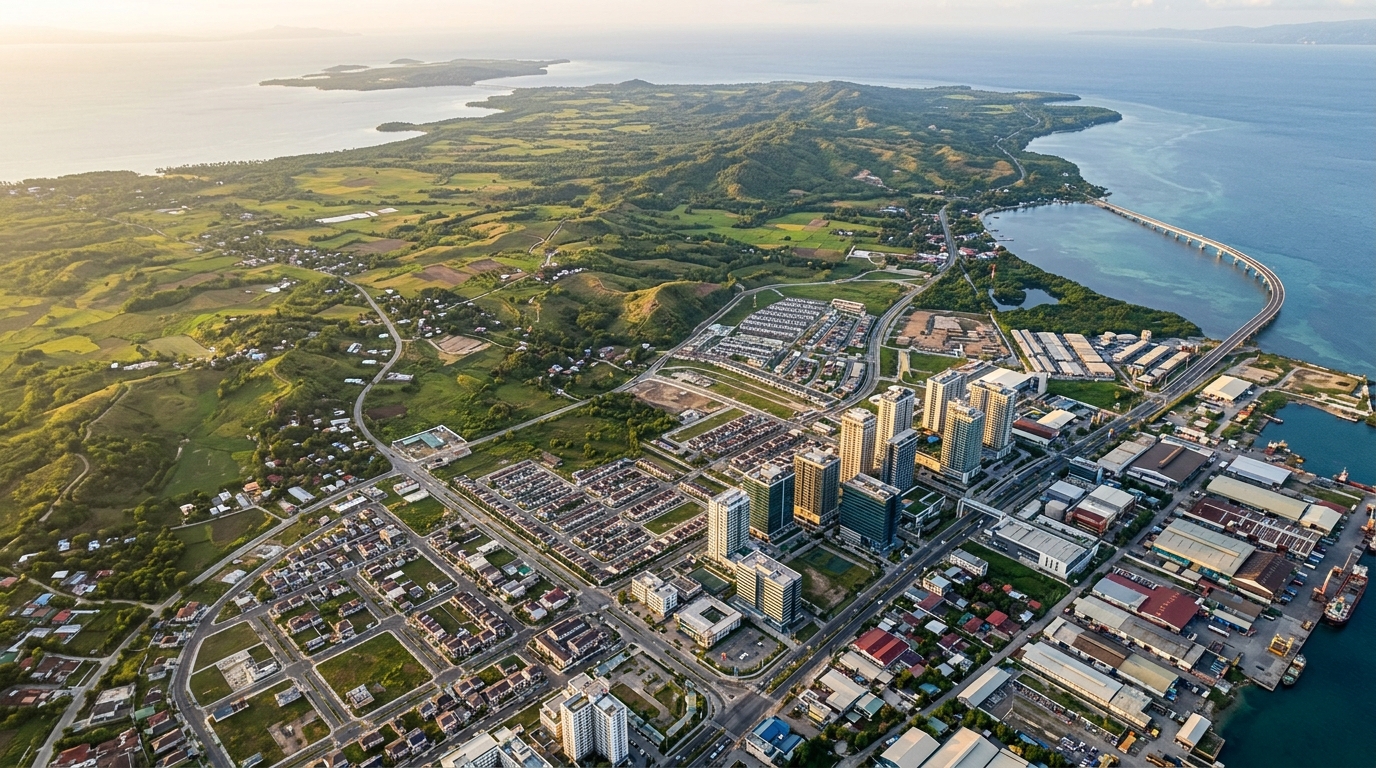
Cebu City, Philippines – The Cebu Provincial Assessor's has developed a draft of 2027 Schedule of Market Values, which aims to systematically readjust the valuation of real properties in all 44 municipalities within the province. Although implementation is expected to take several years, any additional taxes will be capped by law.
According to Cebu Provincial Assessor Michelle Languido, the revised valuation was made in consideration of a thorough study conducted with the assistance of assessors from different municipalities. This move will guarantee that the property valuation of all properties in the province will be equitable and reasonable for their respective property owners.
Valuation Disparity Across Metro and Rural Cebu
The proposed schedule clearly indicates a distinct difference between the corridors and the rural towns. First, cities close to the tri-city metro area like Consolacion, Liloan, Minglanilla, and Cordova will take the lead in having the highest base values. Within these preferred areas, the prime residential land (R1) land is likely to have a price tag as high as ₱8,500 per square meter. The high-end subdivisions (RS1) area will have the price as high as ₱11,800 per square meter. The Commercial zones (C1) zone will fetch ₱15,800 per square meter, while top-tier industrial land (I1) will have a price as high as ₱25,100 per square meter.
On the other hand, the more distant municipalities , particularly Bantayan, Badian, Daanbantayan, and Alcantara, will retain significantly lower figures. In fact, there could be some residential categories in this area that would belong to a limited range from ₱300 to ₱500 per square meter. At the same time, there are some towns like Dalaguete, Argao, and Balamban which belong to a moderate range of valuation, reflecting a mix of commercial and agricultural land use.
Residential lands are categorized from R1 (prime) to R6 (less developed zones), while subdivisions are separately classified from high-end (RS1) to economic housing (RS4).
What the Numbers Signal for the Real Estate Sector
For the real estate sector, the proposed figures serve as an official recognition of where market growth is concentrated. The valuations provide a formal benchmark that may influence appraisals and asking prices even before taking legal effect for taxation.
Crucially, the tax impact will be muted. Under Republic Act No. 12001, or the Real Property Valuation and Assessment Reform Act (RPVARA), any increase in revenue from updated values is capped at six percent of current collections. This means annual property tax bills in high-growth areas will rise gradually rather than abruptly. The actual burden will ultimately depend on assessment levels to be set by the Sangguniang Panlalawigan.
The proposed industrial valuations signal continued expansion in manufacturing and logistics corridors, while low rural values may keep those areas attractive for agri-tourism or retirement developments, subject to infrastructure availability.
Public Hearings and Approval Timeline
The provincial government held public hearings to gather stakeholder feedback, with sessions scheduled on April 6 in Cordova and April 7 in San Fernando. Languido said inputs from the public will be incorporated into the final report.
Following the hearings, the revised proposal will undergo review by the Bureau of Local Government Finance Central Visayas, then elevation to the BLGF central office and the Department of Finance for final approval. Once approved, the document returns to the province for the Sangguniang Panlalawigan to determine applicable assessment levels.
"Once approved it will be forwarded back to us. We will then submit it to the SP for them to decide what assessment level to be used," Languido said.
Implementation Seen by 2028; Amnesty Window Open
Languido projected implementation between 2028 and 2030, following enactment into an ordinance and completion of a general revision of property values. The current valuation schedule, effective since 2023, remains in force.
The RPVARA replaces earlier provisions of the Local Government Code that would have triggered a revision this year. The new law effectively delays the adjustment while providing relief through the six percent revenue cap.
Property owners may also avail of a tax amnesty program under current rates until July 2026, offering a window to settle obligations before any new framework takes hold.
"They should appreciate the said mandate. Why? Because taas-taas ang duration under LGC supposedly this 2026 mo-take effect, but because of this new law, we retain the current values. Still under this law, they can avail the tax amnesty till July 2026," Languido said.