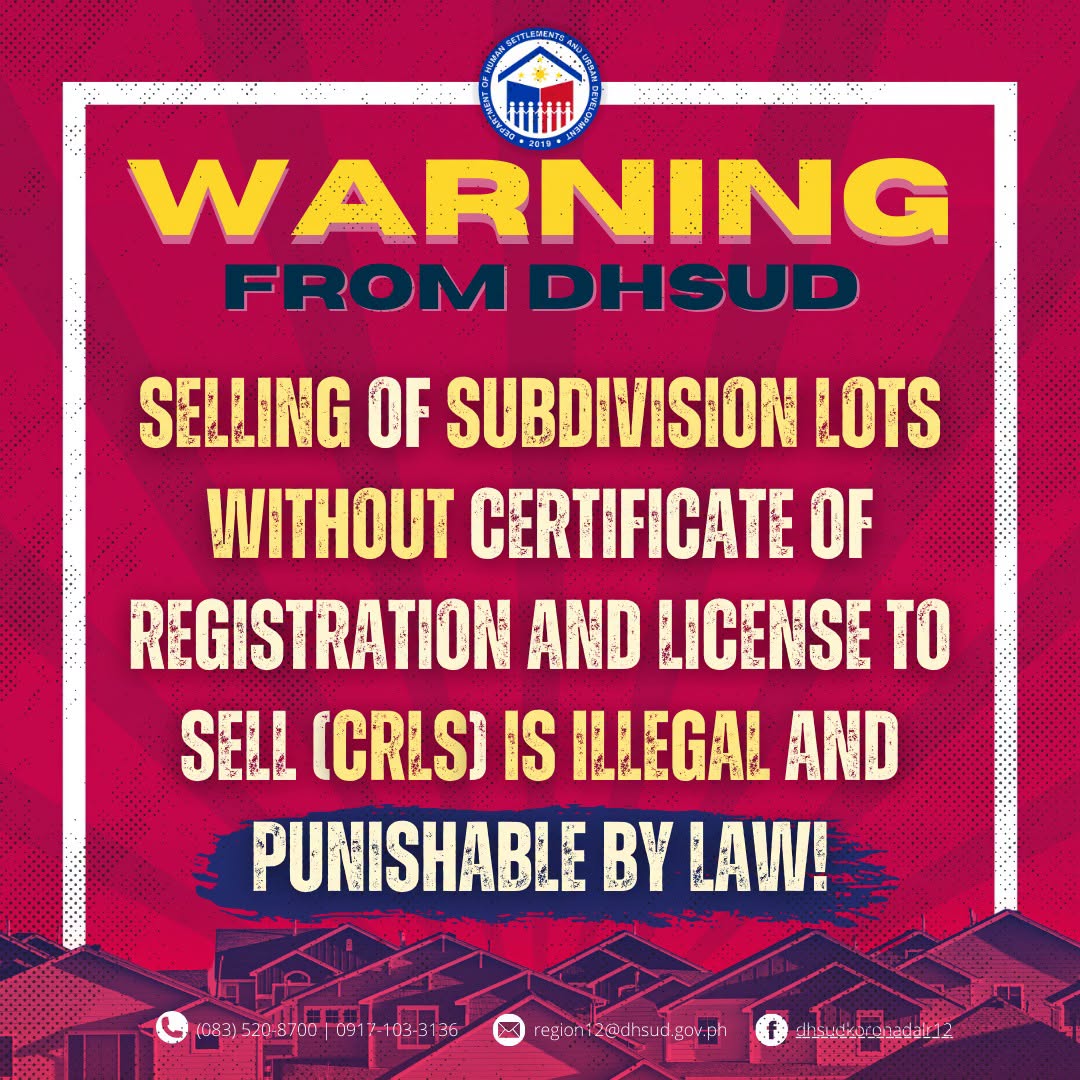
PHILIPPINES — The Department of Human Settlements and Urban Development (DHSUD) has issued a stern public advisory against the proliferation of installment lot schemes on social media, reminding Filipinos that selling subdivision lots without a valid License to Sell is strictly illegal. Buyers are urged to verify before they invest.
The Social Media Trap
Social media platforms have become a marketplace for attractively priced “hulugan” lots, often advertised as affordable dream homes with minimal monthly payments. Many of these listings appear legitimate, complete with site plans and testimonials. However, DHSUD‑12 Regional Director Benleo T. Jarangue warned that many sellers lack the required Certificate of Registration and License to Sell.
Unscrupulous sellers target buyers who are eager to own property but may be unfamiliar with land regulations. They dangle low down payments and easy installments, often pressuring victims to reserve units quickly to avoid missing out. Once payments are made, buyers may discover they have bought land that can never legally be titled in their name.
The Dangers of “Raw Lots”
Many of these illegal offerings are actually “raw lots,” which are typically agricultural lands that have not undergone the formal conversion and subdivision process. The sellers illegally carve them into smaller residential plots without any local government approval. Buyers who build homes on such land face the constant threat of demolition orders and loss of their investment.
Because the land remains classified as agricultural, the mother title cannot be split into individual titles for each buyer. The beautifully drawn subdivision plans shown by sellers are often nothing more than marketing illusions. In addition, these unplanned communities lack proper roads, drainage, and sanitation, leading to health hazards and legal disputes among neighbors.
Legal Consequences for Scammers
Engaging in real estate selling without a valid license carries severe penalties under Philippine law. Presidential Decree No. 957, the Subdivision and Condominium Buyers’ Protective Decree, mandates that violators face fines and imprisonment of up to ten years. Corporate officers and managers can be held personally and criminally liable for these schemes.
Beyond administrative sanctions, scammers may also face criminal charges for estafa or fraud due to misrepresentation. The DHSUD regularly monitors and flags non‑compliant developers and colorum agents. The public is encouraged to report suspicious online listings to prevent more families from falling prey to these illegal activities.
How to Protect Yourself
Before making any payment, always demand the seller’s License to Sell number and verify it through the DHSUD online registry. A legitimate project must have both a Certificate of Registration and a valid License to Sell, which authorizes the developer to collect payments from buyers. Do not rely solely on a mother title or a glossy advertisement.
Visit the local government’s planning office to confirm the property’s actual zoning classification. Engage only with licensed real estate brokers or salespersons accredited by the Professional Regulation Commission and DHSUD. If a project lacks proper permits or the agent refuses to provide verification, walk away immediately. A few extra minutes of checking can save a lifetime of regret.