ANGELES CITY — On May 22, 2026, the Bases Conversion and Development Authority (BCDA) handed the Angeles City government something more valuable than a title deed: the right to operate, manage, and utilize the Sapangbato Watershed, a 546‑hectare protected area whose ecological health directly determines whether the lowlands of Pampanga flood or remain dry. Mayor Carmelo "Jon" Lazatin II and BCDA President and CEO Joshua M. Bingcang formalized the agreement during a ceremony witnessed by Vice Mayor Amos B. Rivera and BCDA Conversion and Development Group Officer‑in‑Charge Mark P. Torres. For the property sector, the signing represents the removal of a long‑standing legal ambiguity: portions of the watershed are owned by BCDA and the Clark Development Corporation, yet the land falls within Angeles City's political jurisdiction. The agreement reconciles that jurisdictional fracture, giving Angeles City the operational mandate to enforce its own Comprehensive Land Use Plan within the watershed for the first time.
"Our work has always rested on a fundamental confidence that the land we steward is not ours to exploit, rather to protect, to develop responsibly, and ultimately, to return to the Filipino people in a better condition than we found it," Bingcang said during the signing ceremony. The statement was not merely rhetorical. The Sapangbato Watershed, located at the southern foothills of Mount Pinatubo, stabilizes local water systems and plays a critical role in regional land‑use planning. Its designation as protected agricultural land and a no‑build zone under the Angeles City CLUP 2021‑2030 had been difficult to enforce while operational control remained divided between the city, BCDA, and CDC. The new agreement resolves that impasse, granting the city the right to operate, manage, and utilize the watershed while reinforcing efforts to preserve its ecological integrity.
A Watershed That Protects Billions in Downstream Property
The real estate significance of the watershed agreement is neither abstract nor sentimental. The Sapangbato Watershed serves as the natural flood defense for Angeles City, Mabalacat, and the low‑lying areas of San Fernando. Without it, these cities—which collectively host Clark Freeport Zone, the Clark International Airport, the North‑South Commuter Railway, and billions of pesos in residential and commercial development—become catch basins during the rainy season. Angeles City was already experiencing flooding, and if the trees in the Sapangbato watershed disappeared, the city and its nearby environs could face even more severe inundation. The partnership aims to improve coordination between national and local authorities as they balance economic growth with environmental protection.
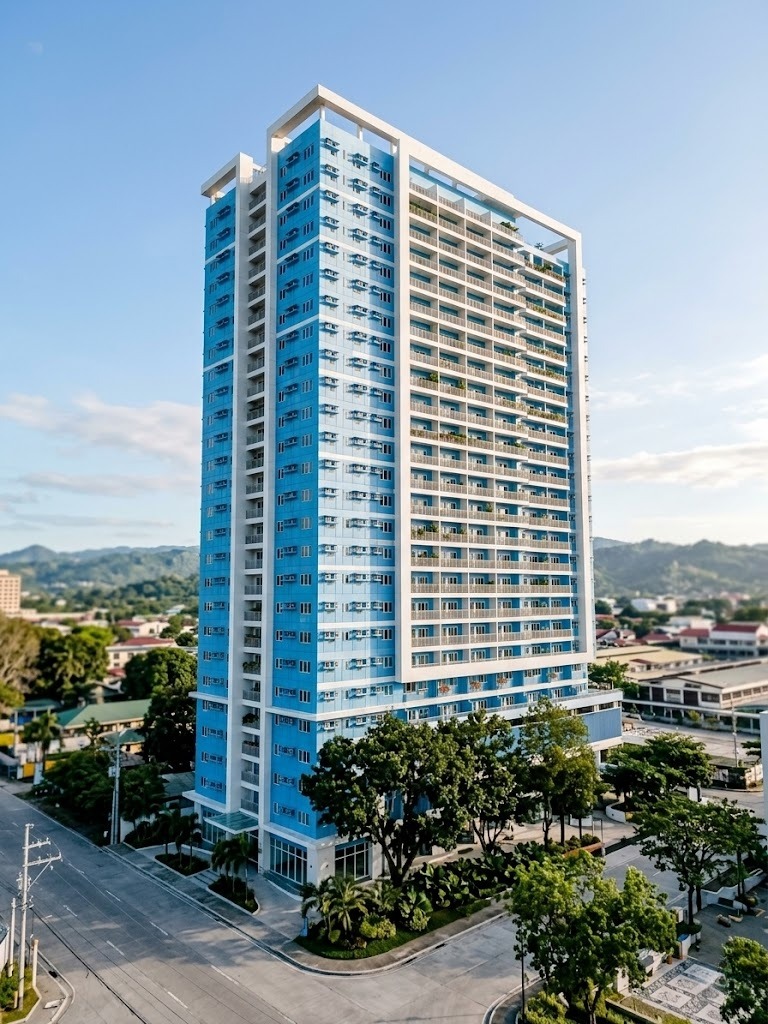
For property investors, the agreement adds a layer of regulatory certainty to a market that has been absorbing record capital inflows. Clark Freeport Zone secured ₱9–10 billion in investment pledges in the first quarter of 2026 alone, on track to exceed its ₱12.35‑billion full‑year target. SM Offices recently announced Tech Hub Tower 11—a ₱700‑million expansion—after the 10‑tower Clark Tech Hub reached 100 percent occupancy. Korean investor JnH Philippines Development Corporation is compressing its ₱840‑million mixed‑use expansion timeline from five years to 30 months. Each of these investments depends, at a fundamental level, on a watershed that prevents the kind of catastrophic flooding that can erase asset values overnight. The BCDA–Angeles City agreement ensures that the watershed will be managed by the local government with the strongest incentive to protect it, and that the enforcement mechanism—the CLUP—will have the institutional backing it previously lacked.
A Reforestation Pipeline That Strengthens the Value Proposition
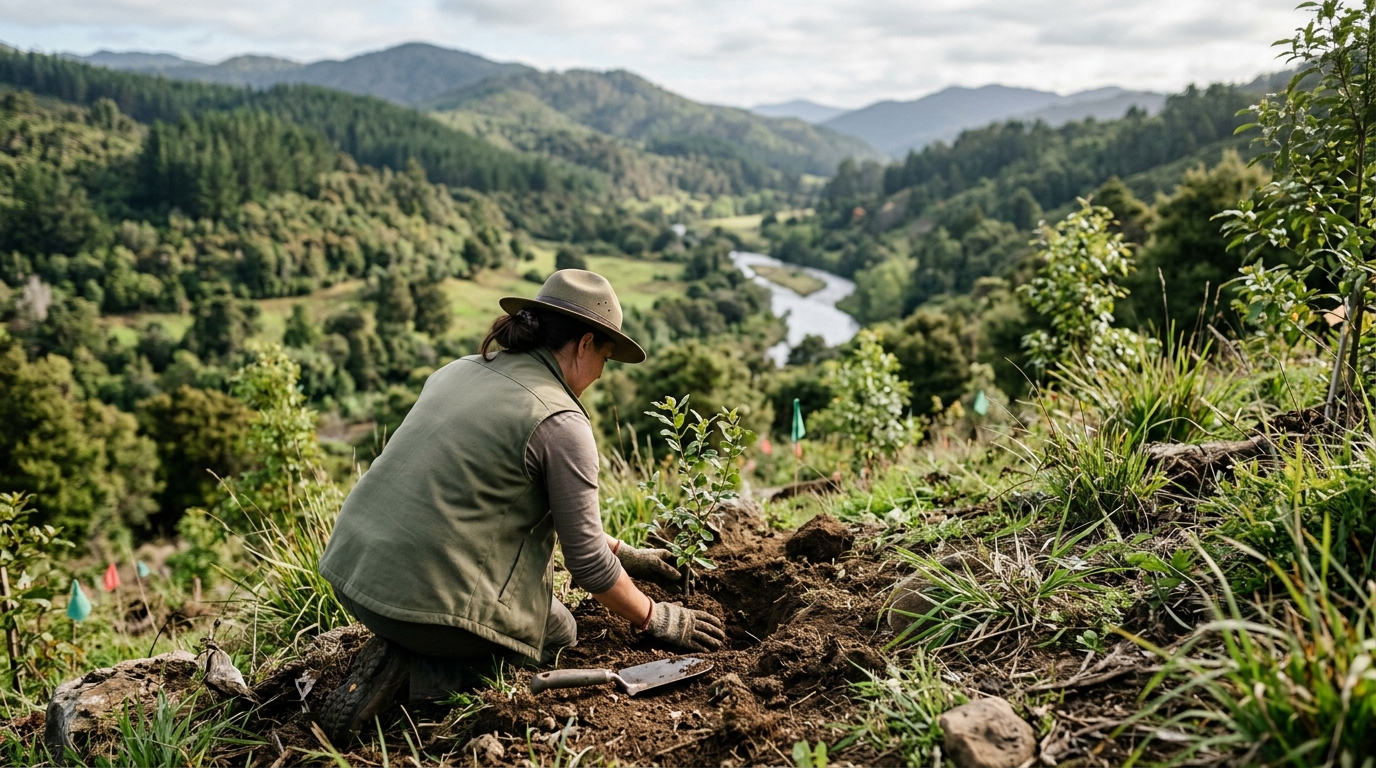
The agreement does not stand alone. It builds on a multi‑year reforestation effort that has already planted 145,041 seedlings across the watershed through the partnership between the Angeles City Government and the Abacan River and Angeles Watershed Advocacy Council, Inc. (ARAW‑ACI), led by the late Kapampangan environmentalist Renato "Abong" Tayag Jr. The Department of Transportation, in coordination with the Department of Environment and Natural Resources, BCDA, and ARAW‑ACI, is supporting the planting of approximately 700,000 indigenous tree seedlings across the Sapangbato and Sacobia watersheds as part of the North‑South Commuter Railway Greening Program, with 690,000 trees to be planted starting in July 2026. These are not cosmetic plantings. They are engineered to restore forest cover, protect water sources, and mitigate the environmental impact of the same infrastructure projects that are driving Central Luzon's property boom.
BCDA has also been advancing a broader watershed restoration strategy. On March 21, 2026, the agency joined over 140 volunteers in the Abacan River Sustainable Clean‑Up Program, clearing 158 sacks of waste from a waterway that supports nearby communities and wildlife. The program, spearheaded by Balibago Waterworks System Inc. and the Metro Angeles Chamber of Commerce and Industry, is conducted every third Saturday of the month. "At BCDA, we see sustainability as a core responsibility," Bingcang said during that cleanup. "As we build infrastructure that drives economic growth, we are equally focused on protecting natural systems that sustain our communities. Development must not come at the expense of our water sources."
A Protected Area with Congressional Backing
The watershed's long‑term security is further reinforced by legislative action. Pampanga First District Representative Carmelo "Pogi" Lazatin Jr.—Mayor Lazatin's brother—filed House Bill No. 2423 in July 2025, "An Act Declaring Sapangbato as a Protected Area in the Province of Pampanga." The bill aims to ensure the preservation of ecological biodiversity within the watershed through the establishment of a Protected Area Management Board. Representative Lazatin also filed House Resolution No. 77, seeking to rename the reforested portion of the watershed after Tayag, and House Resolution No. 446, directing the DENR to strictly monitor the implementation of the Angeles City CLUP with respect to the no‑build zone. During his tenure as mayor, Lazatin ordered the closure of several establishments—including restaurants and resorts—found to be operating within the protected zone under agreements with BCDA, in violation of the CLUP.
The 546‑hectare watershed was delineated from the Network of Protected Areas for Agriculture and Agro‑Industrial Development of the Bureau of Soils and Water Management of the Department of Agriculture, with a specific designation as Fragile Agricultural Land. The congressional legislation, combined with the newly signed BCDA–Angeles City operational agreement, forms a multi‑layered protective architecture: local enforcement through the CLUP, operational management through the LGU, and statutory protection through national legislation. For the institutional investors who have committed tens of billions of pesos to Clark and its surrounding municipalities, that architecture is not an abstraction. It is the reason their assets are not sitting in a floodplain with no institutional defense.
Central Luzon is now the country's most dynamic property corridor outside Metro Manila, but its growth rests on a physical foundation that no developer can build and no investor can buy: the watersheds that capture rain, regulate runoff, and keep the cities below them habitable. By granting Angeles City the authority to manage its most critical watershed, BCDA has acknowledged what property markets in flood‑prone regions have long understood: the most valuable infrastructure is often the one you cannot see from a tower window.