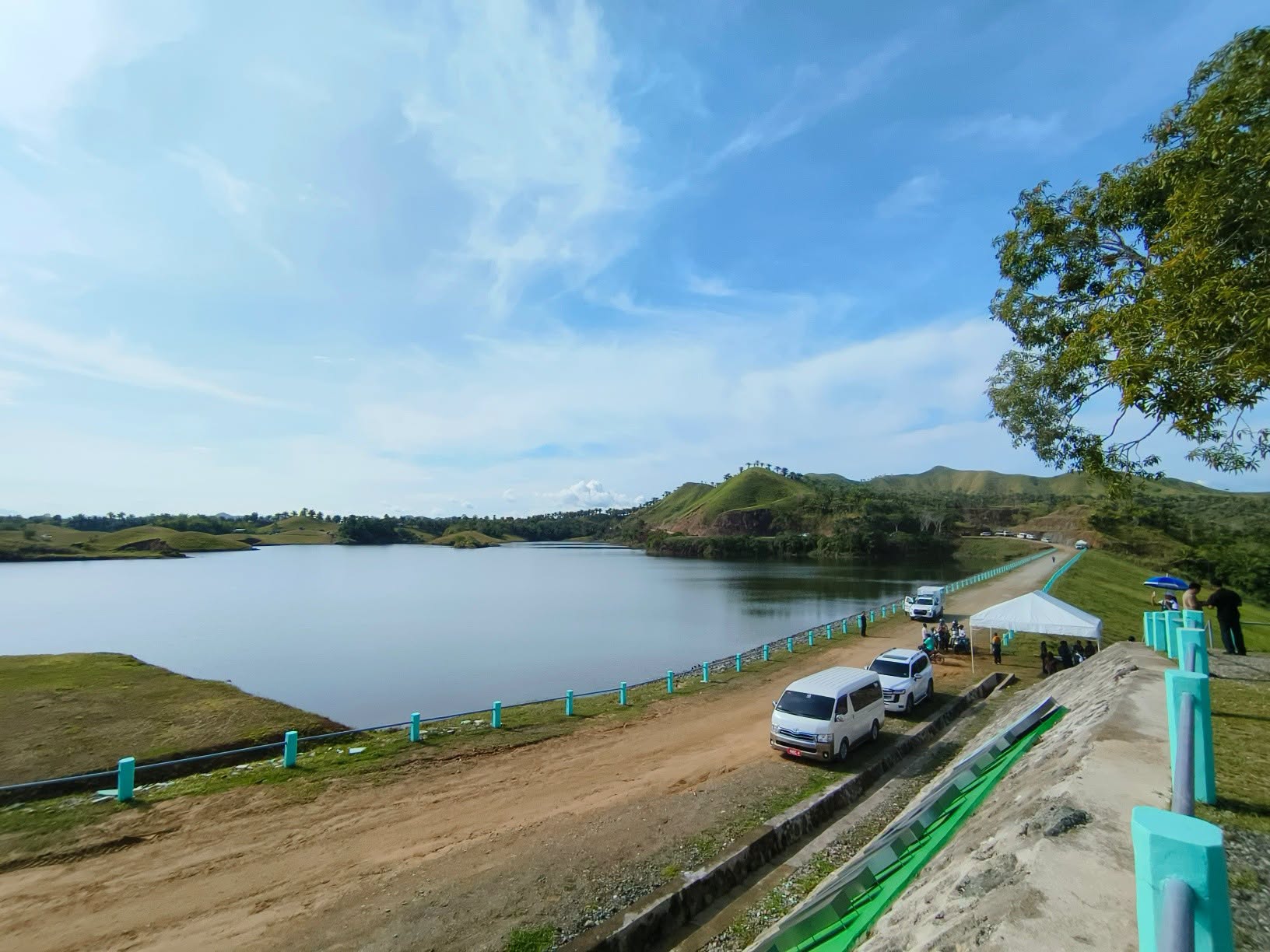
Bohol — President Ferdinand R. Marcos Jr. inaugurated the ₱833.37‑million Mabini‑Cayacay Small Reservoir Irrigation Project on June 22, 2026, a milestone that promises year‑round water for 530 hectares of farmland. The facility will serve 717 farmers across two municipalities.
A Dam Built for Drought‑Proofing
The project harnesses water from the Baujanan and Cawasan Creeks through a 32.2‑meter‑high dam stretching 210 meters across. An ungated ogee weir spillway manages overflow, while an 11.31‑kilometer main canal delivers irrigation directly to the fields. Farmers who once watched the sky for rain now have a dependable source.
The system covers barangays Abaca, San Roque, Aguipo, and Cabidian in Mabini, plus Barangay Cayacay in Alicia. Construction was physically completed in November 2025, and the inauguration formally hands the asset to the community. The Mabini‑Cayacay Irrigators’ Association will manage the day‑to‑day operations.
From Two Harvests to Three
President Marcos highlighted the shift from rain‑dependent farming to scheduled, reliable irrigation. He said sufficient water supply means rice and high‑value vegetable yields will rise noticeably. Instead of planting twice a year, farmers can now manage three full cycles, dramatically increasing their annual income.
The President advised farmers to diversify into drought‑tolerant commercial crops such as watermelon, ginger, ube, peanuts, and eggplant. This strategy cushions them against climate unpredictability while maximizing the new infrastructure. The message blended immediate relief with long‑term agricultural planning.
Climate‑Smart Agriculture in Action
Governor Aris Aumentado described the project as a catalyst for meaningful and inclusive progress. He linked the investment to the province’s Strategic Change Agenda on Climate‑Smart Agriculture and Fisheries. Bohol, as the country’s first UNESCO Global Geopark, balances environmental stewardship with rural development.
The timing is critical. State weather agencies project a 92 percent probability of a moderate to strong El Niño in late 2026 extending into 2027. The reservoir provides a buffer against dry spells that have historically devastated Central Visayas rice production. Preparedness now replaces panic for hundreds of farming families.
A Network of Irrigation Projects Across Bohol
The Mabini‑Cayacay facility is just one piece of a larger water‑security puzzle. Five other irrigation projects are at various stages of completion across the province. The Bonot‑Bonot SRIP in Buenavista is 84 percent finished, while the Hibale SRIP in Danao stands at 44 percent.
Ongoing construction continues at the Molinao Dam in Pilar, Catungawan SRIP in Guindulman, and Mandaug SRIP in Calape. Each project targets specific watersheds and farming clusters, creating a province‑wide grid of irrigation support. The National Irrigation Administration coordinates the synchronized rollout.
Empowering Farmers and Strengthening Communities
The ₱833.37‑million investment does more than move water; it moves livelihoods forward. Higher yields mean more food on local tables and surplus for markets. The irrigators’ association gives farmers a voice in managing the resource, fostering a sense of ownership and responsibility.
For the 717 beneficiaries, the dam represents the end of gambling on rainfall. Predictable water unlocks predictable income, enabling families to plan education, health, and small investments. As Bohol positions itself for climate‑resilient growth, the Mabini‑Cayacay SRIP stands as a model of infrastructure that serves both people and the land.