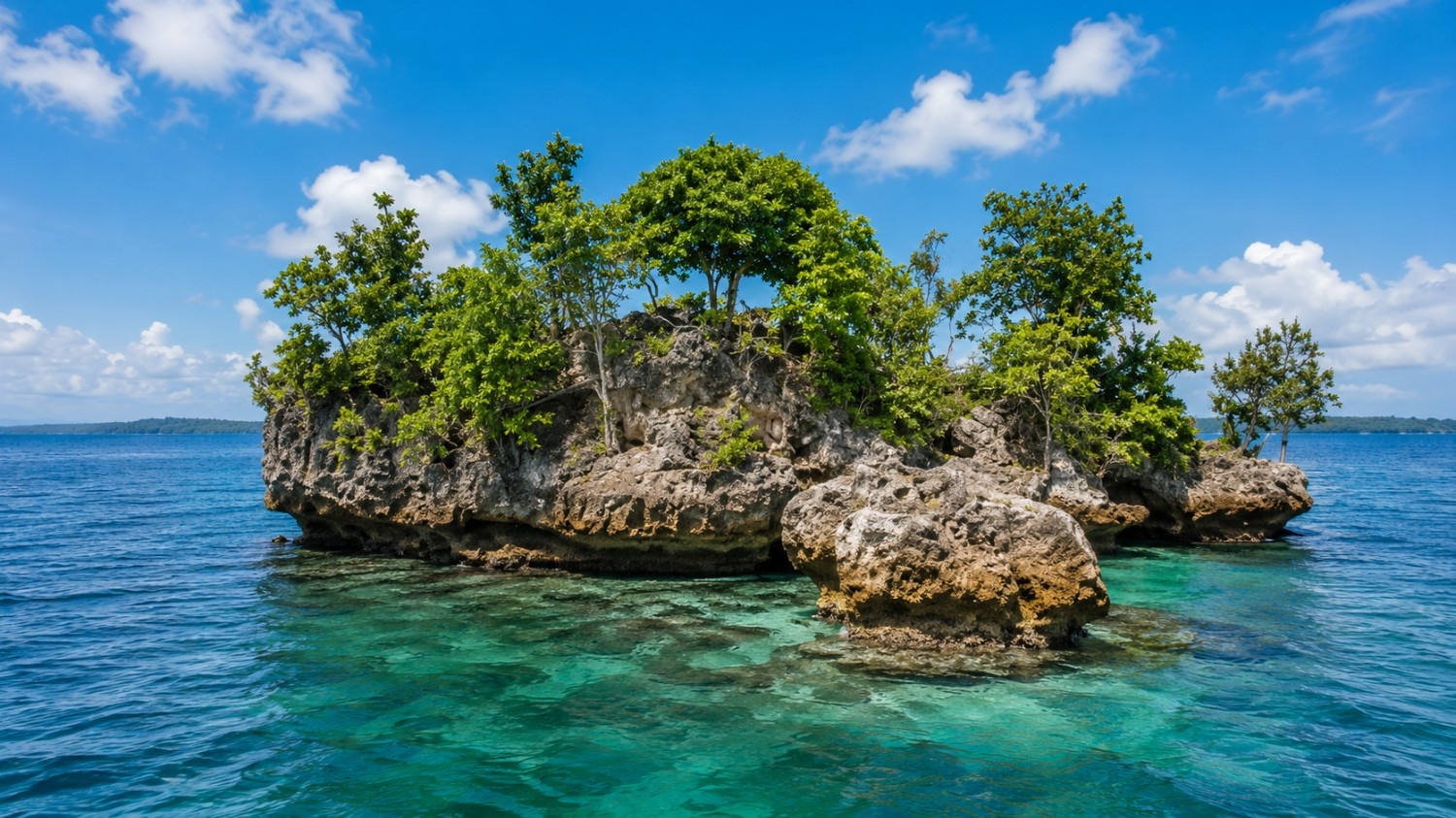
Nestled within the turquoise embrace of the Davao Gulf, Wishing Island serves as one of the most intriguing pitstops on the standard Island Garden City of Samal (IGaCOS) hopping circuit. Unlike the sprawling white-sand beaches that define much of the region, this compact, rocky formation—located near the Kaputian District—offers a raw, intimate encounter with the sea. Often shrouded in local folklore, the islet is frequently referred to by residents as "Enchanted Island," a moniker earned by its tendency to shift in appearance and accessibility depending on the rhythmic pulse of the tides. For travelers on a boat tour, this isn't just a destination; it is a brief, mystical pause where the island’s rugged charm and surrounding vibrant marine life steal the show.
A Raw Landscape for Adventurers
What sets Wishing Island apart from the nearby "Vanishing Island" (or Sanipaan Shoal) is its geological personality; while the latter is a shifting sandbar, Wishing Island is a permanent, craggy formation topped with lush, hardy greenery. This makes it an excellent location for underwater exploration, as the rocky base creates natural pockets and overhangs that host diverse schools of tropical fish and coral clusters. Visitors typically drop anchor here to take cinematic photos against the backdrop of the deep blue gulf or to take the plunge from the rocks during high tide. Because it remains largely undeveloped, the island retains a wild, "forgotten" atmosphere that provides a perfect, quiet contrast to the more commercialized resort areas of Samal.
Planning Your Island-Hopping Expedition
To experience this enchanted destination, the most reliable method is to join an organized boat tour departing from the Santa Ana Wharf in Davao City or to charter a private vessel from the Kaputian or Peñaplata areas of Samal. Most "inland and water" packages bundle a visit to Wishing Island alongside other premier sites like the Taklobo Giant Clam Sanctuary and Diaz Island, making it a seamless part of a full-day itinerary. Travelers should aim to visit during the dry season—ideally between December and May—to ensure calm seas and maximum water clarity for snorkeling. While there is no formal entrance fee to the rock itself, guests should be prepared for a small potential docking fee (roughly ₱300) when arranging private charters, and it is always advised to bring along your own gear if you intend to explore the surrounding reef.