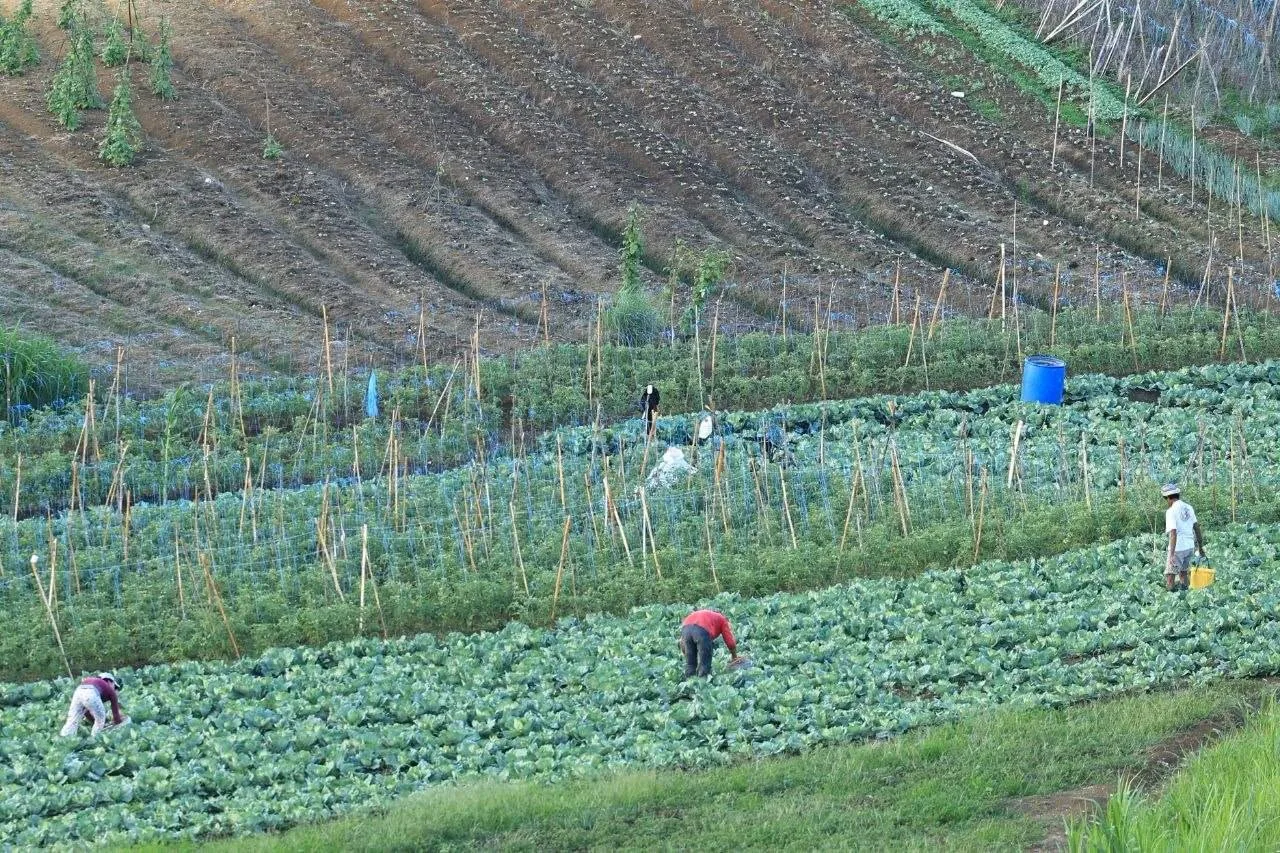
ALCOY, Cebu — Governor Pamela Baricuatro traded her office desk for a farm field on the first week of July 2026, joining local farmers here to harvest corn and onion leeks. The hands‑on visit underscored her administration’s push to put agricultural productivity and rural livelihoods at the center of Cebu’s economic agenda.
A Governor in the Fields
Dressed for work rather than ceremony, Baricuatro knelt alongside farmers, pulling mature onion leeks and snapping ears of corn under the mid‑morning sun. The image sent a deliberate message: the provincial government is not a distant authority but an active partner in food production. Her immersion was both symbolic and practical, allowing her to hear directly about irrigation challenges, market prices, and post‑harvest losses.
The governor was accompanied by a strong support team that included 2nd District Board Members Dr. Stanley Caminero and Raymond Calderon, and Alcoy Mayor Eugene Singson Jr. Former Congressman Willy Caminero and former ex‑officio Board Member SKF Aladin Caminero also joined the activity, signaling a united front across levels of government. The presence of these leaders demonstrated a shared commitment to rural development that transcends political lines.
Assessing Potential, Unlocking Growth
Baricuatro’s walk through the farmlands was not merely a photo opportunity. She assessed the terrain’s suitability for high‑value crops and discussed how improved access to equipment and seedlings could raise yields. Alcoy, with its mix of upland and coastal barangays, holds untapped potential that the governor believes can help Cebu reduce its dependence on food imports from neighboring provinces.
The visit formed part of a larger strategy to shield the province from inflation and supply chain disruptions. Baricuatro has consistently argued that Cebu must produce more of its own food to keep prices stable and protect household budgets. Her stop in Alcoy is the latest in a series of on‑ground assessments aimed at translating that vision into concrete harvests.
Backed by a Fresh Injection of Funds
The outreach in Alcoy carries financial weight. Just weeks before the visit, the provincial government released a combined ₱32 million in development assistance to the municipality. Of that, ₱10 million went to the local government for infrastructure and facility upgrades, another ₱10 million was earmarked for ongoing town initiatives, and ₱12 million—long‑delayed extraction fees from the Dolomite Mining Corporation—was finally turned over to Barangay Pugalo.
These funds are designed to create a supportive environment for agricultural growth. Better roads, post‑harvest facilities, and reliable water systems will enable farmers to bring their produce to market more efficiently. The governor emphasized that development funds must be felt on the ground, not just recorded in ledgers.
From Philanthropy to Food Policy
Baricuatro’s approach to agriculture is deeply personal. Before entering politics, she founded the Simply Share Foundation, a Visayas‑based food bank that fed underserved communities. That experience taught her that hunger is not just about scarcity but about broken links between farm and table. Her administration has since launched Community and Mobile Kitchens alongside a planned People’s Food Center to connect farmers and fisherfolk directly with consumers.
The Alcoy visit thus fits a pattern: identifying production zones, supporting producers, and building the infrastructure that links harvest to household. By standing in the fields herself, the governor reinforces the message that food security is not a slogan but a daily mission. For the farmers of Alcoy, the sight of their governor harvesting alongside them was both a recognition of their labor and a promise of sustained support.