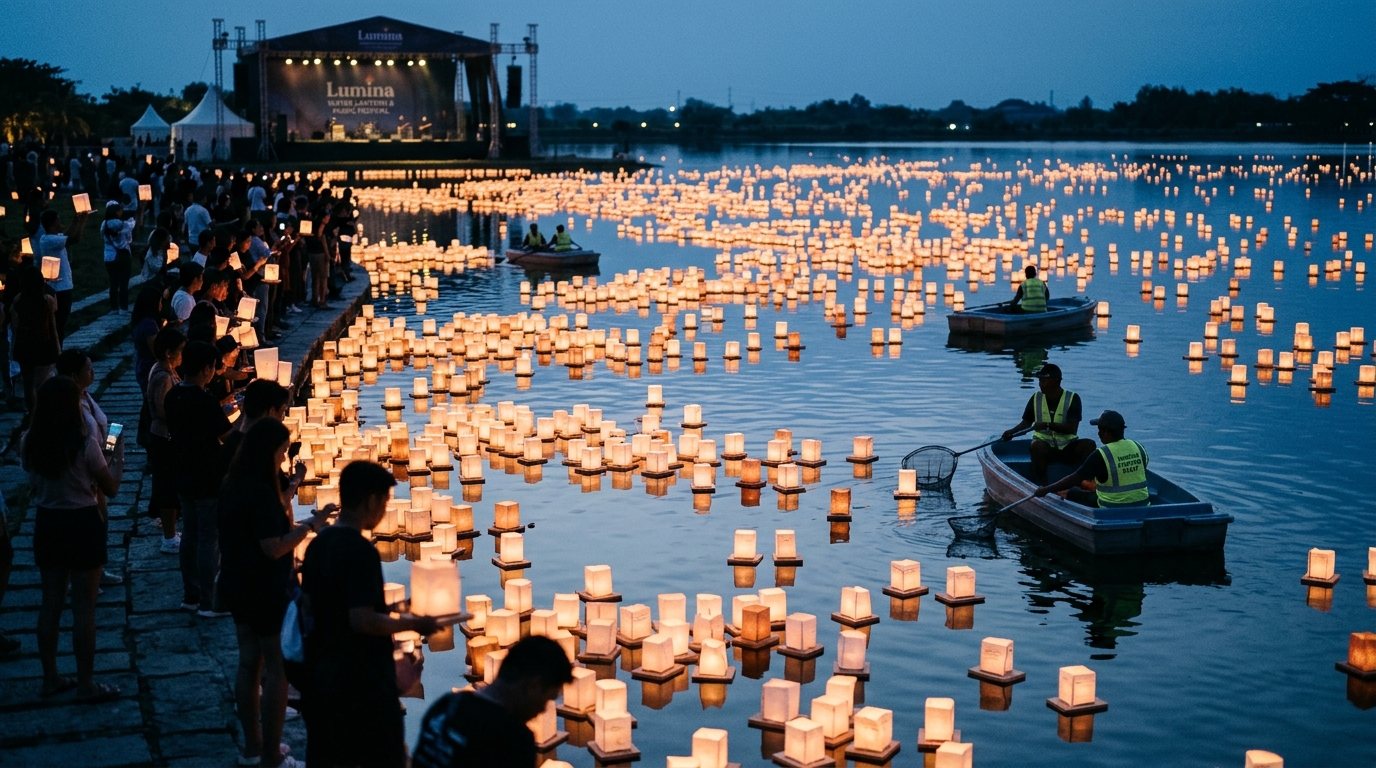
Breaking a world record is impressive. Doing it without harming the environment is even better. The Lumina Water Lantern and Music Festival, which secured a Guinness World Record for the largest display of water lanterns on May 10, 2026, proved that large-scale events can be both spectacular and sustainable. Organizers built eco-friendly measures into every aspect of the festival, setting a new benchmark for responsible tourism in Pampanga.
James Madrid, president of Vibe Events Management Corp., ensured that sustainability was not an afterthought but a requirement from the very beginning. Guinness World Records itself mandated a cleanup, disposal, and recycling plan, along with other eco-friendly initiatives, before the record could be certified . This built-in accountability forced organizers to think beyond the spectacle and consider the environmental footprint of their historic achievement.
LED Lanterns Over Flames: A Safer, Cleaner Choice
Traditional lantern festivals often rely on open flames, which pose fire risks and leave behind wax residue and burnt materials. The Lumina Festival took a different approach. Organizers used paper lanterns mounted on light wooden floaters and illuminated them with small LEDs instead of candles or flames . This simple switch eliminated the risk of fire and ensured that no wax or burnt debris would contaminate the 12-hectare man-made lake at The Lakeshore.
The LED-lit lanterns were also designed for retrieval after the event. Rather than leaving the lanterns to degrade in the water or wash ashore, organizers implemented a collection system to remove each lantern from the lake following the mass release . This retrieval process protected the aquatic ecosystem while allowing the thousands of participants to enjoy the visual spectacle without guilt.
Leave No Trace: A Blueprint for Future Events
The festival adhered to a strict "Leave No Trace" philosophy, a principle increasingly adopted by major events worldwide. Madrid confirmed that Guinness World Records required a comprehensive cleanup, disposal, and recycling plan before approving the record attempt . This meant that from the planning stages, organizers had to map out exactly how they would remove every lantern, separate recyclable materials, and restore the lake to its original condition.
By meeting these rigorous standards, Lumina demonstrated that Pampanga is ready to host world-class events without compromising environmental responsibility. The festival's success sends a clear message to future organizers: sustainability and large-scale tourism can go hand in hand. As Pampanga continues to attract international attention for its tourism offerings, the Lumina model provides a replicable blueprint for keeping the province beautiful while inviting the world to visit.