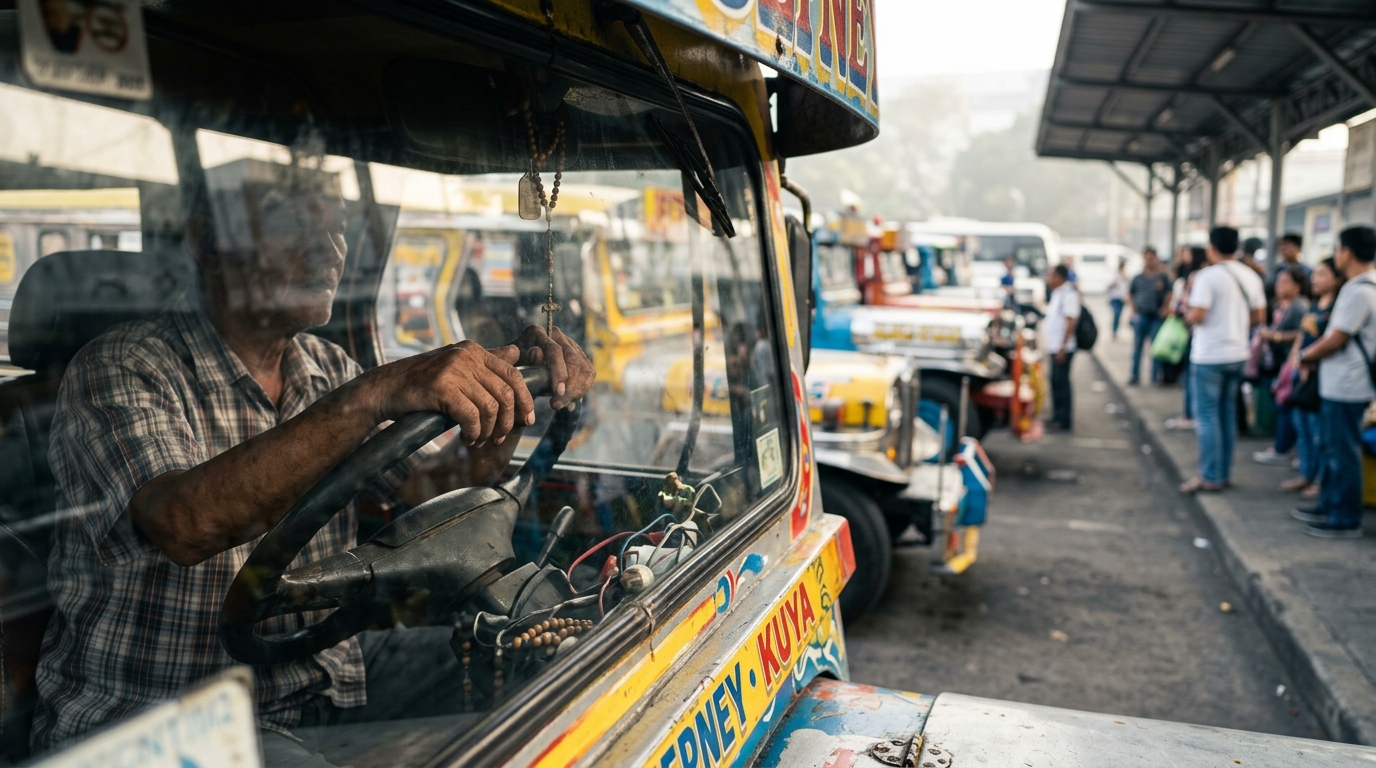
PAMPANGA — On May 18, 2026, 738 jeepney drivers across Pampanga began a 31-day emergency employment program that will keep their vehicles on the road and the province's tourism economy moving. The Department of Labor and Employment Regional Office III launched the TUPAD Tuloy Pasada initiative at the Checkpoint Holy Highway Angeles Terminal, in partnership with the Angeles City government and its Public Employment Service Office. Each beneficiary will receive ₱18,600, calculated at the approved daily wage rate of ₱600, ensuring that the drivers who connect visitors to Pampanga's culinary destinations, heritage sites, and Clark Freeport Zone can continue to operate despite the prolonged energy emergency. DOLE allocated a total budget of ₱14,077,350 to cover salaries, GSIS insurance, remittance costs, and personal protective equipment.
The program covers drivers serving three essential routes: San Fernando-Angeles, Angeles-San Fernando, and Angeles City limits. These routes form the backbone of local mobility in the province's most densely visited corridor, linking the regional capital to the Freeport, the culinary hubs of Angeles, and the emerging retail destinations along MacArthur Highway. DOLE Regional Director Geraldine M. Panlilio led the monitoring activity alongside Angeles City Mayor Carmelo Lazatin II, signaling the collaboration between national and local government to protect both the livelihoods of transport workers and the accessibility that Pampanga's tourism sector depends on. Beneficiaries will render transportation services under two work schedules—6:00 a.m. to 12:00 noon and 2:00 p.m. to 8:00 p.m.—throughout the program period, ensuring that jeepney availability spans both the morning commute and the afternoon leisure window.
A Fuel Crisis Hits Pampanga's Tourism Mobility
The program arrives as fuel costs have tripled the operating expenses of jeepney drivers across the province. Augusto V. Bagtas, Chairman of JODA Angeles City, explained the arithmetic behind the intervention. "Malaki ang maitutulong ng TUPAD sa amin, lalo na sa pang-araw-araw naming pangangailangan at sa gastusin sa diesel. Dahil sa patuloy na pagtaas ng presyo ng krudo, mas nababawasan ang naiuuwi naming kita," he said. Bagtas described a landscape in which diesel costs per route have surged from ₱100 to ₱300, while daily take-home income has dropped from approximately ₱700 to ₱300. Without the TUPAD subsidy, drivers facing those margins might reduce their operating hours or leave the road entirely—decisions that would immediately constrict the public transport network that tourists and residents alike rely on.
For Pampanga's tourism sector, the threat of reduced jeepney availability is not theoretical. The province has been building a year-round calendar of events and attractions that depend on affordable, accessible public transport. The two-day hot air balloon and music festival at Clark Global City in early May drew thousands of visitors. The Lubao Bamboo Hub continues to attract eco-tourists to its hanging bridge and floating market. The recently topped-off Power Plant Mall Angeles is positioning itself as a retail and dining destination for visitors from across Central Luzon. Each of these attractions relies on a transport network that jeepney drivers sustain, and the TUPAD Tuloy Pasada program ensures that the network remains intact through the fuel crisis rather than contracting at the moment when visitor demand is rising.
A Whole-of-Government Response to an Energy Emergency
The TUPAD Tuloy Pasada is not an isolated program. It forms part of the government's coordinated response to the national energy emergency under Executive Order No. 110, which President Ferdinand R. Marcos Jr. issued to mobilize resources across agencies. The DOLE program supplements other forms of assistance reaching Pampanga's transport sector, including the DSWD's Cash Relief Assistance program that distributed ₱5,000 each to 4,922 Kapampangan jeepney drivers on May 19. The combined effect is a layered safety net: one program stabilizes driver income through direct wage support, while the other provides immediate cash relief for household expenses.
The program's design carries a deliberate dual mandate. It provides income support to transport workers while helping sustain accessible public transportation services for commuters and visitors. Beneficiaries are required to render six hours of transport service daily under two shifts, ensuring that jeepney availability spans the critical morning and afternoon windows when tourists move between hotels, restaurants, and attractions. The Angeles City PESO, which coordinated the beneficiary selection, has emphasized that the program targets drivers who are both economically vulnerable and essential to the functioning of the city's transport ecosystem. For the tourist who arrives at the Dau Bus Terminal and needs a jeepney to reach Koreatown or the Holy Rosary Parish Church, the program ensures that a driver with fuel in the tank and a wage to sustain the day's work is waiting at the terminal when they arrive.
A Template for Tourism-Ready Transport Resilience
What unfolded at the Checkpoint Holy Highway Angeles Terminal on May 18 is not unique to Pampanga. The TUPAD Tuloy Pasada program has been rolling out across multiple regions, from Western Visayas to Northern Mindanao, targeting an initial 55,000 jeepney drivers nationwide. But Pampanga's implementation carries a distinctive tourism dimension. The province's 11-kilometer bike lane network along MacArthur Highway and FilAm Friendship Highway, recently completed under the DOTr's active transport push, already positions Angeles City as a destination that can be explored on two wheels. The TUPAD Tuloy Pasada program adds a complementary layer: ensuring that the traditional jeepney—the most iconic and affordable form of Philippine public transport—remains a viable option for visitors who prefer to navigate the province as locals do.
For Pampanga's tourism planners, the program reinforces a proposition that has been quietly building across 2026: that the province is engineering its infrastructure and its workforce to support a growing visitor economy. The Clark Freeport Zone's record investment inflows, the expansion of Rockwell at Nepo Center, the 11-kilometer bike lanes, and now the wage-supported jeepney routes each form a piece of a comprehensive mobility picture. The 738 drivers who began their 31-day TUPAD engagement on May 18 are not merely beneficiaries of a government program. They are the human infrastructure that carries Pampanga's tourism economy from one destination to the next, and for the next six weeks, their fuel tanks and their incomes are protected.