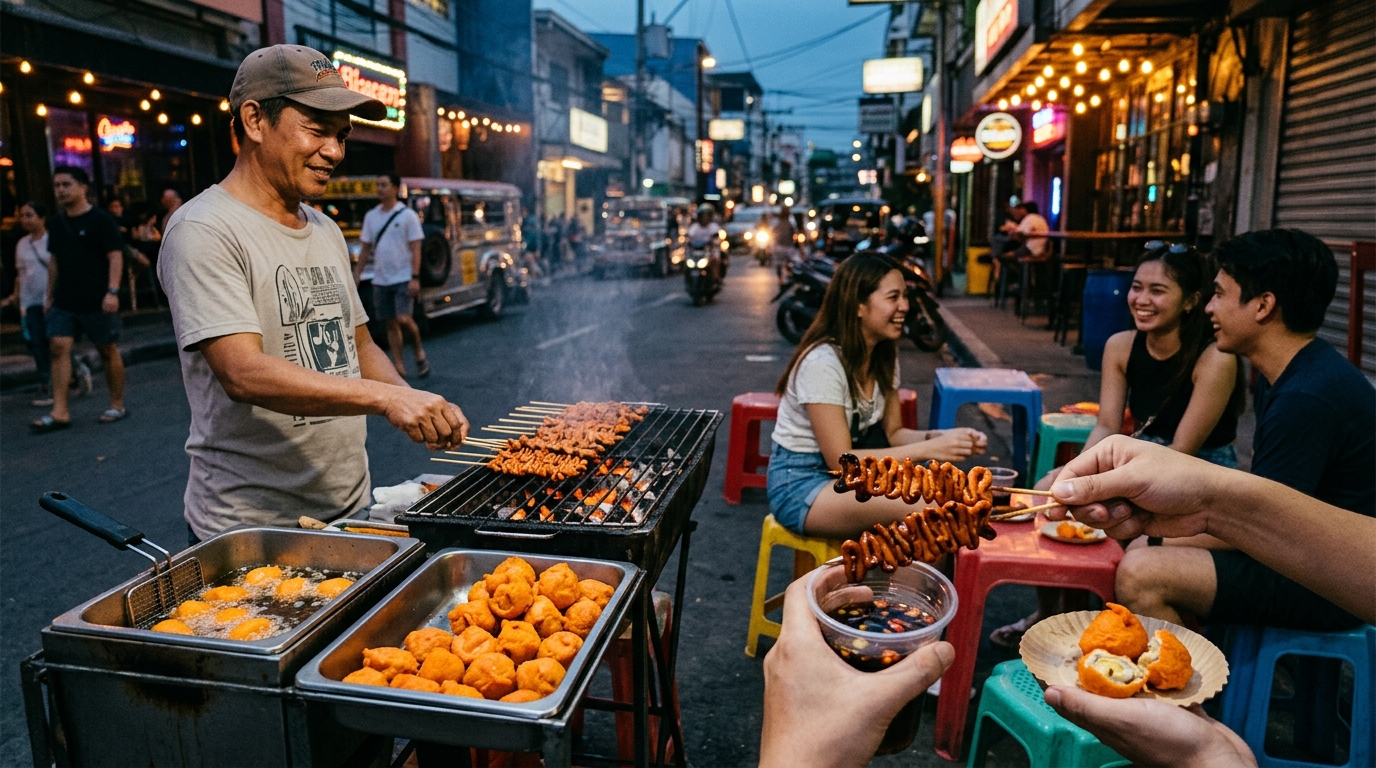
MAKATI CITY — As the sun sets behind the towering buildings of Ayala Avenue, Poblacion begins to transform. The heat of the afternoon fades, neon lights illuminate the streets, and the sidewalks come alive with a different kind of energy, one fueled not by offices and meetings but by food, conversation, and nightlife. This is when the district’s culinary spirit truly shines. The scent of charcoal grills fills the air, fryers crackle with activity, and groups of friends gather around plastic stools to enjoy simple yet beloved street food. In Makati’s most vibrant neighborhood, iconic Filipino favorites like isaw and kwek-kwek are more than just snacks; they represent community, resilience, and the simple pleasures of everyday life.
Isaw: The Humble Hero of the Grill
For first-time visitors, isaw, grilled chicken or pork intestines skewered on bamboo sticks, may seem unfamiliar. For many Filipinos, however, it is a cherished street food staple. Preparing isaw requires care and patience: the intestines are thoroughly cleaned, boiled until tender, and then grilled over hot charcoal until lightly charred and crisp around the edges. The result is a smoky, flavorful skewer with a pleasantly chewy texture, best enjoyed fresh from the grill and dipped in a sharp, spiced vinegar that balances its richness. Throughout Poblacion, particularly along streets such as Felipe and Alfonso, vendors set up their grills each evening, filling the area with the aroma of sizzling meat and burning charcoal. At around 10 to 20 pesos per stick, isaw remains one of the most affordable and satisfying street food treats available.
Kwek-kwek: The Crunchy, Orange Delight
If isaw is the smoky classic, then kwek-kwek is its colorful and playful counterpart. Made from boiled quail eggs coated in a vibrant orange batter and deep-fried until crisp, kwek-kwek delivers a satisfying contrast between its crunchy exterior and soft, warm center. Its bright color makes it instantly recognizable and a favorite among street food enthusiasts. Vendors often serve it alongside other fried snacks such as fish balls, squid balls, and tokneneng (the chicken or duck egg version). Diners can pair it with sweet banana ketchup, spicy vinegar, or thick savory gravy. A serving of three pieces typically costs about 20 pesos, making it an inexpensive but memorable snack that many visitors find difficult to resist ordering again.
Where to Hunt for Treasures: Tambai and Beyond
One of the best places to experience these local flavors is Tambai Yakitori Snackhouse, a casual Filipino-style yakitori establishment known for its grilled skewers. Originally located on Felipe Street, Tambai has since relocated to J.P. Rizal Street, where it continues to attract diners with its relaxed atmosphere and popular barbecue offerings. Nearby, the iconic El Chupacabra still occupies its well-known corner on Felipe Street, drawing crowds with its Tex-Mex tacos and street food favorites. Although the two establishments are no longer side by side, they remain within walking distance of each other and continue to contribute to Poblacion’s lively street food culture.
Experience the Flavors of the City
Travelers looking for a guided culinary adventure can join one of several local food tours that showcase Poblacion’s best eats. A popular option is led by local guide Venus, with tours typically beginning at the lobby of the City Garden Grand Hotel at the corner of Makati Avenue and Kalayaan Avenue. Participants are taken to hidden stalls and neighborhood eateries where they can sample a variety of Filipino street food, including isaw, kwek-kwek, and tempura. The experience usually concludes with a drink at a rooftop bar atop the nearby I'M Hotel, home to the well-known Antidote Bar, famous for its jellyfish tanks and panoramic views of the Makati skyline. Lasting about two hours and costing between PHP3,000 and PHP3,950, depending on the booking platform, these tours provide an enjoyable and educational introduction to the district’s food culture.
More Than Just a Meal
Whether standing beside a street vendor dipping a freshly grilled skewer into vinegar or sitting on a plastic stool while watching the neighborhood come alive, enjoying isaw and kwek-kwek in Poblacion is about more than satisfying hunger. It is taking part in a local tradition where food, conversation, and community come together. The meals are simple, the atmosphere is welcoming, and the night always seems full of possibilities. For visitors, it offers an affordable, authentic, and flavorful glimpse into the soul of Makati, one grilled skewer and one crunchy orange egg at a time.