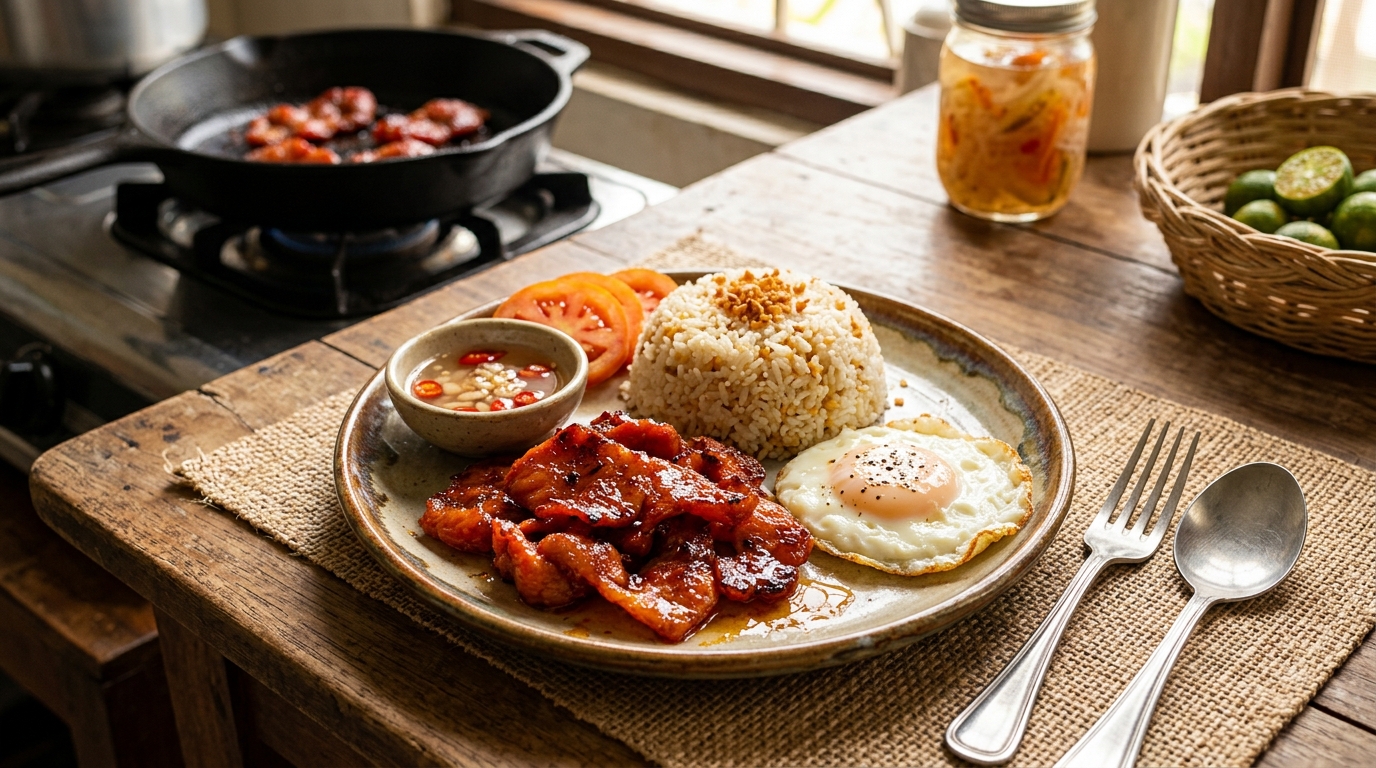
Before it became a frozen staple in supermarket freezers across the globe, tocino was a Kapampangan invention born from a simple desire to preserve meat without refrigeration. Known locally as pindang, authentic Kapampangan tocino is a beloved Filipino sweet cured meat, typically made from thinly sliced pork belly or shoulder, marinated in a blend of sugar, salt, garlic, and annatto for that signature reddish-orange hue . Unlike the uniformly sweet versions found elsewhere, traditional Kapampangan tocino can have a slightly tangy profile, a subtle sourness that sets it apart and hints at its preservation roots.
The name tocino comes from the Spanish word for bacon, but the Kapampangan version is uniquely Filipino. To achieve the tender, melt-in-your-mouth texture that defines authentic pindang, traditional makers massage and mix the ingredients by hand for hours before curing the meat . This labor-intensive process ensures that the marinade penetrates every fiber, resulting in a sweetness that is balanced, complex, and never cloying.
The Carabao Version: Pindang Damulag
While pork tocino is the most familiar, Pampanga offers a unique regional specialty that adventurous eaters seek out: Pindang Damulag, tocino made from carabao (water buffalo) meat . This version boasts a distinct sweet-and-sour flavor profile that is more robust and earthy than its pork counterpart, reflecting the province's agricultural heritage and resourcefulness.
The use of carabao meat connects the dish directly to Pampanga's farming communities, where water buffalo were historically essential to rice cultivation. When older animals were retired from farm work, their meat was transformed into pindang damulag, ensuring that nothing went to waste while creating a delicacy that remains a source of local pride today.
The Brand That Brought Kapampangan Tocino to the World
Pampanga's Best, the most iconic commercial brand, was originally founded in San Fernando, Pampanga, and revolutionized the industry by introducing factory-packaged tocino to supermarkets worldwide . The brand made it possible for overseas Filipino workers and tocino lovers outside Pampanga to enjoy authentic Kapampangan sweet cured meat without needing to master the traditional curing process at home.
Today, Pampanga's Best products are available in Filipino grocery stores across North America, Europe, the Middle East, and Asia, serving as a tasty ambassador for Kapampangan culinary heritage. For those who prefer the authentic homemade experience, local markets in San Fernando, Angeles City, and Bacolor still sell traditionally prepared pindang made by families who have passed down their curing recipes for generations.
How to Cook and Serve Tocino the Kapampangan Way
Cooking tocino the Kapampangan way is an art that caramelizes the sugars to a perfect stickiness. Start by placing the tocino in a pan with about half a cup of water. Boil over medium heat until the water evaporates and the sauce begins to thicken. Add a few tablespoons of cooking oil (or wait for the pork's natural fat to render). Fry until the meat is browned and caramelized, but not burnt . The goal is a glossy, slightly charred exterior with a tender, juicy interior.
Tocino is a staple of silog meals — the beloved Filipino breakfast plates featuring garlic fried rice and a sunny-side up egg. The combination is called Tosilog (Tocino + Sinangag + Itlog). Best paired with sliced fresh tomatoes or a dipping sauce of spicy vinegar, the acidity cuts through the sweetness and balances the richness of the fried egg and garlic rice . For home cooks aiming for authenticity, look for tocino with visible fat marbling — that fat is what renders during frying to create the signature sticky caramelization. The best traditional makers still hand-massage their meat before curing, a detail that separates authentic pindang from mass-produced versions .