



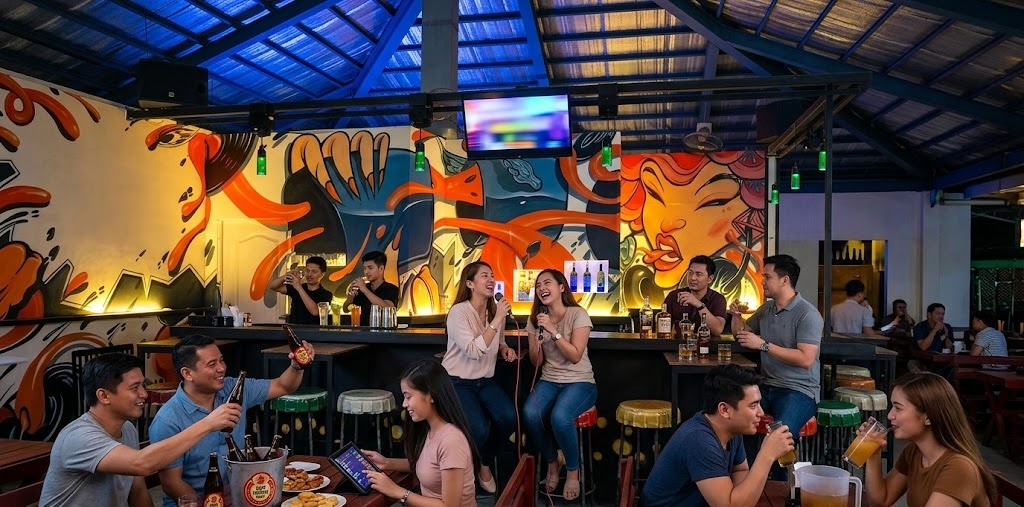
Karaoke works because participation matters more than skill. Once microphones begin circulating, conversations loosen and groups become less self-conscious around each other. Friends tease each other between songs while shy guests eventually join in after enough encouragement. Bacolod gatherings often feel warmer once music enters the room. Singing dissolves formality quickly.
Unlike nightlife centered only in bars or clubs, karaoke culture spreads across homes, resorts, restaurants, and casual celebrations throughout the city. The activity feels flexible enough to fit birthdays, reunions, drinking sessions, or ordinary weekends. Bacolod residents treat singing casually rather than ceremonially. Entertainment blends into daily social life. That accessibility keeps the culture alive.
Tourists often underestimate how emotionally revealing karaoke nights can become. Singing together creates faster familiarity between people who barely knew each other earlier in the evening. Guests leave remembering specific songs, jokes, and moments of collective embarrassment more than polished entertainment venues. Bacolod nightlife frequently feels participatory instead of performative. Everyone eventually becomes part of the soundtrack.
