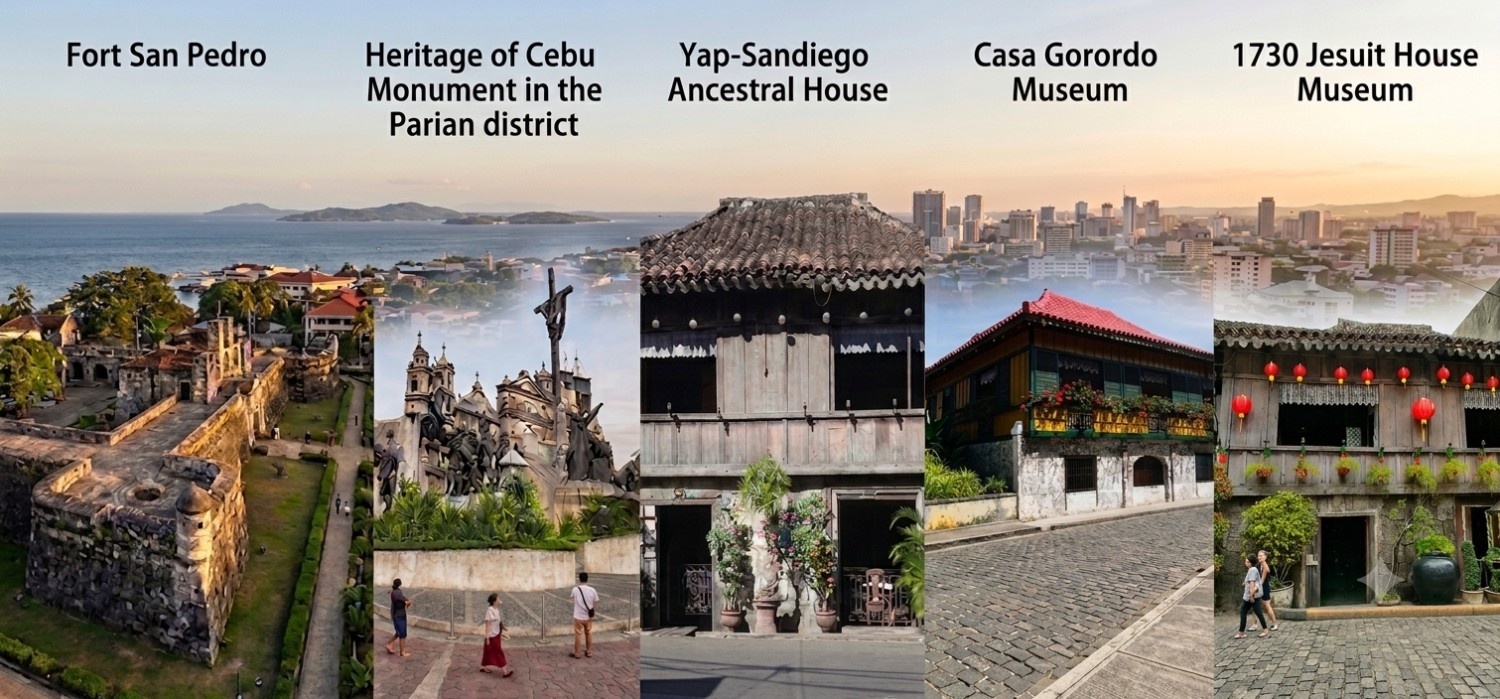
Cebu — The city is not merely a modern business hub; it is the cradle of Philippine history, serving as the birthplace of Christianity and a crucial colonial trading power that shaped the nation’s identity. For travelers looking to step back in time, downtown Cebu offers a rich cluster of landmarks that remain remarkably preserved despite centuries of change. From formidable Spanish fortresses to the intimate, ornate living quarters of the 17th-century elite, these five historical sites provide a profound look at the architecture, faith, and daily life that defined the "Queen City of the South."
Fortresses and Monuments of the Past
The journey begins at Fort San Pedro, the oldest and smallest triangular bastion fort in the country, originally commissioned by Spanish conquistador Miguel López de Legazpi. Today, visitors can walk along the weathered stone ramparts and explore a museum that displays salvaged artifacts from a Spanish shipwreck dating back to the early 1600s. Just a short walk away is the Heritage of Cebu Monument, a massive, open-air tableau located in the Parian district. Created by renowned artist Eduardo Castrillo, this brass, bronze, and concrete masterpiece offers a sweeping visual timeline of Cebu’s narrative, depicting pivotal events from the Battle of Mactan to the historic baptism of Rajah Humabon, making it a perfect spot for photography and historical contemplation at any hour of the day.
Living History: Ancestral Homes and Missionary Bases
To truly understand the lifestyle of colonial-era Cebu, one must step inside the city's beautifully maintained ancestral homes. The Yap-Sandiego Ancestral House stands as one of the oldest residential structures in the Philippines, built in the late 17th century using coral stone and native hardwoods, offering a rare glimpse into the opulent world of Chinese-Filipino merchants. Complementing this is the Casa Gorordo Museum, the 1850s residence of Juan Gorordo, Cebu’s first Filipino bishop; this site expertly blends traditional bahay-na-bato architecture with modern, interactive digital displays. Finally, hidden away in Parian is the 1730 Jesuit House Museum, an intriguing time capsule housed within an industrial warehouse that served as the operational base for Jesuit missionaries. Together, these sites offer a complete portrait of a city that has spent centuries standing at the crossroads of East and West.