



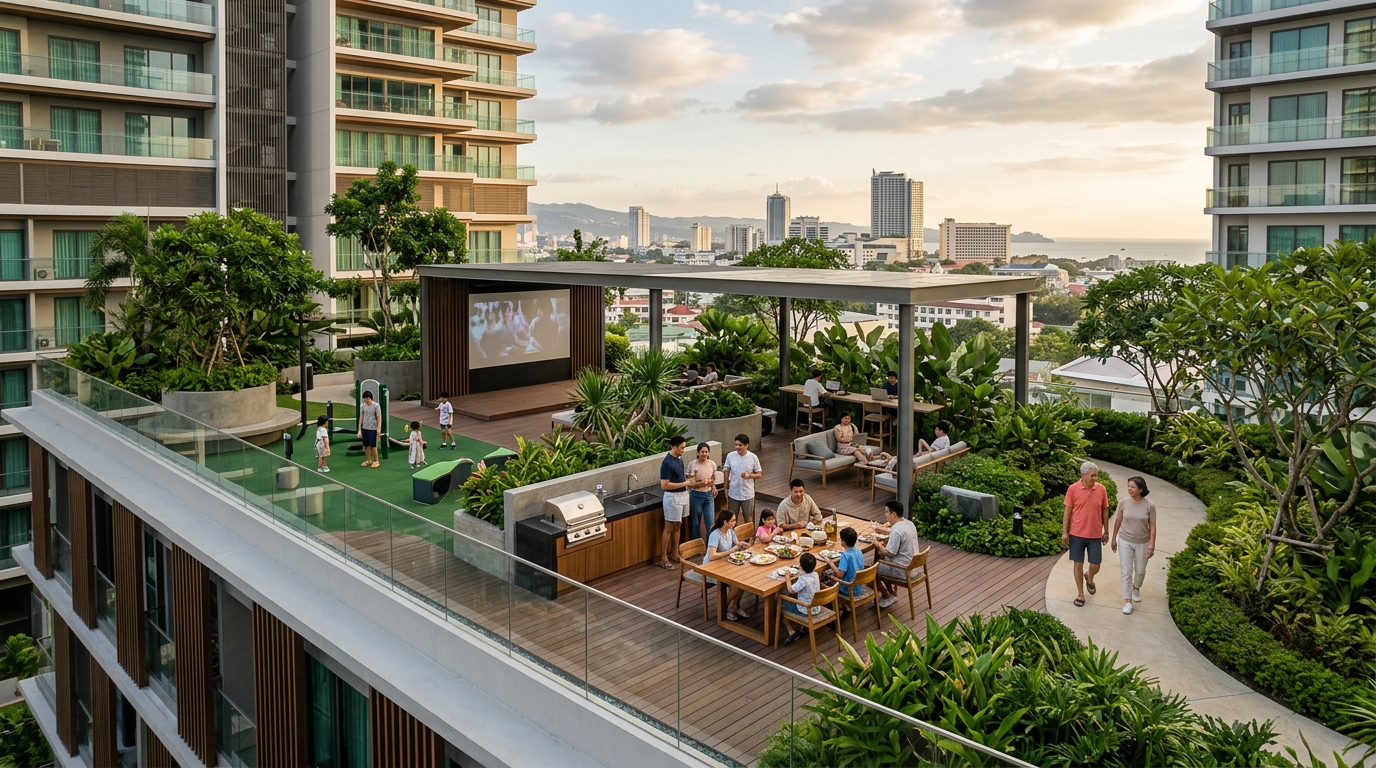
April 12, 2026 — The high-density residential market in Cebu City is pivoting toward the "Vertical Village" concept. New luxury condominium projects in the Banilad and Lahug areas are moving away from isolated units toward shared "Sky Gardens" that serve as communal hubs for multi-generational living.
The Primary Narrative
For Cebu’s urban core, this month's message is "Social Densification." Modern buyers are increasingly seeking out high-rise living that replicates the social connectivity of traditional village life. Consequently, developers are integrating massive, multi-level sky gardens that feature communal kitchens, outdoor cinemas, and shared workspace pavilions. These spaces are designed to facilitate interaction between residents, reducing the isolation often associated with metropolitan high-rise living. This focus on "community-first" architecture is attracting a mix of young professionals and active retirees who value social proximity.
The Market Movement
This shift is significantly impacting the resale value of older, traditional "box-style" condominiums in the city. Properties that lack integrated social spaces are seeing a stagnation in prices, while "Vertical Village" units are commanding a 15-20% price premium. Investors are recognizing that the long-term desirability of a unit is now tied to the quality of its shared environment. Several property management firms are even introducing "Community Curators" to organize events and workshops within these sky gardens. This professionalization of community life is becoming a key differentiator in a competitive market.
Looking Ahead
The city government is considering tax incentives for developers who incorporate "Public-Private Green Spaces" into their vertical designs. This would allow the general public limited access to certain garden levels, helping to solve the city's shortage of park space. Such initiatives are expected to improve the overall liveability and air quality of the Cebu City skyline. For the 2026 investor, the "Vertical Village" is not just a housing trend; it is a blueprint for sustainable urban growth. It represents the future of how Cebuanos will live, work, and connect in an increasingly dense environment.
