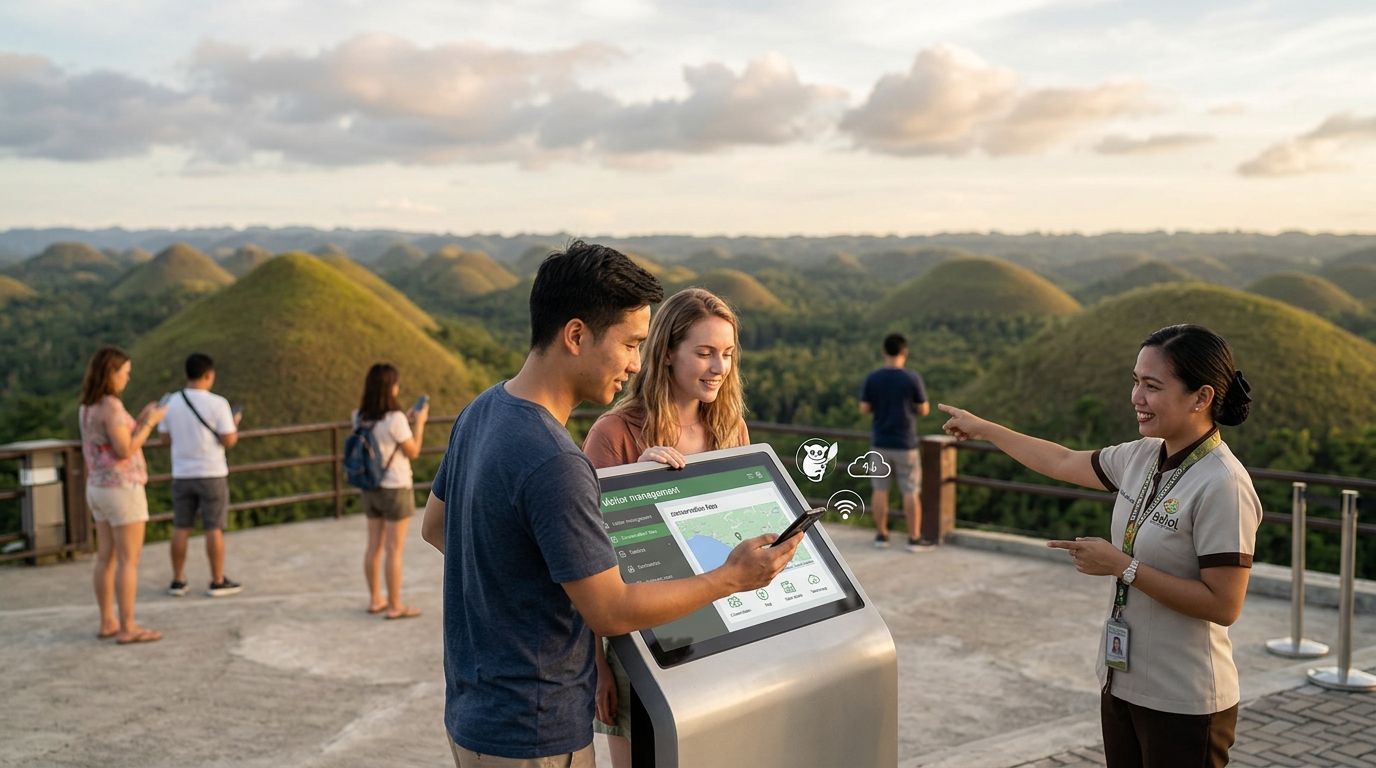
As of mid-April 2026, the Provincial Government of Bohol has officially launched its integrated digital visitor management platform. This "Smart Tourism" initiative is designed to streamline the visitor experience at key UNESCO Global Geopark sites, allowing for real-time tracking of tourist density and automated fee collection to support local conservation efforts.
The Data-Driven Conservation Narrative
For Bohol’s environmental management, the story is about the transition from reactive to proactive preservation. By using real-time data to monitor foot traffic at sensitive sites like the Chocolate Hills and the Tarsier Sanctuary, officials can now implement "dynamic carrying capacities" to prevent ecological fatigue. This technological layer ensures that Bohol remains a premium destination while strictly adhering to its regenerative island mandate. For the 2026 traveler, this means a more seamless, paperless entry process and the assurance that their visit directly funds the protection of the island’s unique geology.
Strategic Marketing and Global Reach
This movement is driving a more targeted international marketing strategy for the second half of 2026. The platform provides the Provincial Tourism Council with granular data on market preferences, allowing them to tailor their presence at major upcoming events like the World Travel Market and the Philippine Travel Mart. By identifying high-value, culturally-aligned markets—such as the expected influx of Japanese travelers in May—the province can optimize its promotional spend. This data-led approach is crucial for maintaining Bohol’s position as a "Best Tourism Destination Province" in a competitive regional landscape.
Economic Transparency and LGU Support
Local officials emphasize that the digital system is significantly reducing leakages in revenue collection for municipal local government units (LGUs). The automated distribution of fees ensures that host communities receive their fair share of tourism income instantly, facilitating faster local development projects. This transparency is building greater trust between the private sector and government regulators, encouraging further investment in community-based tourism programs. By late 2026, the system is expected to serve as the national blueprint for provincial e-governance in the Philippines.