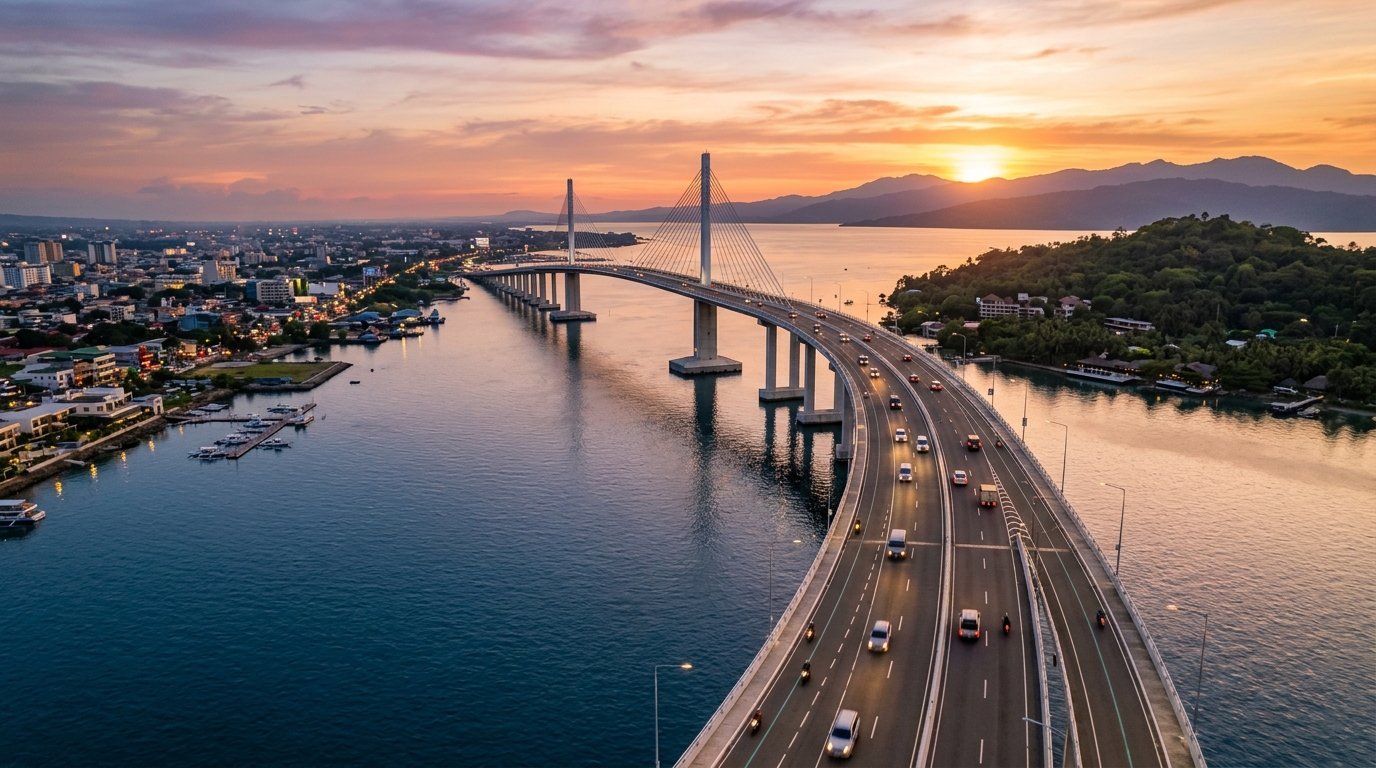
Reports indicate that while the Samal-Davao Connector (SIDC) Bridge is over 53% complete, it faces a critical funding junction this quarter. The Department of Public Works and Highways (DPWH) has confirmed that the project remains economically robust, with a projected internal rate of return of 17.38% when tourism benefits are factored in. However, the timeline has shifted to 2028 as the government seeks to secure the final P4.69 billion needed for the 2026 construction cycle. This bridge is the most anticipated infrastructure "game-changer" for Davao’s real estate, promising to cut travel time from 50 minutes to just five.
The Sensitivity of Progress
Economic analysts have run "sensitivity tests" proving that even if costs increase by 20%, the bridge remains a highly viable investment for the government. The current focus is on the 3.98-kilometer, four-lane, cable-stayed section that will cross the Pakiputan Strait. Engineers are working around the clock to maintain a "positive slippage" of 3.9%, meaning they are actually ahead of the technical schedule despite the funding hurdles. This engineering efficiency is a rare win for large-scale Mindanaoan public works.
Real Estate and Tourism Bait
The bridge's progress has already triggered a speculative real estate boom on both sides of the strait, with land values in Samal’s Barangay Limao seeing steady growth. Investors are betting on the bridge to unlock Samal Island as a primary residential suburb of Davao City rather than just a weekend destination. The "5-minute commute" promise is the primary selling point for several upcoming luxury villa projects currently in the planning stage. This infrastructure is the literal backbone of the region’s 2030 development vision.
A Call for Fiscal Support
With the current loan package under review, the provincial government is lobbying for a "sovereign guarantee" to ensure the project doesn't stall by year-end. Failure to secure the 2026 budget allocation could result in work suspensions that would inflate the total project cost by billions. Community leaders and business groups have formed a "support coalition" to ensure the bridge remains a top national priority. The consensus is clear: the bridge is no longer a luxury, but a logistical necessity.