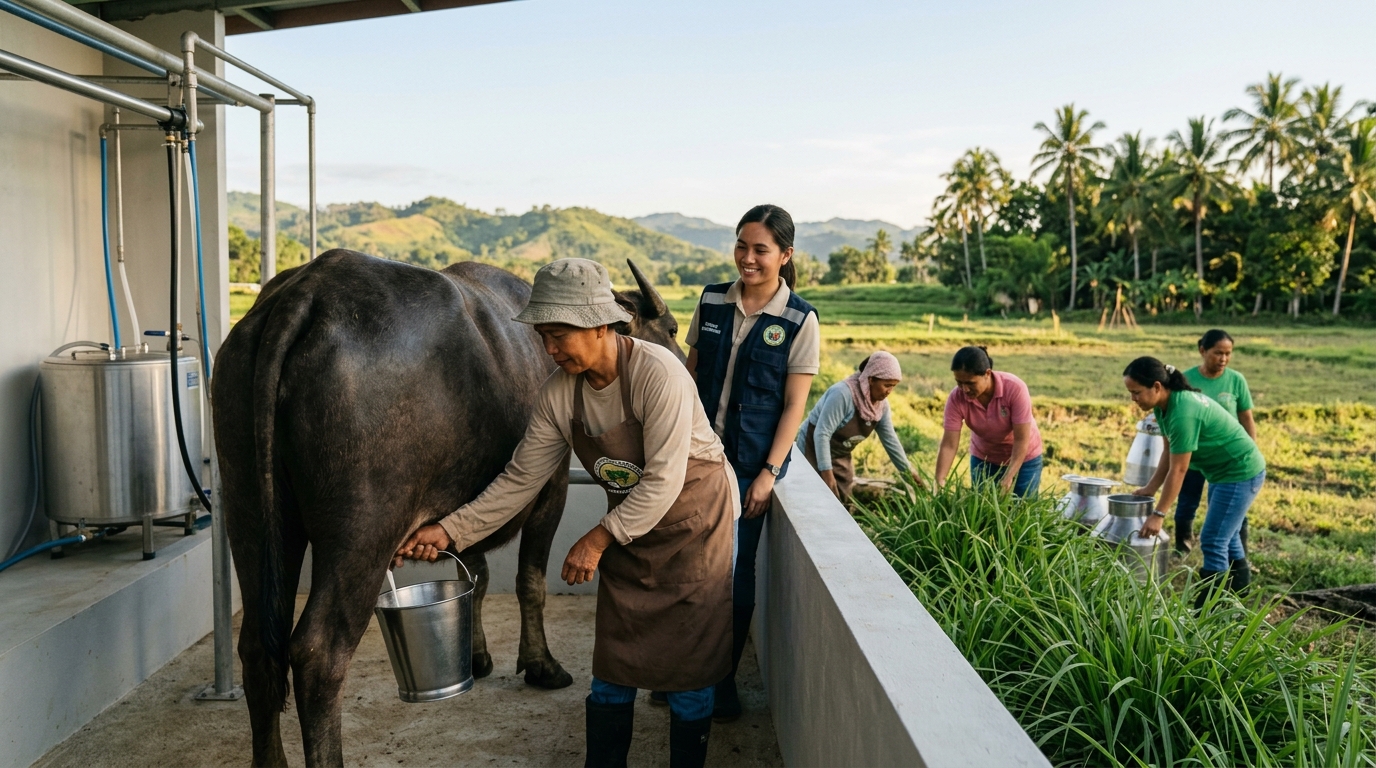
A forward-looking food security campaign launched in the northern municipality of Medellin on Thursday, May 21, 2026, aiming to diversify the province's livestock production lines. The Cebu Provincial Government entered into a strategic production partnership with the Philippine Carabao Center (PCC) to establish dedicated dairy buffalo farming networks across multiple districts. Under the directive of Governor Pamela Baricuatro, provincial veterinarians are mapping out selected agricultural plots in Compostela and neighboring central towns where smallholder carabao cooperatives already possess basic handling infrastructure. This targeted livestock expansion aims to scale up the island's independent milk output, providing a resilient nutritional safety net for local schools while generating fresh revenue streams for rural women's groups.
Supplying Richer Nutrients to Complement Existing Cattle Fields
Provincial Veterinarian Dr. Mary Rose Vincoy clarified that the newly introduced buffalo production model is specifically configured to complement rather than compete with existing dairy cattle farms. Dairy buffalo milk is highly prized by local culinary artisans and cheese manufacturers due to its significantly higher fat content and rich, creamy texture, which commands premium prices in urban gourmet markets. The PCC is transporting certified, high-yield dairy buffalo breeds to local breeding stations to give smallholder farmers access to top-tier genetic stocks. Providing these premium animals to rural cooperatives allows family-owned farms to upgrade their daily output without absorbing heavy capital debt at commercial livestock auctions.
Integrating Community Groups into the Cold Supply Chain
To ensure that the raw milk reaches urban consumer markets safely without spoiling, the provincial board is funding localized cold-storage milk collection facilities. Rural women's associations and community farming groups are receiving specialized technical training from municipal agronomists to master hygienic milking procedures and basic pasteurization machinery. This organized training program turns traditional backyard livestock raising into a formal, highly profitable commercial enterprise that operates throughout the calendar year. Financial analysts expect this steady stream of daily cash revenues to lift household incomes significantly across interior mountain barangays, providing a reliable shield against inflation.
Securing Sustainable Feed Paths Ahead of Changing Weather Cycles
Municipal engineering teams are collaborating with the Department of Agriculture to establish dedicated, high-protein forage plots near the designated buffalo breeding centers to guarantee a steady feed supply. Farmers are being trained to cultivate drought-resistant grass varieties that maintain their nutritional value even during dry spells, keeping milk production levels completely stable. This proactive focus on sustainable animal nutrition ensures that the province's food security programs do not suffer disruptions from sudden environmental shifts. Cebu continues to set an excellent example of how countryside economies can use targeted scientific partnerships to build a self-reliant, highly sustainable agricultural sector.