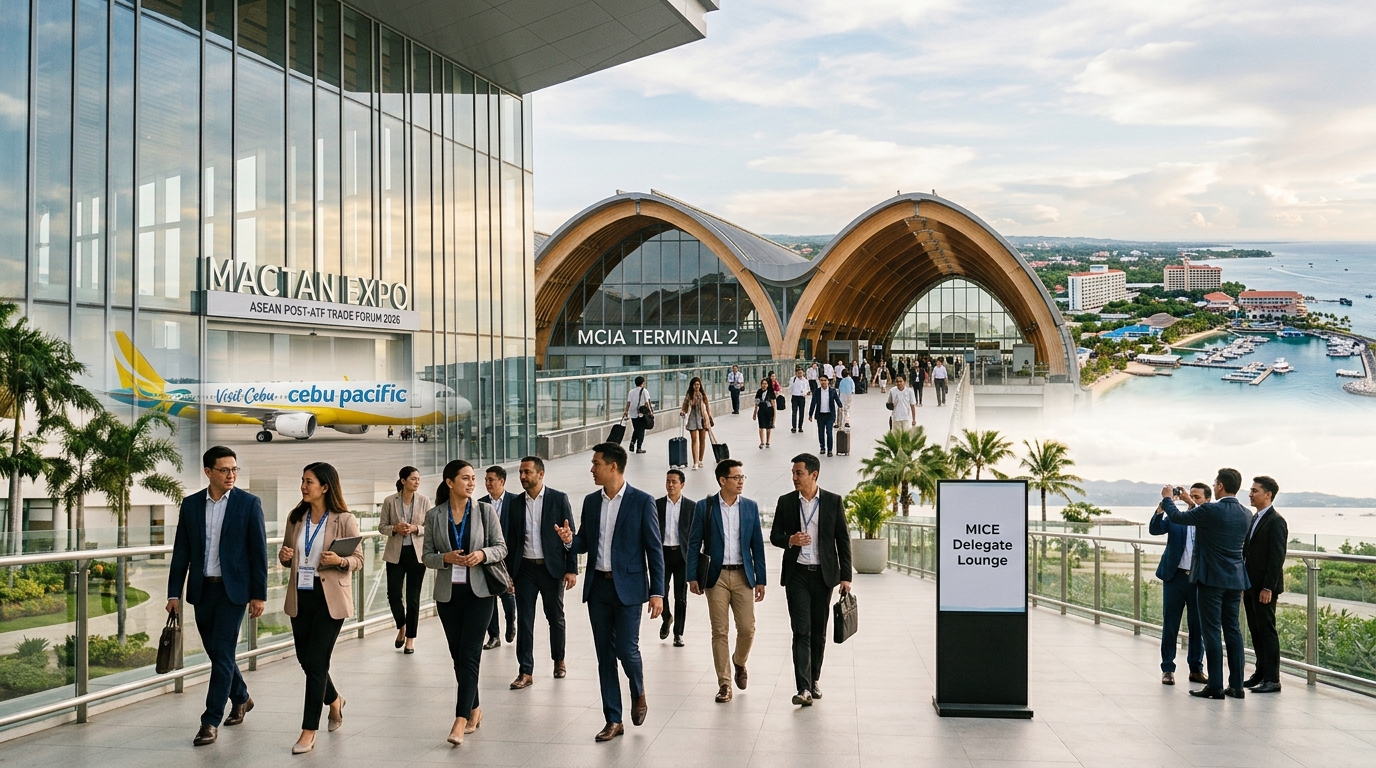
As of April 4, 2026, the dust has settled on the massive ASEAN Tourism Forum (ATF), but the "Cebu Effect" is only just beginning to reshape the Visayas' economic landscape.
While Cebu has always been a darling of the "Sun and Sea" crowd, April 2026 marks its graduation into a global business hub. The momentum from the ASEAN Tourism Forum—which brought over 5,000 international delegates to the island earlier this year—has triggered a structural shift. Real estate and tourism are now merging at the Mactan Expo, a ₱1.5 billion facility that is currently serving as the nerve center for a series of post-ATF trade exchanges. This infrastructure surge is backed by a strategic "MICE Guidebook" developed by the Cebu Chamber of Commerce, positioning the province as a competitive alternative to regional giants like Singapore and Bangkok for large-scale corporate events.
Looking at the numbers, the impact is already visible. Despite an unpredictable 2025, Cebu’s international arrivals are trending upward, supported by the "Visit Cebu" campaign—a unique tripartite partnership between the DOT, Cebu Pacific, and the Hotel, Resort, and Restaurant Association of Cebu (HRRAC). With new direct flights from Hanoi, Brisbane, and Cheongju now fully operational at Mactan-Cebu International Airport, the "Bleisure" (Business + Leisure) segment is filling hotels that previously relied on seasonal vacationers. For investors, the message is clear: Cebu’s value is no longer tied solely to its coastline, but to its newfound capacity to host the world's most influential decision-makers.