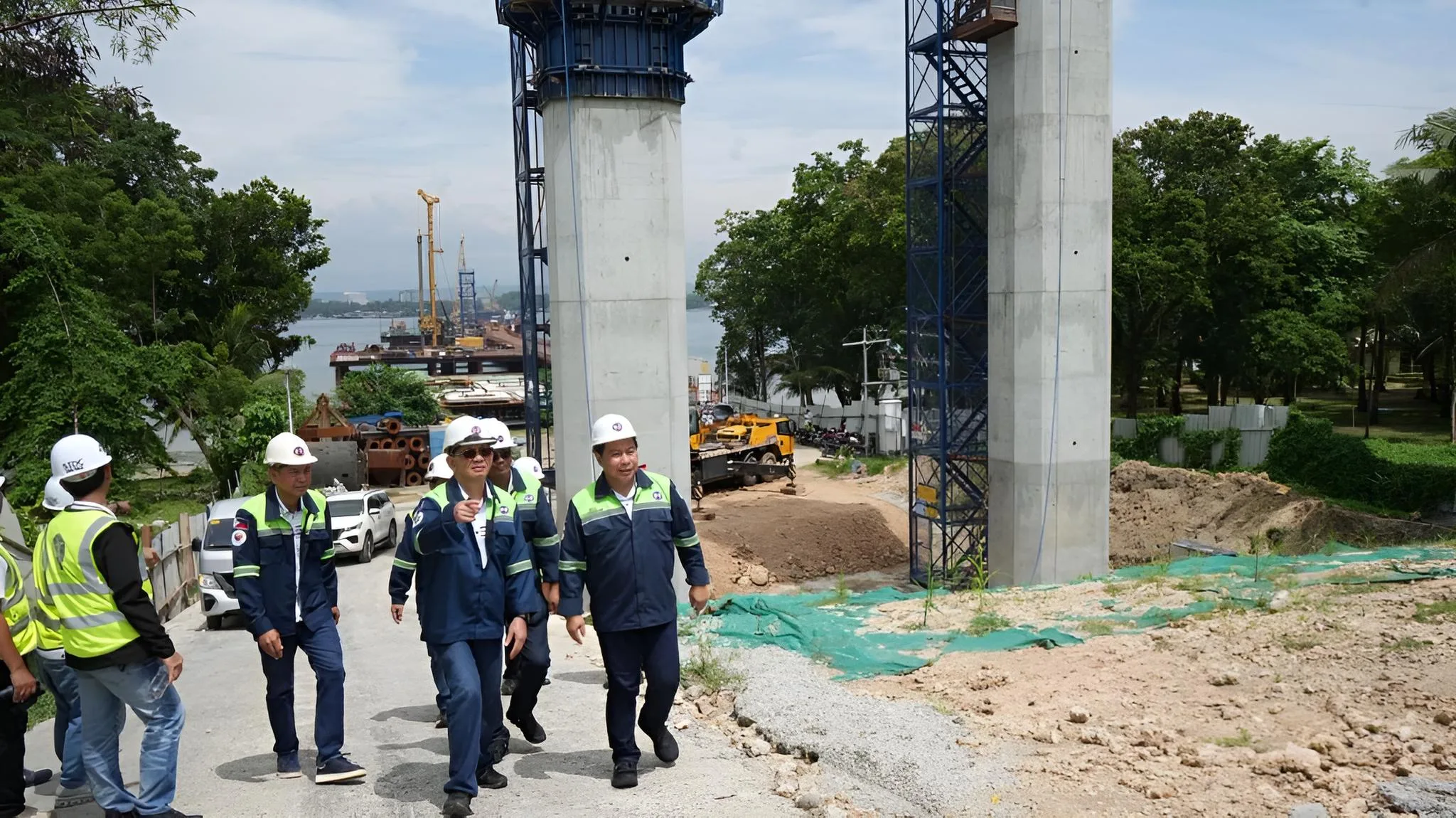
DAVAO CITY — The Department of Public Works and Highways (DPWH) has dismissed social media rumors that the Samal Island-Davao City Connector Project has been abandoned, reporting that construction is 61.334 percent complete and slightly ahead of schedule. The confirmation is energizing long-term real estate confidence across the Davao Region.
Superstructure Advances Beyond Speculation
DPWH Region 11 spokesperson Dean Ortiz said the project has shifted to installing box girders for the superstructure, after all underwater foundation columns were completed. The visual emptiness that sparked online rumors was due to scheduled heat breaks, not suspension of work.
As of June 25, actual accomplishment reached 61.334 percent against a target of 61.26 percent, yielding a positive slippage. This measurable progress confirms the cable-stayed bridge is advancing steadily, silencing claims of a stalled landmark project.
The four-lane design will accommodate rising traffic between mainland Mindanao and the Island Garden City of Samal. With the substructure finished, the rising precast box girders have turned the blueprint into a skyline-altering structure, making future connectivity tangible.
24/7 Operations Overcome Funding Gaps
Despite a request for ₱4.86 billion this year, only ₱314 million was approved. To keep work uninterrupted, DPWH adopted resource pooling that maintains a 24/7 construction schedule, ensuring the bridge continues rising while supplementary national government funds are awaited.
Ortiz explained that the normal working hours are from 6 a.m. to 11:30 a.m. and 1:30 p.m. to 6 p.m., adjusted to protect workers from extreme heat. Yet the round‑the‑clock pooling arrangement pushes critical segments forward even during the night, preventing any real delay.
He stressed that work proceeds “dire direcho” to meet the September 2028 deadline. That fixed timetable provides a concrete horizon for real estate developers and homebuyers who need clarity before committing capital to either side of the Pakiputan Strait.
Connectivity Set to Reshape Land Values
The 3.98‑kilometer bridge will permanently link Davao City’s Buhangin/Agdao junction directly to Samal’s Circumferential Road, replacing unpredictable ferry trips. Real estate analysts anticipate that the fixed link will trigger a broad reassessment of property values on both sides of the strait.
In Davao City, parcels near the R. Castillo–Daang Maharlika approach are already drawing developer interest. The promise of seamless access to Samal’s beaches, dive sites, and industrial zones is expected to lift residential and commercial land prices, rewarding early investors.
Tourism operators foresee a surge in day‑trippers and resort guests once the bridge opens, fueling demand for commercial spaces and vacation homes. The bridge effectively integrates Samal’s leisure assets into the metropolitan economy, expanding the real estate catchment of Davao City.
Samal Island Primed for Residential and Tourism Boom
Samal’s once‑sleepy barangays, especially Limao near the landing point, are positioned to become prime real estate destinations. The direct road link will drastically shorten commuting time, making island living a practical and attractive choice for urban professionals working in Davao City.
Developers are already eyeing large tracts for resort‑residential communities, capitalizing on the improved accessibility. The bridge will unlock inland properties that were previously undervalued, potentially doubling or tripling land values over the medium term as infrastructure takes shape.
Investor Confidence Rises on Timetable Clarity
The confirmed September 2028 completion target offers a reliable timeline for real estate investment planning. Knowing precisely when the fixed link becomes operational allows buyers, builders, and hospitality groups to align their project pipelines with the infrastructure’s activation date.
Ortiz’s firm rebuttal of abandonment rumors has reinforced market confidence. By demonstrating positive slippage at 61 percent, DPWH is signaling that the region’s most transformative infrastructure project is no longer a distant ambition but an emerging reality shaping property markets today.