The race toward corporate sustainability in the Philippines just witnessed a massive power move from one of the country's most dominant conglomerates. SM Investments Corporation (SMIC) officially announced that the SM Group successfully increased its group-wide renewable energy sourcing to 31 percent of its total electricity consumption, marking a significant leap from the 27 percent recorded the previous year. Tapping an impressive 730 million kilowatt-hours (kWh) of clean electricity across its retail, banking, and real estate properties, the conglomerate managed to prevent over 370,644 metric tons of carbon emissions from entering the atmosphere. For everyday consumers and market analysts alike, this transition proves that integrating green energy into massive commercial operations is no longer just a trend—it is a vital financial strategy for future resilience.
The Strategic Vision of Clean Sourcing
This aggressive energy transition is being framed by corporate leadership as both an environmental milestone and a highly calculated operational defense mechanism. SM Investments President and Chief Executive Officer Frederic C. DyBuncio emphasized that investing heavily in clean power alternatives directly helps the conglomerate manage volatile, long-term energy costs while building business models capable of withstanding economic shifts. The massive reduction in carbon emissions achieved by this shift is visually staggering, effectively mirroring the environmental impact of removing nearly 297,000 passenger vehicles entirely off the road for a full year. By embedding these metrics deeply into their core strategy, the conglomerate is actively demonstrating how large-scale commercial networks can optimize their supply chain costs while reducing their overall ecological footprint.
Geothermal Power and Rooftop Solar Networks
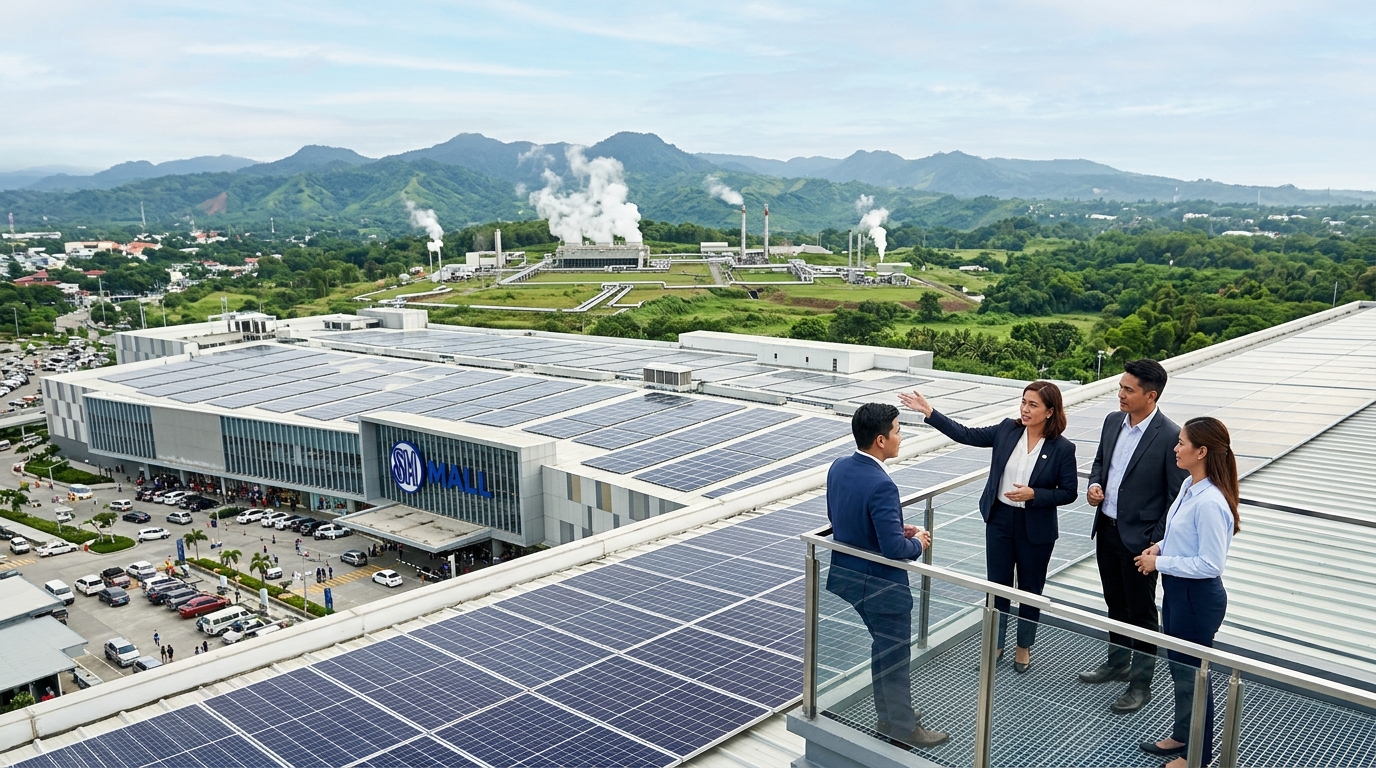
Driving the heavy machinery behind this corporate green transition is the Philippine Geothermal Production Company (PGPC), a wholly-owned subsidiary of SMIC that currently commands the legendary Mak-Ban and Tiwi steam fields. These powerhouse facilities generate enough round-the-clock clean energy to comfortably power up to one million local households annually, and PGPC is already actively developing six brand-new geothermal sites across Luzon to inject an additional 400 megawatts of clean power into the national grid. Simultaneously, the retail and commercial property arm under SM Prime Holdings, Inc. continues to expand what is recognized as the country’s largest developer-owned rooftop solar matrix. The property giant has deployed more than 200,000 solar panels across 69 integrated mall developments, while smaller retail networks like Alfamart are greening their logistics by installing dedicated solar infrastructure at major hubs like the Sariaya Distribution Center.
Sustainable Financing and Future Benchmarks
The green transformation ripple effect extends far past the rooftops of physical shopping malls and distribution warehouses, heavily steering the investment portfolios of the group's massive banking assets. By the close of the financial cycle, BDO Unibank, Inc. had channeled an incredible ₱1.21 trillion into verified sustainable projects, a massive fund that includes ₱177 billion dedicated directly to 71 distinct renewable energy developments nationwide. Complementing this banking push, China Banking Corporation stepped up by extending an additional ₱72 billion in targeted financing for clean energy access, efficiency upgrades, and infrastructure development.