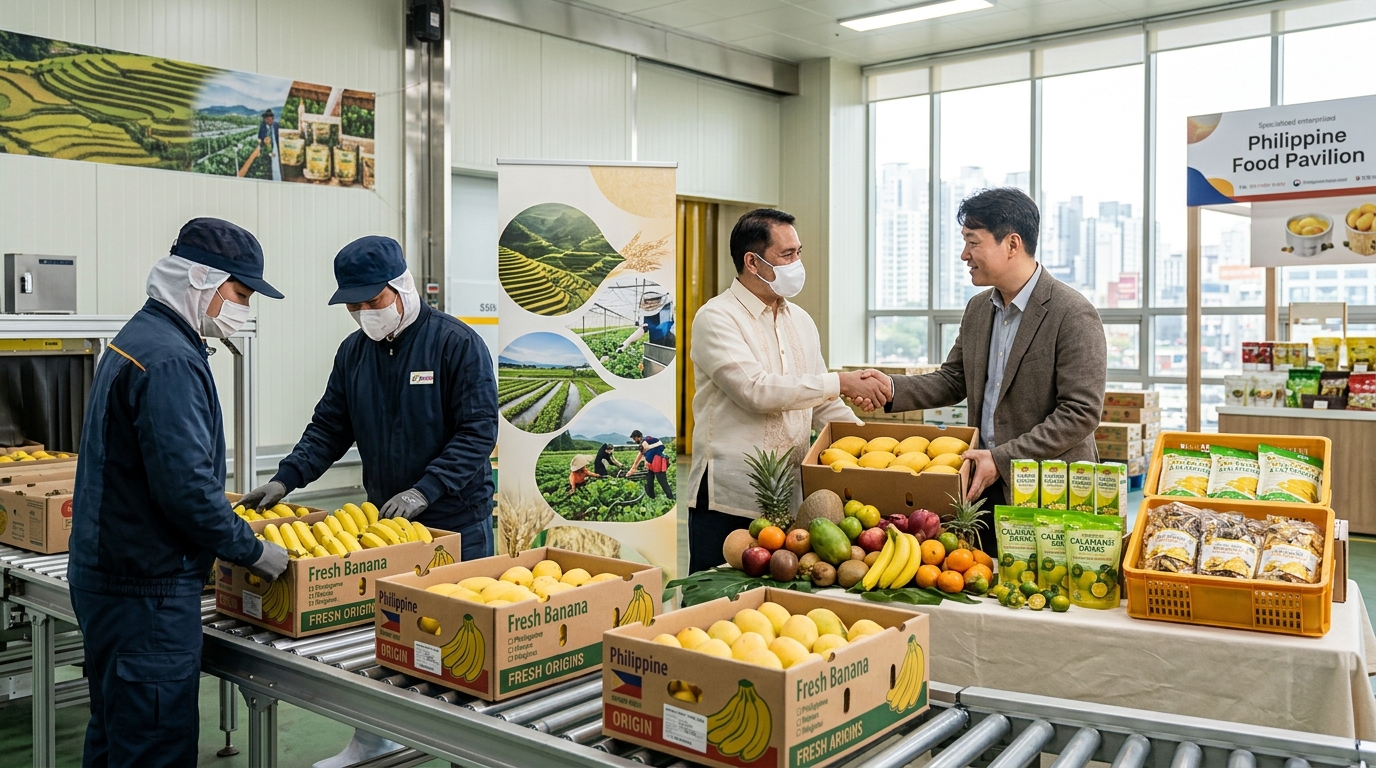
South Korea — The Philippines has embarked on a strategic bid to significantly expand its footprint within the South Korean food market, as reported by The Korea Times. This proactive step by the Philippine government aims to carve out a larger share for Filipino agricultural products and processed foods in one of Asia's most dynamic economies. While specific details of the bid, such as target products or timelines, remain undisclosed in the initial report, the move itself underscores a clear intent to strengthen economic ties and leverage the growing global appreciation for diverse cuisines.
Transitioning to Value-Added Aggregates and Modernizing Cold Chain Channels
This strategic pivot is not merely about trade; it’s about positioning Filipino produce and culinary heritage on an international stage. Historically, the Philippines has been a significant exporter of tropical fruits and some processed goods. This new focus on the Korean market suggests a concerted effort to diversify export baskets and capture new consumer bases, capitalizing on South Korea's robust economy and its citizens' evolving palates.
Maximizing Farmgate Returns and Scaling Rural Employment Stability
For the Philippines, this initiative holds substantial economic promise. Increased exports to South Korea could translate into direct benefits for Filipino farmers, producers, and the broader agricultural sector. Higher demand for Philippine goods could stimulate local production, create more jobs in farming, processing, and logistics, and ultimately contribute to the nation's economic growth. Furthermore, a successful entry into the competitive Korean market could serve as a springboard for expanding into other East Asian economies, enhancing the Philippines' reputation as a reliable and quality food supplier. It also signifies a proactive approach to economic diplomacy, utilizing food as a soft power tool to build stronger bilateral relations.
Leveraging In-Country Specialty Storefronts and Fostering Cultural Enterprise
This strategic push resonates deeply with Filipinos, especially the large community of Overseas Filipino Workers (OFWs) residing in South Korea. For OFWs, a stronger presence of Filipino food products could offer a comforting taste of home, enriching their cultural experience abroad. It could also open avenues for Filipino entrepreneurs in Korea to establish businesses catering to both the local Korean population and their fellow Filipinos, ranging from specialty grocery stores to restaurants featuring authentic Filipino cuisine. Beyond Korea, this initiative highlights the Philippines' commitment to fostering economic opportunities that can indirectly benefit the families of OFWs back home through a more robust national economy. It's a testament to the potential for Filipino culture and products to gain global recognition, creating pride and connection for Filipinos worldwide.