JAPAN — In a quiet prefectural office northeast of Tokyo, a conversation unfolded on April 17, 2026, that may well determine how smoothly thousands of Filipino families navigate life in Japan. The Philippine Embassy delegation, led by Acting Consul General Robert D. Quintin, sat across from officials of the Ibaraki Prefectural Government's newly established Foreign National Policy Division to exchange views on a single, pressing question: how can local government better serve the 12,037 Filipinos who now call Ibaraki home? The meeting, disclosed by the Embassy on May 20, was not a ceremonial courtesy call. It was a working dialogue aimed at embedding Filipino-specific needs into the prefecture's rapidly evolving framework for foreign resident support, a framework that now includes Tagalog-speaking certified community supporters, free multilingual legal consultations, and Japanese language classes designed to bridge the gap between survival and belonging.
The numbers underscore the urgency. Ibaraki Prefecture is experiencing a rapid increase in its foreign population, with over 111,000 foreign nationals recorded as of 2025. Filipinos represent one of the largest communities within that demographic, drawn by employment in agriculture, manufacturing, and caregiving sectors across the prefecture's cities and towns. The Foreign National Policy Division, received the Embassy delegation and provided an overview of its current activities, which include raising awareness of Japan's laws and customs while promoting harmonious coexistence between foreign and local communities. The prefecture's International Exchange Association, which offers Japanese language classes and facilitates community engagement, also operates the Native Communication Supporters system, a network of certified supporters who assist foreign residents in multiple languages, including Tagalog, with daily concerns such as hospital visits, administrative procedures, and childcare.
A Three-Day Outreach That Brought the Embassy to the People
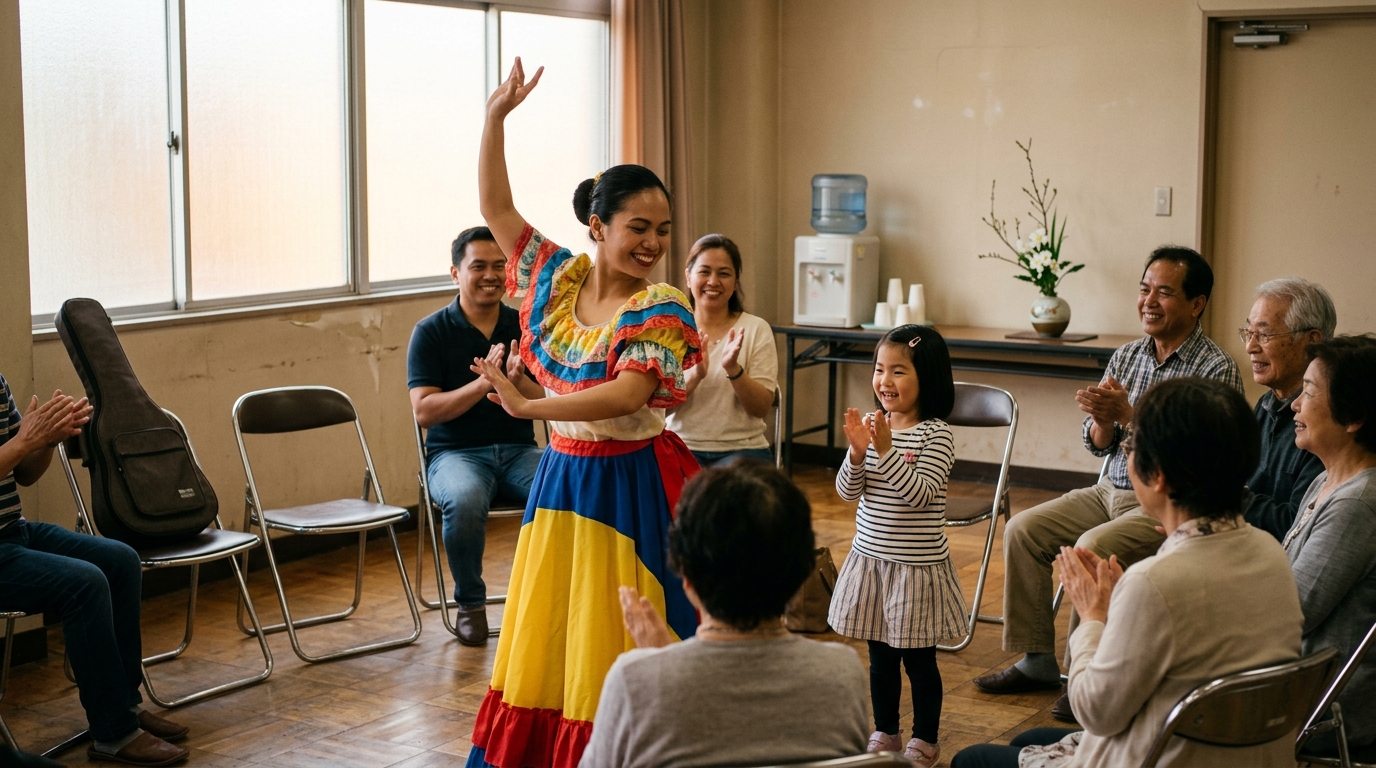
The April 17 policy dialogue did not occur in isolation. Two days later, on April 19, the Embassy conducted a Consular Outreach Mission and Kumustahan ng Pasuguan at the Chikusei Municipal General Welfare Services Center, drawing members of the Filipino community from across Ibaraki and neighboring prefectures. Deputy Chief of Mission Christian L. De Jesus led the gathering, joined by Acting Consul General Quintin, First Secretary and Consul Fatima G. Quintin, and Labor Attaché Ramon Lamberto C. Pastrana. The event offered consular services, updates from the Migrant Workers Office–Tokyo and the Social Security System–Japan, and an open forum where Filipinos could raise concerns directly with Embassy personnel. "The Embassy remains steadfast in its commitment to continuing robust and collaborative partnership with the Filipino Community in Ibaraki," De Jesus told the assembled crowd. "Your concerns, feedback, and active participation are vital in helping us further improve the delivery of our services to our kababayan in Japan."
Chikusei City Mayor Emiko Shidara attended the event in person, reaffirming the city government's support for continued engagement with the Filipino community. Her presence signaled a level of local political commitment that is not uniformly extended to foreign resident communities across Japan, and it reflected a relationship that the Embassy has been deliberately cultivating. Earlier in February, Ambassador Mylene J. Garcia-Albano received Mayor Shidara at the Philippine Embassy in Tokyo, where they discussed potential cooperation in agriculture, agri-technology, city planning, and local governance. The consular outreach in Chikusei was, in this sense, the operational expression of a diplomatic relationship that had been months in the making. The program also featured performances by the Madayaw Philippine Folk Dancers and guest artists soprano Angeli Benipayo and pianist Gabriel Allan Paguirigan, underscoring the cultural dimension of the Embassy's community engagement strategy.
Why a Prefectural Partnership Matters for Every OFW in Japan
The Ibaraki engagement represents a model of diplomatic practice that extends well beyond a single prefecture. The Philippine Embassy in Japan has been systematically replicating this approach across multiple regions, engaging prefectural governments in Gunma, Kanagawa, and beyond to secure institutional support for Filipino residents. Each engagement follows a similar template: establish contact with the prefecture's foreign resident support infrastructure, identify gaps in Filipino-specific services, and advocate for language access, legal assistance, and community integration programs. The model recognizes a structural reality of the Filipino diaspora in Japan: unlike many other foreign national groups, Filipinos are widely dispersed across the country, working in sectors ranging from agriculture in Ibaraki to manufacturing in Aichi to healthcare in Tokyo. Approximately 350,000 Filipinos now call Japan home, making the community the country's fourth-largest foreign population. A prefecture-by-prefecture engagement strategy is not merely efficient—it is the only approach that can reach Filipinos where they actually live and work.
The Ibaraki Prefectural Government's Native Communication Supporters system, which includes Tagalog-speaking certified supporters, exemplifies the kind of institutional infrastructure that the Embassy advocates for. The prefecture also organizes free consultation days for foreign residents at least five times a year, staffed by lawyers, administrative consultants, and social insurance and labor consultants. The next such session is scheduled for May 31, 2026, in Tsukuba City. For a Filipino worker facing a contract dispute, a family seeking guidance on their child's school enrollment, or an elderly resident needing to navigate Japan's healthcare system, these services represent the difference between isolation and access. The Embassy's April 17 meeting with the Foreign National Policy Division, by securing a direct line of communication with the officials who design and fund these programs, ensures that Filipino voices are part of the conversation as the prefecture's foreign resident policies evolve.
The broader significance of the Ibaraki model lies in its replicability. The Embassy's engagement with multiple prefectural governments demonstrates that local-level diplomacy—the kind that unfolds in prefectural offices rather than ministry headquarters—can deliver tangible, everyday benefits to OFWs. When Acting Consul General Quintin conveyed Ambassador Garcia-Albano's appreciation for the prefecture's openness to collaboration, he was doing more than exchanging pleasantries. He was reinforcing a diplomatic relationship that, over time, can shape how a Japanese prefecture budgets for interpretation services, designs its consultation programs, and trains its personnel to serve a multicultural population. For the 12,037 Filipinos in Ibaraki, that relationship is not abstract. It is the reason a Tagalog-speaking supporter can accompany a pregnant Filipina to a hospital visit, why a free legal consultation on May 31 will be accessible in multiple languages, and why the prefecture's schools are increasingly equipped to welcome Filipino children into their classrooms. The Embassy's work in Ibaraki is not yet complete, but the architecture is now in place—and for the Filipino families who call this corner of Japan home, that architecture is the foundation on which their daily lives rest.